Barbecue Pulled Pork Pizza

Today I have the second of the three pizzas I planned to share with you for Pizza Week. You can see the dough recipe here and the Spinach and Garlic Alfredo Pizza here. Hooray for pizza! Now, I can’t speak for your own mother, but I -for one- would be thrilled with a homemade pizza for Mother’s Day.

By now you all know how I feel about pizza, but there’s one very big reason to love it that I haven’t mentioned yet. It’s frugal. Oh, baby, it is the frugal hausfrau’s best friend. You can put nearly anything on a pizza, so it’s great for using up odds and ends in from the refrigerator and the pantry. Granted, not every combination will be a winner. A good rule of thumb to keep in mind when figuring out what to load onto your crust is “Would this taste great together on a sandwich?” If you answer yourself with a yes, chances are good that it will make a wonderful pizza.

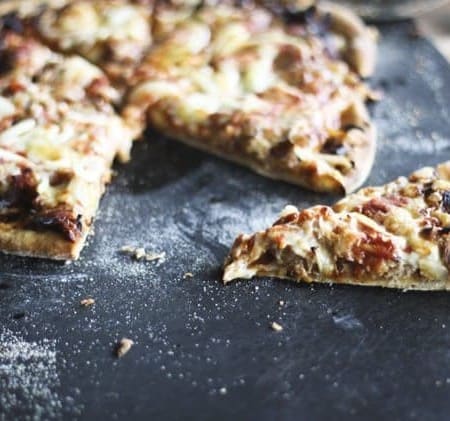
With my own rule in mind, I raided my chill chest and put together today’s pizza. Using a little leftover pulled pork (I used this from one of my most popular posts ever here on Foodie With Family but this one would be great, too!)  barbecue sauce, enchilada sauce, pepper jack cheese and onions from hamburgers, I put together this beautiful Barbecue Pulled Pork Pizza.  It was a handful of this and a fistful of that and a pinch of another thing. We’re talking about little ingredients that so easily could’ve been lost in some forgotten corner of the refrigerator, but they became dinner. In fact, they became a glorious barbecue pulled pork crossed with pizza. How could that be anything less than wonderful?

Another great advantage of making pizza at home is the infinite ability to adjust it to your own preferences. You’re not an onion lover? Leave them off! You dislike barbecue sauce? Replace it with pizza sauce or hot sauce. The world is your oyster, or rather, your pizza!

Barbecue Pulled Pork Pizza

Barbecue Pulled Pork Pizza

This pizza is a delicious multi-tasker. Yes, it tastes amazing- pizza meets pulled barbecue pork on a crackly crisp crust- but it's also a great user-upper of leftovers from the refrigerator.

Ingredients

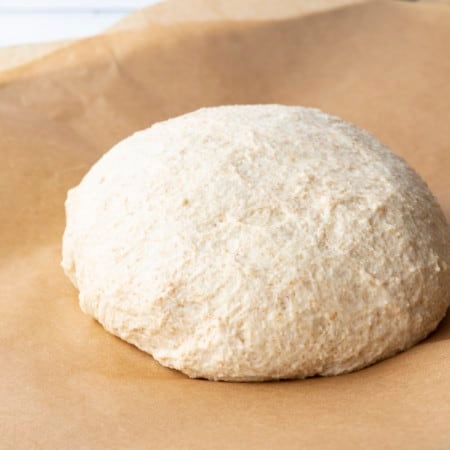
  • 1 piece, about 5 ounces or the size of a large plum, of No-Knead Whole-Wheat Semolina Pizza Dough
  • 1 to 1 1/2 cups leftover pulled pork (like this or this.) | http://www.foodiewithfamily.com/2009/03/24/cuban-pork-part-i-slow-cookin-good-lookin/]
  • 1/4 cup barbecue sauce (I use this but you can use whichever is your favourite.)
  • 1 cup shredded pepper jack cheese
  • 1/2 cup shredded part-skim mozzarella cheese
  • 2 tablespoons hot sauce or enchilada sauce
  • Optional, but tasty:
  • 2-3 quarter-inch thick, half moon slices of onions
  • mixed salad greens
  • additional hot sauce

Instructions

With a pizza stone situated in the bottom third, preheat the oven as high as you can get it. We use a 500°F setting on our oven.

Lightly flour your work surface. Form your pizza dough into a ball by gently stretching the top of the dough underneath itself. Place the dough on the floured work surface and pat it out gently with your hands into a disc shape until you cannot make it any wider. Flour a rolling pin and gently roll the pizza dough out. This works best if you look at the pizza dough as a clock. Start rolling from the center of the circle toward 12 o'clock, rotate your pin and roll from the center to 3 o'clock, then from the center to 6 o'clock, and so forth, ending back at 12 o'clock. Do this until you have a circle that is about 10-inches in diameter.

Sprinkle a pizza peel generously with semolina flour or cornmeal. Carefully transfer the dough to the peel. Shake gently to be sure no part of the dough sticks. This is crucial. You will be shaking the peel gently after each addition of toppings to make sure the dough can still move freely. If at any point the dough sticks, gently lift the offending area and throw a bunch of semolina or cornmeal under it.

Dot the barbecue sauce over the dough to within a 1/2-inch of the edges. Shake the dough to make sure it's not stuck.

Pull the pork apart with your hands and arrange it over the barbecue sauce to within a 1/2-inch of the edges. Again, shake to be sure it isn't stuck

Sprinkle the pepper jack and mozzarella cheese over the pork and then drizzle with the 2 tablespoons of hot sauce or enchilada sauce. If you're using the onion, separate the slices into individual pieces and arrange over the top. Shake! Shake! Shake! To be sure it isn't sticking.

Open your oven, position your peel over the back edge of the pizza stone. Flick your wrist to get the dough moving, pulling the peel back as you transfer the dough to the stone. Shut the oven and let the pizza bake on the stone for 8-10 minutes, or until the crust is the desired colour and the cheese is melted and bubbly with golden brown or charred areas. Slip the peel back under the pizza and give a little jerk to move it safely onto the peel. Transfer the cooked pizza onto a cutting board. Let it rest 3-5 minutes before slicing.

If you'd like to, and I almost always do, serve the slices with a handful of fresh salad greens and another drizzle of hot sauce over the top.

http://www.foodiewithfamily.com/2012/05/11/barbecue-pulled-pork-pizza/

No-Knead Whole-Wheat Semolina Pizza Dough | Make Ahead Mondays

I’m about to do something I’ve wanted to do for a long, long time. I declare this week to be pizza week.

I’ve run a handful of pizza recipes (this, this, this and this) but I’ve never gone deep into pizza territory in this space. This -to put it mildly- is nuts. Why? Because I am certifiably obsessed with pizza. I love pizza truly, madly and deeply. It is my happy food. I’m not talking about cardboard take out pizzas (although I’ll eat those, too.) I am talking about homemade pizza whether it’s thin and crispy, thick pan pizza, or anything in between.

Way back when The Evil Genius and I were first wed, we went on our first of many food kicks. We had a collective hankering for a pizza fresh from the oven with a thin, crispy and chewy crust. We bought a pizza stone and peel, researched recipes, and ate pizza nearly every night for a month. We were thrilled with our results, but there was always one little piece that didn’t quite meet our expectations: that crust.

Good golly. Who knew that a little piece of dough could create such frustration? We tried stiffer dough, slacker dough, dough made from various flours, enriched dough, plain dough, new dough and aged dough. It seemed like no matter what, it just wasn’t exactly what we had pictured.

The years passed and we still loved homemade pizza infinitely better than takeout*. We liked our crust and put aside our quest for crust perfection while we were busy with our five baby boys. About a year ago, though, the pizza crust bug bit again. I decided to go a direction I had never gone with my dough.

*I like a variety of ingredients on my pizza. Sometimes I like ham, sometimes bacon, sometimes artichoke hearts, pineapple, roast beef, provolone, crusts rubbed with garlic, extra char on the crusts, caramelized onions, anchovies, shaved asparagus, bleu cheese, barbecue sauce, shredded chicken, a combination of those things or something else entirely. Aside from the fact that our local pizzeria just doesn’t carry half of those, I’m a little to embarrassed to order the world’s most high maintenance pizza, and I’m too cheap to pay for it. I’d far rather make twice as much at home for the same price and preserve my dignity.

I weighed flours and ingredients as I dumped them into my dough bucket and stirred. I let it rise and fall, got my oven screaming hot, sprinkled flour over the surface of the dough, pulled off a piece the size of an orange, rolled it out*, transferred it to the peel, topped it and baked it.

*This may horrify some pizza purists and hand-tossing devotees, but the truth is simple. I prefer to roll out my pizza crusts. I like a relatively uniform shape and whenever I toss the dough, I end up with amoeba shaped pizzas. While that’s not a terrible thing, it’s a little harder to evenly cut it. Yes, I am a control freak. We’ve already covered that. Feel free to hand-stretch or toss your crusts. My rolling pin and I will happily carry on doing what we’re doing.

I moved the pizza to the cutting board, let it rest for a couple of minutes then sliced it. Unlike the usual approach to pizza night, where I call everyone to grab pizza and settle in at the table, I slid over into the corner of the kitchen where no one can see me unless they come all the way into the room and took a bite. Oh yes. This was the crust I’d wanted all those years. Crackly crisp on the outside but chewy on the inside, slight bits of char here and there, sturdy enough to hold the toppings I love, but delicate, too. Oh yes. This was pizza love. I served the pizza to my family without telling my husband what I had changed.

He took a bite and looked at me. “This crust! This is the crust! What did you do? This is perfect!”

So here’s the skinny. Today, for Make Ahead Mondays, I am giving you the crust recipe in handy-dandy printable form. Get a batch of this mixed up and into your refrigerator, because this week, we make pizza, and lots of it.

Those of you with good memories may recognize this recipe as being very similar to one I’ve posted before. It’s true, I did! The only difference between the previously posted recipe and the one being posted today is the presence of white whole wheat flour in today’s version. There’s something about that white whole wheat that perfects what was an already good dough. This is the dough that fulfilled the pizza crust fantasy. This is crust upon which dreams are built.

Is it hyperbole? I’ll let you be the judge.

No-Knead Whole-Wheat Semolina Pizza Dough | Make Ahead Mondays

Prep Time: 10 minutes

No-Knead Whole-Wheat Semolina Pizza Dough | Make Ahead Mondays

This is our favourite pizza crust. The easy to mix and work with dough yields a crispy and chewy, flavourful crust that holds up to anything you put on it. Thankfully, the large batch keeps well for up to 10 days in the refrigerator. For longer storage, divide into individual sized portions in oiled zipper top bags and freeze for up to 3 months.

Ingredients

  • 5 1/2 cups room temperature water
  • 1/2 cup extra virgin olive oil
  • 3 tablespoons instant yeast
  • 2 tablespoons kosher salt
  • 2 tablespoons sugar (raw or granulated)
  • 4 cups (1 pound 1 ounce by weight) white whole wheat flour
  • 7 cups (1 pounds, 14 3/4 ounces by weight) all-purpose flour
  • 2 cups (11 ounces by weight) semolina flour

Instructions

Mix the yeast, salt, sugar, olive oil and water in a 12 quart capacity bucket. (This recipe can be halved if you do not have a large enough container.)

Stir in the flour until no dry pockets remain. You do not have to knead it, but I find the easiest way to have it thoroughly mixed is to wet one hand and forearm and use that one to mix it in completely.

Cover lightly (Do not put a lid on tight. Trust me.) and let rest at room temperature until the dough has doubled and collapsed. (Or at least until dough is very, very puffy.) This takes a less than 2 hours in warm weather and more than 2 hours in cool or cold temperatures.

You can use the dough immediately. If you have leftovers, you can store them in the container, lightly covered (again, do not use a tight lid!) for up to 10 days. If you need to store the dough beyond that time, divide into individual pizza sized servings. Freeze in re-sealable plastic bags that have about a teaspoon of olive oil smeared around inside each for up to 3 months.

http://www.foodiewithfamily.com/2012/05/07/no-knead-whole-wheat-semolina-pizza-dough-make-ahead-mondays/

English Muffin Bread

English muffins hold a very special place in my heart. How could you possibly not love the craggy, full-of-holes, moist bread and the crunchy, toasty bits of cornmeal stuck to the outside that transfer to your fingers when you grip it? I love them every which way, from the English muffin pizzas my mom used to make as after-school treats, to dripping with butter and slathered with berry jam or  marmalade, to topped with a fried egg and a good squeeze of rooster sauce.

I can’t imagine my life without English muffins.

Yet, as much as I love English muffins, that is how much I love this English Muffin Bread. I know, it feels kind of disloyal to say it, but it’s true. This bread is everything that an English muffin is, but more convenient. And way-hay-hay-hay less expensive.*

*Unless, of course, you’re making your own, in which case it’s no less expensive but a heckuva lot more convenient and far less time consuming. Carry on.


What I mean to say is that this bread has the crags, the holes, (*cough the nooks and crannies cough*) the moistness, the crunchy, toasty bits of cornmeal that transfer to your fingers and the incomparable ability to carry sinful amounts of butter and jam, or sauce and cheese, or egg and hot sauce just like its namesake muffins.

Let me tell you something. This bread is so easy, so DEAD easy, that there is no reason a complete beginning baker can’t successfully make it. It doesn’t require any exotic ingredients or specialty equipment. The hardest part of the whole process is waiting for it to cool. Because cool completely it must. If you cut into this gorgeous, tempting, incredible bread before it is one-hundred-percent cooled, you will cry many bitter, salty tears of regret.

There is a very good scientific reason to this. The bread continues to cook and set up as it cools. Unlike some other breads where it’s a-okay to wrench large fistfuls of warm bread and stuff them into your mouth, this will simply assume a gummy texture and stay there when sliced warm. That’s where your crocodile tears would flow. Sigh. But if you wait, your wildest dreams will come true. Kind of like if you vote for Pedro.  In short, LET IT COOL!

And then when it has finally cooled and you slice it and toast it…

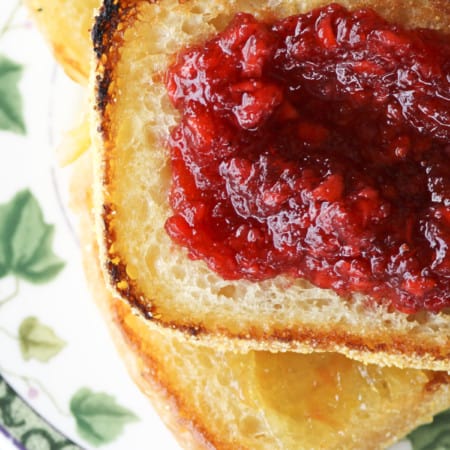
There have to be little blackened parts around the edges. You can’t half-heartedly toast an English muffin, right? Well, you can’t be meek about toasting English Muffin bread, either. You have to go all-in, full-throttle; you have to commit to toasting it.

For heaven’s sake, don’t let a toaster anywhere near this bread. Toast this bread in a good puddle of melted, salted butter in a cast-iron (or other heavy-bottomed) frying pan or on a griddle over medium high heat. Does this really make a difference? Let me answer it this way. Does breathing make a difference in your quality of life?

When it’s browned in the middle and black around the edges, flip it over with a fork. Oh, yes. It is far more hands-on than a toaster, but the results will speak for themselves. Salted, crispy, buttery on the outside and moist and soft on the inside. We’re talking about toasty, crunchy, bready nirvana.

Oh me. Oh man. Oh mama…

If this doesn’t make you happy, I just don’t know how to help you.

I never, ever make this in quantities less than four loaves, but I am feeding a regiment here with my five boys and their buddies and, let’s be honest, my husband and I can eat impressive quantities, too… If you have a wee bird appetite, or are feeding fewer people than we are, I’ve included a halved recipe in the printable. Nothing in the method changes, so choose your level of consumption and let’s get baking!

English Muffin Bread

English Muffin Bread

This gorgeous, simple, golden brown bread has the crags, the holes, the moistness, the crunchy, toasty bits of cornmeal that transfer to your fingers and the incomparable ability to carry sinful amounts of butter and jam, or sauce and cheese, or egg and hot sauce just like its namesake muffins. This recipe is suitable for novice bakers and is easy on the wallet, to boot!

Ingredients

    For a Standard Recipe (3-4 loaves):
  • 5 1/2 cups warm-to-the-touch water (not hot)
  • 2 tablespoons kosher salt
  • 3 tablespoons sugar
  • 2 tablespoons plus 3/4 teaspoons instant yeast (or 3 packages)
  • 11 1/2 cups (3 pounds 1 1/2 ounces by weight) all purpose or bread flour (I often do a half and half combination of the two.)
  • For a Half-Size Recipe (1-2 loaves):
  • 2 3/4 cups warm (not hot) water
  • 1 tablespoon kosher salt
  • 1 tablespoon plus 1 1/2 teaspoons sugar
  • 1 tablespoon plus 1 1/4 teaspoons instant yeast (or about 1 1/2 packages)
  • 5 3/4 cups all-purpose or bread flour (1 pound 9 ounces, by weight)
  • Also Needed:
  • Non-stick cooking spray
  • cornmeal
  • plastic wrap
  • melted butter for brushing the bread mid-way through and after baking

Instructions

To Prepare the Dough:

Stir all of the ingredients together by hand in a large mixing bowl (or in the bowl of a stand mixer fitted with a paddle) just until combined. The dough will be shaggy and very sticky.

Spray a piece of plastic wrap with non-stick cooking spray and lay it loosely over the mixing bowl. Let the dough rise in a warm, draft-free place for about an hour or until it looksbubbly and puffy.

Spray 3 standard loaf pans (8.5" x 9.5") with non-stick cooking spray and sprinkle in a fistful of cornmeal. Tilt the pans, tapping gently, until the interiors are coated with a thin layer of cornmeal. Tap out any excess cornmeal.

Spray your hands with non-stick cooking spray and use them to divide the dough evenly between the pans. The pans should be no more than halfway full. If you need to, spray and cornmeal an additional loaf pan for any excess.

Spray more pieces of plastic wrap with non-stick cooking spray and lay them loosely over each loaf pan. Let rise in a warm, draft-free place until the dough looks bubbly and puffy again, and has risen with the top of the dough dome just peeking above the edge of the pan.

While the dough is rising, preheat the oven to 350°F.

It is possible to let this dough rise too long, so be sure the oven is waiting for you rather than you waiting for the oven.

Evenly space the loaf pans in the oven and set the timer for 30 minutes. After 30 minutes, take out one bread pan at a time and brush the tops of the loaves with melted butter. When you place the bread pans back in the oven, rotate their positions from front to back. Bake for an additional 10 minutes or until they are just lightly golden brown.

Immediately turn the loaves out onto a cooling rack and brush again with melted butter. Cool completely before slicing.

The bread can be stored, tightly wrapped, at room temperature for up to a week. If you do not think you can eat it in that time, wrap the cooled, unsliced loaves with two layers of plastic wrap and cover that with one layer of foil before storing in the freezer for up to 3 months. They can be thawed or simply sliced from their frozen state before toasting.

http://www.foodiewithfamily.com/2012/02/23/english-muffin-bread/

Bubble Pizza (Pizza Monkey Bread)

Isn’t there some sort of sporting event coming up this weekend? Some big deal? Football something or other?

I’m a little fuzzy on that point, I’m just thinking I’ve heard talk.

Anyway, if you happen to be going somewhere or having lots of people over, you might be expected to have some finger food available. It’s only natural. And if you’re looking for something fast and filling, it doesn’t get much better than this.

We’re talking about Bubble Pizza. What is that, you say?

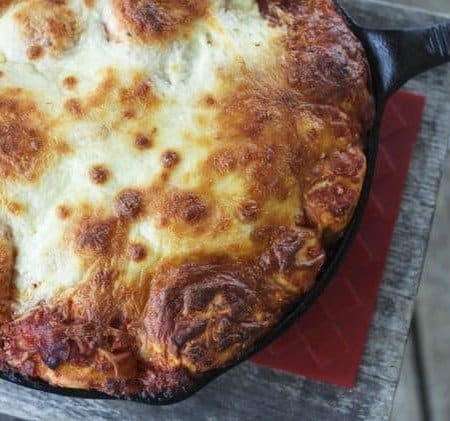
Pizza dough + pizza sauce + pepperoni + scads of cheese = Bubble Pizza

In other words, it’s a  lip-smacking, comforting, puffy, pizza-goody-packed, cheesy, gooey, easy, crowd-pleaser. If you’re not cooking for a crowd, don’t despair. If you serve this with a nice green salad, you have a complete meal that’ll win over everyone other than the dearly departed Doctor Atkins.

Here’s a bonus… If you keep this dough on hand, Bubble Pizza is never more than an hour away!

Bubble Pizza (Pizza Monkey Bread)

Prep Time: 25 minutes

Cook Time: 30 minutes

Bubble Pizza (Pizza Monkey Bread)

Some parts crispy, some tender, but all gooey, cheesy, pizza-y and full of pure comfort, Bubble Pizza is the perfect addition to your big game party food, but it's equally at home served with a big salad for a fast and satisfying weeknight meal.

Ingredients

  • 1 pound pizza dough (like this) , cut into 16 roughly equal sized pieces or storebought
  • 2 cups of your favourite pizza sauce (like this)
  • 3 cups grated part-skim mozzarella, separated
  • 25 thin slices of pepperoni, cut into quarters
  • 2 tablespoons olive oil
  • Optional:
  • sliced green onions for serving

Instructions

Drizzle the olive oil into a 9-inch to 12-inch cast iron skillet (or other heavy oven safe skillet.) Use a pastry brush to distribute the oil over the bottom and up the sides of the pan.

In a medium mixing bowl, stir together the pizza sauce, 1 cup of the mozzarella and the pepperoni slice quarters until evenly mixed. Drop in one piece of dough at a time, use tongs or two forks to turn it to coat both sides, then transfer to the prepared pan. Repeat with the remaining pieces of dough. If any of the sauce mixture remains in the bowl, use a spoon to dollop it in small amounts over the dough that is in the pan. Sprinkle the remaining cheese evenly over the prepared dough and let rise for 10 minutes before preheating your oven to 425°F with a rack positioned in the center third of the oven.

When the oven reaches the correct temperature, slide the pan into the oven (on top of a rimmed baking sheet to catch drips if the dough, cheese and sauce look precariously close to the top of the pan. Remember it will rise higher as it bakes!) Bake for 25-30 minutes (or longer, if necessary) or until the bread is puffy and well-set and the cheese is melted and browned. Remove the pan from the oven and let it rest for 10 minutes. Lay a platter or plate that's slightly larger over the top of the pan before carefully inverting.

If desired, you can sprinkle sliced green onions over the Bubble Pizza before serving. Serve warm!

http://www.foodiewithfamily.com/2012/01/31/bubble-pizza-pizza-monkey-bread/


Mini Cheddar Scallion Monkey Breads


There’s very little cheese in this recipe. That is, there’s not so much cheese compared to the sum total amount of cheese in, say, Wisconsin or Vermont. There’s really not a whole lot compared to what you would find in my favourite cheese factory and shoppe. But otherwise?

There is a ton of cheese in and on these mini monkey breads.

As in a lot.

Very much.

A whole cheesy bunch.


Mmm. Cheese.

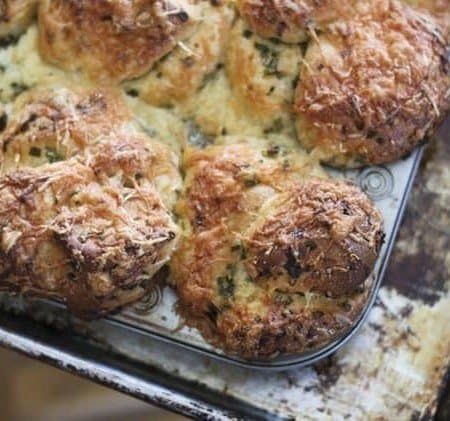
What we have here is little pieces of cheese bread dough tossed with minced scallions (Because onions and Cheddar cheese? They’re like *this*!) and olive oil, plopped into muffin tins and capped with a serious amount of cheese. How much? Well, about this much…

In case you’re mentally tabulating, that’s roughly a quarter cup of shredded cheese on top of each of these little golden brown beauties. (That doesn’t count how much went into the dough. Hubba hubba.)

In short, this bread is a cheese lover’s dream. Served by itself as a hearty snack or alongside a piping hot bowl of whatever soup flicks your Bic, this is, simply put, the stuff.

Now I’m going to tell you to grate your own cheese for this. I try not to be super bossy about this kind of thing, but I’m going to put on my mom voice right now. Whether you do it, your food processor does it for you or you bribe some burly bicep-ed man in the house with promises of cheesy kisses, I don’t care… Just don’t use the stuff in the bag (not that I’m opposed to that sometimes) because it usually is treated with stuff to make the shreds stay separate for long periods of time on the store shelves. There’s something about the way cheese you’ve shredded yourself melts that just plain makes this taste better.

I have another piece of unsolicited advice for you.  Use the extra sharpest Cheddar you can find for this bread. You want the tang and punch and wow and “I AM CHEESE” presence that only extra sharp Cheddar can deliver. Your extra-Cheddar perseverance will be rewarded. Unless, of course you really don’t like extra sharp, in which case you should substitute away!

I want you to know that I accidentally fell face first into this plate after I took these pictures.

It’s okay, though. I only ate the ones I licked.

Mini Cheddar Scallion Monkey Breads

Mini Cheddar Scallion Monkey Breads

Bite sized morsels of cheese-laced bread dough tossed with minced scallions (Because onions and Cheddar cheese? They're like this!) and olive oil, arranged in muffin tins and capped with a serious amount of cheese then baked to crisp topped, deep golden brown perfection.

The dough for this is the Cheese Bread recipe from the King Arthur Flour Baker's Companion.

Ingredients

    For the dough:
  • 1/4 cup water
  • 1 cup whole milk
  • 1 1/4 teaspoons salt
  • 1 tablespoon sugar
  • 3 1/2 cups bread flour (can substitute all-purpose flour if necessary)
  • 2 1/4 teaspoons instant yeast
  • 1 cup finely grated extra sharp Cheddar cheese
  • 1/2 cup finely grated Parmesan cheese
  • 2 tablespoons softened butter
  • 2 teaspoons tomato paste
  • For the Scallion Oil:
  • 8 scallions, trimmed and minced
  • 5 tablespoons olive oil
  • 1/2 clove garlic, peeled and minced
  • To Top the Rolls:
  • 2 cups finely shredded extra sharp Cheddar cheese
  • 1/2 cup finely shredded Parmesan cheese

Instructions

Mix together all of the dough ingredients by hand, stand mixer or bread machine until a smooth, elastic dough forms. Let rise, covered, until doubled in bulk, about 1 hour.

Stir together all of the ingredients for the scallion oil in a small mixing bowl. Spray a 12-cup muffin tin with non-stick cooking spray. Toss together the cheese topping mixture. Set these all aside.

Turn the risen dough out onto a clean counter and divide into 36 equal-ish sized pieces. Roll each piece in the scallion oil, pushing scallion bits into the dough. Put 3 pieces in each of the 12 muffin cups. Let rise for 30 minutes in a warm, draft-free place.

Preheat oven to 375°F. As the oven preheats, evenly divide the cheesy topping mixture over each of the risen monkey breads. Bake for 22-30 minutes, or until the bread is set and the cheese is golden brown and crusty on top of each monkey bread.

Let the bread cool for 5 minutes in the pan and then turn out onto a cooling rack. Serve warm or room temperature.

http://www.foodiewithfamily.com/2012/01/16/mini-cheddar-scallion-monkey-breads/

No-Knead Rosemary Crescent Rolls

Each Thanksgiving that I have spent as an adult, whether we were eating at home or taking to the road to visit relatives, I have made two kinds of rolls; Honey Potato Wheat Rolls and Crescent Rolls. The truth is, though, that I have eaten one or both of these every single Thanksgiving of my life. I grew up on them. Both of these roll recipes are handwritten by my grandmother on index cards with her notes and advice. I can almost feel a hug from Grandma when I hold the recipe cards in my hand. I can see her wink at me while turning away from everyone and giving a secretive jerk of her thumb over her shoulder toward the extra basket of rolls she stashed on top of the refrigerator for me. Well, I assumed they were from me. My Grandma wasn’t much given to secretive hand gestures.

I tell you this so you can understand how important those rolls are to me and how big a departure it was for me to even consider another roll. Don’t get me wrong, a gal can never have too many roll recipes*. But the mere thought of introducing a roll recipe that wasn’t my Grandma’s so close to Thanksgiving about gave me the vapours**.

*As evidenced by my over-the-jean roll against which I continually do Pilates battle.

**Not that my Grandma minds. She’s all about innovation at 85. I’m the one with the change issues.

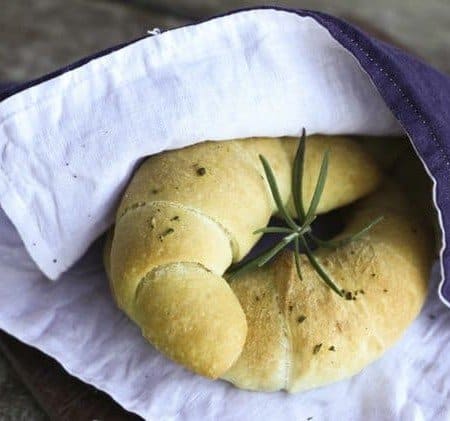
All this to say that it would clearly take something pretty special to motivate me to play with a new roll recipe more than a week into November. And to try one that even superficially resembled my Grandma’s crescent rolls? GASP. I’m telling you, if I was in therapy, they’d tell me I was making progress. I’d hate to let them down, but I would have to be honest and say it’s because Zoë François of Artisan Bread in Five Minutes a Day exercised some sort of voodoo mind control with her Rosemary Crescent Roll recipe.  It was inevitable that I was going to make these. I am a sucker for all things rosemary. I said to myself, “I’m just going to try making these. It doesn’t mean I’ll make them for Thanksgiving.”

I decided to do a little experimentation and try ABin5′s Olive Oil Dough vs. my own No-Knead Semolina Dough recipe. I went all scientific for the job, too. I weighed dough. I rolled, prepared and baked it identically. I served it to an audience (Hi, Austins!) willing to observe my “this one in the right hand, this one in the left hand and never the twain shall meet” rule. They gamely ate two crescent rolls each (one of each variety) and pronounced them both really, really, really good.  When I asked which they liked better, they pretty much agreed that they liked them both equally. The ABin5 one was narrowly pegged as the one they’d rather eat as a sandwich roll (because I made mine large) and my No-Knead Semolina Dough was narrowly preferred as the one to eat solo.

I turned to my husband as the tie-breaking vote. He ate one roll from each batch. He chewed thoughtfully. He contemplated. And then he said, “They’re both awesome. ”

So it looked like it was going to boil down to whichever dough I had on hand the next time I  made the rolls, because there was obviously going to be a next time. The question was when. Then he said it.

“I think we should have these at Thanksgiving.” I looked at him like he had five heads.  “B-b-but Grandma’s rolls!” I stammered.

“I just really like these. Both versions. If I had to choose, I’d go with these.” (And here he gestured with the hand holding the ones made from my semolina dough.)

Then I thought about how the crisp-crusted, soft-crumbed, rosemary enhanced rolls would taste sopping up gravy. I thought of slicing open a twisty, tender, herb studded crescent roll and stuffing in pieces of leftover roasted turkey and maybe, just maybe sneaking some cranberry sauce in to boot. I considered my late night Thanksgiving tradition of standing at the refrigerator door long after the kids are in bed and dunking a roll in the leftover gravy and I had a realization.

This year, there would be three kinds of rolls at our table.

Progress, she marches onward in the form of rosemary and bread. That kind of change I can live with.


No-Knead Rosemary Crescent Rolls

No-Knead Rosemary Crescent Rolls

These crisp-crusted, soft-crumbed, rosemary studded rolls are perfect for sopping up gravy, leftover turkey sandwiches with cranberry sauce,and late night dunking into the gravy boat in front of the refrigerator door. Bonus: They're created with dough you can make up to 10 days in advance of baking!

Ever so gently adapted from and with thanks to Zoë François

Ingredients

  • 1 pound No-Knead Semolina Dough or olive oil dough from Artisan Bread in Five Minutes a Day.**
  • 2 tablespoons finely chopped fresh rosemary
  • 3 tablespoons extra virgin olive oil
  • coarse salt for sprinkling

Instructions

Line a half-sheet pan (or two smaller baking sheets) with parchment and set aside.

Moderately flour a clean work surface and your ball of dough.

Roll the dough into a circle that is about 1/4-inch thick. Brush the circle generously with olive oil, sprinkle evenly with the chopped rosemary and sea salt.

Cut the circle into 8 equal wedges. Take one wedge into your hands and gently stretch the pointed end of it while holding onto the wide end to make the piece longer.

Lay the piece back on the work surface and pull the wide end to stretch it gently. Begin rolling the wide end tightly, jelly-roll style, toward the pointed end. When you get close to the pointed end, give it another gentle stretch and wrap it tightly around the center.

Lay each roll on the prepared pans, with the point side down to keep the dough rolled. Be sure to leave ample room between the rolls for expansion. If desired, curl the ends of the rolls gently toward the center to enhance the shape of the finished rolls. Let rise, uncovered, in a warm, draft-free place for up to an hour, or until puffy.

Preheat oven to 475°F.

Brush the rolls one more time, generously, with olive oil then bake, rotating midway through the cooking time, for about 20 minutes, or until beautiful golden brown.

http://www.foodiewithfamily.com/2011/11/12/no-knead-rosemary-crescent-rolls/

Do you have recipes that you break out every year or do you do something different every Thanksgiving? I must know!


Homemade Hot Dog Buns

I make my own hot dog buns.

I’ve had a couple friends tell me -in the most loving way possible- that I’m off my nut for making hot dog buns. “You can get them anywhere! You’re certifiable!”

Why in heaven’s name would I make hot dog buns when there are so many available to buy? The short answer is because I have never been able to buy a hot dog bun that holds a candle to these*.

*Every hot dog bun I’ve ever purchased has one or more of three massive problems; too soft, too stale, too crumbly. More often than not, that’s compounded with funky, nasty preservatives and ingredients that I try to avoid giving my family. (Hellooooo, High Fructose Corn Syrup. I’m looking at you.)

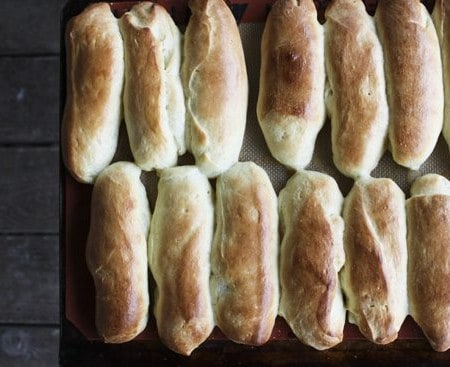
These buns are the be-all-and-end-all, the ne plus ultra, the Hot-Diggity-Dog of hot dog buns. They’re buttery. They have real flavour! They’re soft on the inside with a fine textured crumb, but they have a little chew to them. Unlike their styrofoam store-shelf cousins, my buns hold up to whatever toppings you want to load onto your hot dog. Wanna Matlock dog*? These are the buns for the job.

*Does referencing Matlock age me? I feel my hair turning blue just saying it. Seriously, though, Matlock knew how to eat a hot dog. Because he was a real man, right? Just as real as Opie Cunningham.

Just look at this. Can you imagine a store bought roll that comes close to being able to do this?

I promise you that this held all of those toppings when I hoisted this chili dog to my mouth. It held on clear through the ritual sopping up of the chili from the plate.

For the record: Those friends who thought I was bonkers do so no longer because they’ve all eaten my hot dog buns now. They are convinced.

So yeah. It takes a little longer to make your own buns than to buy them. I’m not a nincompoop, though. I use my time and effort where it makes the biggest difference.  And here? It makes a world of difference here.

While it does take a little time, it’s not a difficult process. Before I get to the recipe, I want to show you how to form the rolls. If you already know how to do this, scroll to the bottom for the recipe. The key to making the best hot dog buns is to try to cut your dough into (roughly) equal-sized pieces before you begin forming it.

Each batch of dough makes fifteen standard sized buns or twelve large hoagie or Italian sausage style buns. I have a double batch here. You start by dividing each batch of dough into 3 pieces of equal size or weight. I’m partial to using my kitchen scale to ensure I’m breaking the dough down into close-to-equal sized  pieces. Is this necessary? Not strictly, but it makes my little inner Obsessive Compulsive Chef sing for joy. If you don’t have a kitchen scale, or refuse to use one on moral grounds, just eyeball it and do your best to break them down equally. Gently form each piece into an oblong log.

Cut each of the logs into 5 equal pieces for standard sized hot dog buns or 4 equal pieces for Italian sausage or hoagie rolls.  Working with one piece at a time, pat the dough into an oval. (You can see inches marked on the bottom of the dough mat I used.)

Use the edge of your hand to indent the dough down the length of the center of the dough.

Roll the dough around the indentation you created.

Lightly pinch together the seam.

Turn the dough seam side down and use the flats of your hands to roll it back and forth until it reaches about 6-inches in length. Tuck any funky shaped ends under so you have a tube of dough with flat ends.

After rising and before baking, brush the rolls generously with buttermilk. (Remember how easy it is to make your own?)

4.7 from 3 reviews

Homemade Hot Dog Buns
Author: 
Recipe type: Bread
Prep time: 
Cook time: 
Total time: 

Serves: 12-15
 

Homemade Hot Dog Buns elevate an ordinary hot dog meal into an extraordinary experience. Soft, buttery, flavourful, and able to hold up to infinite toppings, these buns put all supermarket rolls to shame.
Ingredients
  • 1¼ cups lukewarm milk
  • 1 large egg, beaten
  • 6 tablespoons butter, softened to room temperature, cut into pieces
  • 3 tablespoons sugar
  • 4 cups bread flour (You can substitute all-purpose flour if necessary.)
  • 3 tablespoons instant potato flakes
  • 1 tablespoon vital wheat gluten (optional, but it improves the final texture.)
  • 2 teaspoons kosher salt
  • 2 teaspoons instant yeast
  • ½ cup of cultured buttermilk, for brushing

Instructions
To mix dough in a bread machine:
  1. Put all ingredients except for the buttermilk in the pan. Program bread machine for the dough cycle and hit start.
To mix dough in a stand mixer:
  1. Put all ingredients except the buttermilk in the bowl of a stand mixer fitted with a dough hook. Mix on low speed for 10 minutes, or until a smooth, elastic dough is formed. Remove the bowl from the mixer, cover with a tea towel and let rise in a warm, draft-free place until doubled in bulk, about 1-2 hours.
To mix dough by hand:
  1. Add all ingredients except for the buttermilk to a large mixing bowl. Use a sturdy wooden spoon or your hand to stir until a shaggy dough forms. Turn out onto a lightly floured surface and knead until a smooth, elastic dough forms, about 15 minutes. Place in an oiled bowl, cover with a tea towel and let rise in a warm, draft-free place until doubled in bulk, about 1-2 hours.
To form rolls:
  1. Lightly grease an 11-inch by 13-inch baking sheet or line with a silpat or parchment paper. Set aside.
  2. Divide dough into 3 equally sized pieces and form into logs.
  3. Divide each log into 5 equal pieces for standard sized rolls or 4 equal pieces for larger Italian sausage or hoagie rolls.
  4. Working with one piece at a time, pat each piece out into an oval.
  5. Press an indentation down the length of the center of the oval with the side of your hand.
  6. Roll the dough up around the indentation.
  7. Pinch the seam together lightly.
  8. Roll the pieces gently seam side down until about 6-inches in length.
  9. Transfer to the lined baking sheet, leaving about 1 inch between the pieces, and let rise in a warm, draft-free place until puffy, about 30 minutes.
  10. Preheat oven to 375°F.
  11. Brush the puffy dough generously with buttermilk.
  12. Bake for 18-22 minutes, or until deep golden brown.
  13. Cool the rolls on a rack for at least 10 minutes before slicing.
To serve as a hot dog or sausage roll:
  1. Make a slice down the center of the top of the roll nearly through to the bottom. Gently pry open with your fingers to hold the hot dog or sausage.
To serve as a hoagie or sandwich roll:
  1. Lay the roll on its side and slice it in half about midway up the roll.
To store leftovers:
  1. Wrap tightly and store at room temperature for up to two days. They can be wrapped tightly and frozen for storage up to a month.


Shortbread Cookie Spoons (Spookies)

You know how sometimes everything just comes together at the right time? Those moments where inspiration strikes at the same time that you have all the supplies to make it happen? This is one of those moments.

I had just made some velvety, luscious chocolate custard and one of my friends started talking about the world’s best shortbread cookies that she just made. I wished aloud that I had a couple of her cookies to dunk in my custard and asked for the recipe.

Lightbulb.

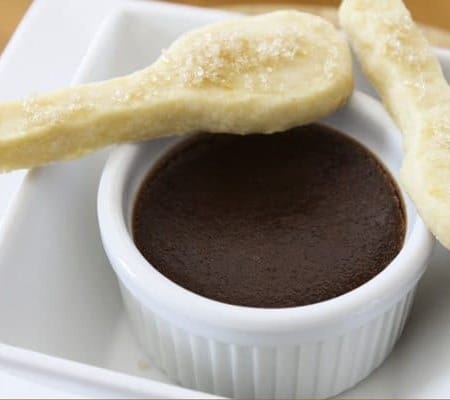
I was going to make cookies that were spoons and eat my custard with them. Were they cookies? Were they spoons? Yes, they were both; they were Spookies*.

*Like a spork, but much more delicious.

I imagined them wrapped up in cellophane and a bow as the prettiest cookie at the bake sale, bagged up with a gift tag as a hostess gift, then the dipping and dunking vistas opened up before me;  Spookies dunked in custard (as I served them), Spanish Style Hot Chocolate, coffee, hot cocoa, pudding… What couldn’t Spookies do?

I messed with my friend’s recipe ever so slightly, substituting orange zest for lemon zest out of necessity and  rice flour for half of the all-purpose flour in her recipe. Why? Well, the best shortbread cookie I have ever had in my entire life came from an elderly Scottish woman who told me she the secret to truly wonderful shortbread was to use half all-purpose flour and half rice flour.  She said as long as you used real butter and the flour blend, everything else would fall into place.

Every shortbread I’ve made since has incorporated her trick. To test her (now our) theory, I did a side-by-side comparison on my friend’s recipe. I made a batch using all-purpose flour and one using the blend of all-purpose and rice flour. They were both outstanding, but the one made with rice flour was slightly more delicate in crumb and flavor.  The verdict: Half the crew here was in the rice flour camp and half was in the all all-purpose camp but everyone agreed that they would eat either without hesitation. If you can lay your hands on a bag of rice flour, I encourage you to make it as written below. If you can’t, substitute another cup (4 1/4 ounces, by weight) of all-purpose flour for the rice flour. It’ll still be delicious!

Note: To the best of my knowledge, there aren’t any spoon shaped cookie cutters in the world. I did the next best thing. I used brute force and a pair of pliers to bend an old bell-shaped medium-sized (2″) cookie cutter into a spoon-ish shaped cutter. It was a bit wonky, but effective and efficient. If you’d prefer, you can trace a tablespoon sized measuring spoon on cardboard and cut that out to use as a template.  I found it much simpler to bend the tar out of a cookie cutter and use it than to cut around a cardboard template repeatedly, but do as the whimsy moves you!

Shortbread Cookie Spoons

Gently adapted from Krysta, Evil Chef Mom.

Scroll to the bottom for an easy-print version of this recipe!

  • 2 sticks (8 ounces, by weight) unsalted butter, softened to room temperature, cut 1/2-inch pats.
  • 1/2 cup superfine sugar (Can be made by placing granulated sugar in a blender on HIGH for about twenty seconds.)
  • 1/2 teaspoon vanilla extract
  • zest of 1/2 an orange
  • 1 cup (4 1/4 ounces, by weight) unbleached all-purpose flour
  • 1 cup (5 ounces, by weight) white rice flour
  • 1/8 teaspoon kosher salt
  • 1/2 cup Bourbon and Vanilla Infused Sugar (preferably Bourbon infused) or granulated sugar

In a small mixing bowl, whisk together the flours and set aside.

Fit a stand mixer with the paddle attachment  and beat butter on medium high until butter is totally smooth, about 1 minute. Change mixer speed to low, and with it running, gradually add the superfine sugar, then the vanilla, orange zest and salt, and continue mixing until it lightens in color. Turn mixer off, add about 1/3 of the flour blend. Turn mixer onto low and incorporate all the flour. Turn off the mixer, scrape down the sides and add another third of the flour blend.  Again, mix on low until incorporated, then turn off the mixer, scrape down the sides and add and blend in the final installment of flour. Continue mixing on low until the dough forms a fairly cohesive mass.

Turn the dough out onto a floured work surface and knead four times, or until smooth. Dust the top of the dough with flour. Gently roll the dough out to an even thickness between 1/4- and 1/3- of an inch.

Line two cookie sheets with silpats or parchment paper and place to the side.

Use your spoon cookie cutter (or trace around the edge of our template with a sharp paring knife) and carefully transfer the shapes to the lined cookie sheets, placing them 1-inch apart.  Collect the scrap dough, gently push it back together and roll out, cutting more cookies. Continue gathering scraps, re-rolling the dough, and cutting until all the dough has been used.

Place the cookie sheets in the refrigerator to chill for 30 minutes.

Preheat oven to 350°F with racks positioned in the upper and lower thirds of the oven. When hot, place one cookie sheet on each rack. Cook,rotating the trays from front to back and top to bottom after 7 minutes, for a total time of 15 minutes or just until they become golden brown around the edges. Remove the trays from the oven and immediately sprinkle the raw sugar over the hot cookies. Cool the cookies completely on the pans.


Store in an airtight container at room temperature. These cookies just improve with age.

…Want your own bourbon and vanilla infused sugar? That’s coming your way tomorrow! I guarantee you want this recipe. Think of it stirred into coffee, tea, sprinkled over cookies, etc… I thought so. See you tomorrow!


Shortbread Cookie Spoons (Spookies)
Author: 
Recipe type: Dessert, Cookie
Prep time: 
Cook time: 
Total time: 

Serves: 15
 

These lightly orange-scented, spoon shaped shortbread cookies turn the ultimate cookie into the ultimate dipper. Dunk in hot chocolate, coffee, tea, or milk. Don’t stop there, though. Try them in pudding, custard, and ice cream!
Ingredients
  • 2 sticks (8 ounces, by weight) unsalted butter, softened to room temperature, cut ½-inch pats.
  • ½ cup superfine sugar (Can be made by placing granulated sugar in a blender on HIGH for about twenty seconds.)
  • ½ teaspoon vanilla extract
  • zest of ½ an orange
  • 1 cup (4¼ ounces, by weight) unbleached all-purpose flour
  • 1 cup (5 ounces, by weight) white rice flour
  • ⅛ teaspoon kosher salt
  • ½ cup raw sugar (preferably Bourbon infused) or granulated sugar

Instructions
  1. In a small mixing bowl, whisk together the flours and set aside. Trace a measuring spoon (tablespoon size) onto cardboard and cut out to use as a template or bend a medium-sized metal cookie cutter into a spoon shape. (Of course, if you happen to have a spoon sized cookie cutter that will work!)
  2. Fit a stand mixer with the paddle attachment and beat butter on medium high until butter is totally smooth, about 1 minute. Change mixer speed to low, and with it running, gradually add the superfine sugar, then the vanilla, orange zest and salt, and continue mixing until it lightens in color. Turn mixer off, add about ⅓ of the flour blend. Turn mixer onto low and incorporate all the flour. Turn off the mixer, scrape down the sides and add another third of the flour blend. Again, mix on low until incorporated, then turn off the mixer, scrape down the sides and add and blend in the final installment of flour. Continue mixing on low until the dough forms a fairly cohesive mass.
  3. Turn the dough out onto a floured work surface and knead four times, or until smooth. Dust the top of the dough with flour. Gently roll the dough out to an even thickness between ¼- and ⅓- of an inch.
  4. Line two cookie sheets with silpats or parchment paper and place to the side.
  5. Use your spoon cookie cutter (or trace around the edge of our template with a sharp paring knife) and carefully transfer the shapes to the lined cookie sheets, placing them 1-inch apart. Collect the scrap dough, gently push it back together and roll out, cutting more cookies. Continue gathering scraps, re-rolling the dough, and cutting until all the dough has been used. Place the cookie sheets in the refrigerator to chill for 30 minutes.
  6. Preheat oven to 350°F with racks positioned in the upper and lower thirds of the oven. When hot, place one cookie sheet on each rack. Cook,rotating the trays from front to back and top to bottom after 7 minutes, for a total time of 15 minutes or just until they become golden brown around the edges. Remove the trays from the oven and immediately sprinkle the remaining sugar over the hot cookies. Cool the cookies completely on the pans.
  7. Store in an airtight container at room temperature. These cookies just improve with age.