Blueberry Butter Tarts with Mascarpone Ice Cream

We have a winner!  And I have my power back!  Yes.  I was without power for nearly two days.  With two stinky dogs, sixteen stinky chicks, five stinky chickens, five stinky kids and two marginally less stinky adults, our power came back none too soon.  No power translated to no pump for the well, no lights, and *gasp* no computer.  We made due by enjoying each other’s company, eeking out our water, making hot dogs on the grill, reading lots of books and playing lots of board games.  Not bad, not bad…  But I was eager to come back here and announce the winner of the Raspberry Cake Bar Gift Basket that was so kindly offered by our friends at Shelf Reliance/THRIVE.  After plugging our comments into the random.org sequencer, we have a winner.  Drumroll, please !

(Insert drumroll here.)
Our winner is: Traci!  If you’re reading this, Traci, please email me with your mailing address and I’ll forward it on to the nice folks at Shelf Reliance/THRIVE.  And may I just suggest that the rest of you check out their website?  I highly recommend their freeze-dried pineapple.

It is officially blueberry season around here and I have blueberries coming out of my ears.  Almost literally.  I border on obsessed with blueberries.  I eagerly watch the local papers and bulletin boards at grocery stores for any clues about when blueberry patches open up.  I gear up the boys by repeatedly reading Bruce Degen’s “Jamberry”.  I tantalize everyone’s tastebuds with talk of blueberry crumbles, cobblers, ice cream, smoothies, muffins, pancakes, waffles, and dumplings. And for The Evil Genius, I keep mentioning blueberry daiquiris.  (What?  It’s a very manly, evil drink.  As evidenced by the fact that he loves them.  Hello.)

Last week, while picking up our new baby chicks from the local feed mill, I saw it.  IT!  The sign saying the blueberry patch was going to open the following Monday;  in three days!  I drove home at warp speed.  (Well, as ‘warp’ as you can get in an ancient purple Ford Windstar.) I counted, washed and prepped my pint jars; grabbed backpacks; located all of our Sigg bottles and miraculously found the necessary caps; popped the cooler into the back of the van; and grabbed the checkbook.  It took me three days to do this.  Have I mentioned I have five kids?  And that they’re human locusts?  They eat everything in their path except for the Legos which I’m pretty certain reproduce asexually whenever I’m not looking.  But that’s another cup of coffee.  Back to the blueberries.

Monday morning, at the crack of 9 a.m. I loaded all the kids into the van.  By 10 a.m., I had re-loaded them in the van after feeding them their breakfasts. Whoopsie.  I was a little excited to head out there… By 12 p.m., I had them all strapped into their seats. (This had to happen multiple times for some of my children [who shall remain unnamed] who remembered they had to feed the dogs, grab their water bottles from the top of the piano[?], grab a book in case they felt like reading in the patch, and/or ‘go potty’ after being strapped the first time.) And by 1 p.m., we were on our way.  After backtracking to drop off an overdue book at the library, we finally made it to the patch at the bright and early hour of 1:45 p.m.  The patch was only open until three.  By the time we got down the half mile path to the blueberry patch it was 2 o’clock and we knew we had to haul keister.

I have to brag on my kids for just a minute.  They are championship blueberry pickers.  They have been trained (very loosely speaking) from a very tender age to pick berries and they are good at it. Each of my boys has visited the berry patch from the time they were in strollers or backpacks.  When they were tiny, I carried them on my back to the patch and let them ride along while I picked.  When they were old enough to eat solids, I’d position their stroller in a shady spot in front of a berry bush and let them pick and eat while I picked for the freezer and jam jars.  The eldest three now pick like maniacs.  They fill buckets nearly as quickly as I do.  I still win because I’m taller and can reach further into the brush.  I don’t expect that to last for long, but for now, the bragging rights are still tenuously mine.)  We have a couple traditions we observe.  The first berry picked when entering the patch is picked with our teeth; straight from the branch.  I promise you’ve never had a berry that tastes as good as that first sun-warmed blueberry.  And as we leave the patch, we each take and eat one blueberry from the last bush on the way out.  I’m not sure how we got started doing either of those things, but they’re as much of a part of our summer as Independence Day, shorts, sprinklers and corn on the cob.

With buckets tied to our waists, we all threw ourselves into the task and picked ‘like the wind’. (That was how Aidan kept exhorting his brothers to work more quickly, “Pick the like the WIND guys!  We only have… Wait, Mom?  How much longer can we pick?)  Rowan, who picks more like a gentle breeze than the wind, managed half a bucket despite his tiny size and three years of age since, unlike most of his brothers, he doesn’t eat his berries as he picks them.  Ty observes the inaugural eating-of-the-berry tradition, but that’s as far as he’ll go with the eating. He lost a few when he ‘accidentally’ threw them at the back of Aidan’s head, but he assured me they were the squishy berries and he would “never, EVER throw a good berry!” and still filled his bucket.  Aidan and Liam each filled a bucket.  Leif might have, but he surely ate ten berries to every one that landed in his pail.  I filled two buckets and gathered the troops for our weigh in at the scales. When the final tally was in, we had managed to pick twenty-three pounds in a little under an hour. As we headed back for the trail to get our bounty to the van, the owner told us that he expected it to be a very short season, so we should get all our picking done in the next couple days.  We had put a twenty-three pound dent in our usual ninety-pound goal, so we felt pretty good.

Driving home, an involuntary “Booyah!” and fist pump escaped me.  Where did THAT come from?  My inner super jock?  I’m not a ‘booyah’ kind of girl.  I’m more of a “Heck, yes!” type.  Blueberries move me, I tell you. (And they move Leif in different ways since he eats so many of them.  But I digress.)

Blueberries are one of the main foods I preserve. They’re so easy to pick, freeze or make into jam.  Having a freezer stocked with blueberries and shelves lined with purple blueberry jam is like having money in the bank.

And here I interrupt myself again.  Having food  laid up for the winter is always like having money in the bank.  I was really excited to learn earlier this year that one of my good blogging buddies, Natalie from Hot Off the Garlic Press,  was tapped to be a spokesperson for Shelf Reliance/THRIVE Foods.  This is a company that I can dig.  They specialize in food storage, food rotation and emergency preparedness products.  If you’ve hung around here at Foodie With Family much, you know this is near and dear to my heart.  We live in the middle-of-nowhere and we have sketchy, unreliable vehicles.  When the hard winter hits, which it inevitably does, I need to know that I have food to feed my mammoth family for however long we’re socked in by snow.  How does this tie in with Shelf-Reliance/THRIVE and Nat?   A little while ago, Nat contacted me on behalf of Shelf Reliance/THRIVE and asked if I’d be interested in getting some samples to try out and hosting a giveaway of their products.  Food giveaway?  Heck, yes!  (See?  I told you I’m not a booyah girl.) They sent me some goodies; freeze dried pineapple chunks, sweet corn and strawberries, and dried whole eggs.  Useful and tasty things, all, but let me tell you about those freeze-dried pineapple chunks.  We eat through food quickly at this house, but those pineapple chunks literally disappeared in a split second around the campfire.  The boys, The Evil Genius, my brother-in-law and sister-in-law and I did our very best locust impersonations as we descended on that poor unsuspecting bag of pineapple chunks and inhaled it.  They were amazing.  Buy some.  (And order extra for me, please!)   Oh my goodness, am I off topic now or what?  Tune in to the end of the post for more on the giveaway and now back to our regularly schedule blueberry programming.

I went straight to work after I got home.  I made two batches of jam, froze* several sheet pans full of blueberries and still had a few cups left over.  Blueberry tarts were in order.

*Want to know the absolute best, bar-none, method of freezing blueberries so you can take just what you need from the bag without breaking out your ice pick?  First, pick at a place that doesn’t spray their berries.  That makes the next step possible.  Second, lay the unwashed- YES! UNWASHED!- berries on rimmed metal sheet pans and put them in the freezer.  When the berries are frozen solid, quickly transfer them to labeled zipper-top bags.  And that’s all there is to it!  Since the berries haven’t been sprayed, you don’t have to wash chemicals off of them.  And best yet, since you’re stinking them in the freezer, any bugs that might’ve hitched along for the ride will die and fall away from the berries. Because you didn’t wash the berries, they won’t stick together and having frozen individually, they’ll rattle around like delicious little marbles in their zipper-top bags. How much time did you just save between not washing them and not having to pry them apart?  You can thank me by sending blueberry muffins.

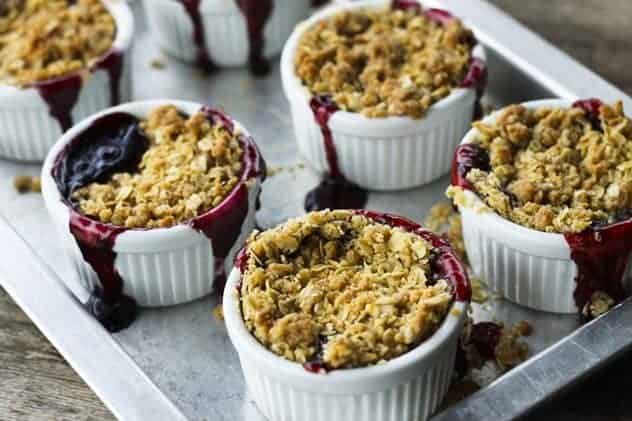
My favorite blueberry tarts start with a fabulous crust.  The recipe for my favorite tart crust ever can be found here. And when I have a blueberry tart, I want to taste fresh blueberries and feel like I’m eating them straight from the field;  I want them to pop in my mouth. I cooked down some of the underripe blueberries* with the tiniest bit of lemon juice, sugar, and cornstarch and folded that in with the rest of the fresh berries. The end result was a sweet butter tart crust topped with bursting-with-juice blueberries coated with sweet, sticky blueberry syrup.  Pure summer bliss.  Long sigh.

*Why underripe?  Because they have the highest level of naturally occurring pectin in blueberries.  It’s an old jam-maker’s trick.  Toss a handful of underripe berries in with your jam and you end up with a firmer setting, thicker jam.

You might think that would be fabulous enough, right?  No way!  Gild that lily, baby.  I topped it with Mascarpone Ice Cream.  Mascarpone Ice Cream is only four ingredients blended together and frozen in an ice cream maker; Mascarpone cheese, cream cheese, heavy cream and dulce de leche.  Did I really do that? Yes.  Yes, I did.  And I don’t regret it even though my thighs may long pay the price for the glorious amount of calories I consumed in the process.  The dulce de leche is a background player in the ice cream lending sweetness and just a hint of caramel to the creamy mascarpone base. When I tell you this is the richest, most decadent ice cream I’ve ever made will you please believe me? On second thought, don’t believe me.  Make it yourself.  If velvet were edible, delicious and could be made into ice cream, this is what it would be.  When you throw a scoop of this on top of the Blueberry Butter Tarts you will think you’ve died and gone to heaven. This dessert is officially on my list of items I would eat for my last earthly meal.

blueberrytartmascarponeicecream 11

A note about the Mascarpone Ice Cream.  This stuff freezes up harder than a brick.  Unlike most ice creams, this is one you want to serve relatively quickly after churning.  You can store it well in the freezer, but you’ll have to plan to have it soften up on the counter for between fifteen minutes to a half hour, depending on the temperature of your room, before serving.

For a photo-free, printer friendly version of this recipe, click here!

Blueberry Butter Tarts with Mascarpone Ice Cream

Ingredients for the tarts:

8 individual sized fully-cooked butter tart shells or 1- 9″ fully baked butter tart shell (click here for the recipe!) You may recognize this crust as being the same one used in the Grapefruit Tarts and the Chocolate Truffle Tarts

blueberrytartmascarponeicecream6

4 cups of blueberries, washed and picked over

blueberrytartmascarponeicecream3

1/2 cup of water plus 2 Tablespoons of water, divided

2 Tablespoons cornstarch

1/2 cup (or more, to taste) granulated sugar

2 teaspoons lemon juice

To make the tarts:

Combine 2 Tablespoons of water with the 2 Tablespoons of cornstarch with a fork or small whisk in a measuring cup.  Set aside.

Put the berries into a large mixing bowl.  Measure out 1 cup of the berries, including as many of the underripe ones as you can find, into a heavy-bottomed saucepan over high heat.

Add 1/2 cup of the water to the berries in the pan, cover.

blueberrytartmascarponeicecream4

When the berries and water reach a boil, remove the lid, lower the heat and simmer, stirring constantly, until most of the berries have burst and the liquid has begun to thicken, about 4 minutes. While stirring constantly, add the cornstarch mixture, the sugar and the lemon juice to the pan.  Simmer until the juices become thick and translucent, about 1 minute.

Remove from the heat and pour over the remaining berries in the bowl.

blueberrytartmascarponeicecream5

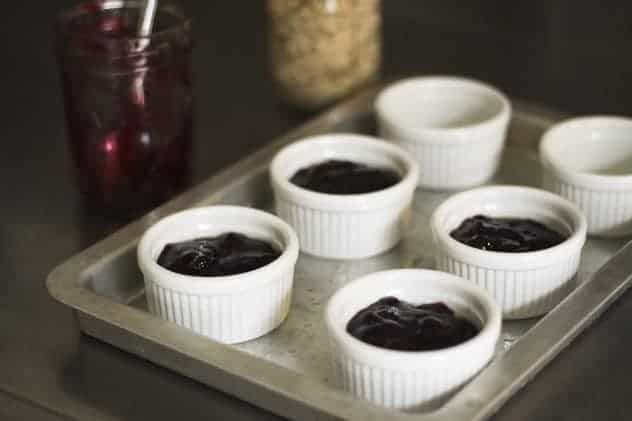
Toss gently to coat thoroughly.  Spoon the blueberry mixture into the tart shells.

blueberrytartmascarponeicecream7

blueberrytartmascarponeicecream8

blueberrytartmascarponeicecream9Look at how gorgeous the blueberries look.  Glistening, juicy, sweet, and vibrant; they’re so inviting.  Actually, they’re inviting me to plunge my face into this tart.

blueberrytartmascarponeicecream 10

Cover lightly with plastic wrap or a cake dome and allow to rest at room temperature for 30 minutes or more prior to eating.  Serve with whipped cream or ice cream.  Store uneaten tarts at room temperature for up to two days.

While the tarts are resting, you can make your ice cream…

Ingredients for the ice cream:

12 ounces fresh mascarpone

8 ounces cream cheese

2 cups plus 1/2 cup heavy cream, divided

2/3 cup dulce de leche

To make the ice cream:

Add all ingredients to a blender.  Blend until smooth.  (Alternately, you can whisk them in a stand mixer or use a hand-blender to combine the ingredients until smooth.)  Freeze according to the directions for your ice cream maker.  This is best served freshly churned. If you need to freeze it for later use, allow to soften on the countertop for between fifteen minutes and a half hour prior to serving.

And because good enough is never great enough, throw that Mascarpone Ice Cream on top of your Blueberry Butter Tarts.  Throw a bunch of it on top.  I did.  Ask my girth.  Since it’s growing big enough to speak for itself…

blueberrytartmascarponeicecream2

Hey!  I didn’t forget about the giveaway.  Those neat folks over at Shelf Reliance/THRIVE Foods have kindly offered to give away a gift basket full of tasty and practical things to one of my readers.  This Raspberry Cake Bar Gift Basket is stinkin’ adorable.

raspberrycakebargiftbasket

The contents of this basket?  Oh my word.  Listen to how they describe it on their site:

Now you can easily give your friends and loved ones the gift of great-tasting THRIVE with our Raspberry Bars Gift Basket. This tasty gift comes with all the THIVE ingredients you’ll need to make mouth-watering raspberry bars. Make someone happy today by sharing the joy of THRIVE Food Storage!

Each Raspberry Gift Basket includes:

1 Pouch of THRIVE White Sugar
1 Pouch of THRIVE Butter Powder
1 Pouch of THRIVE Whole Eggs
1 Pouch of THRIVE White Flour
1 Pouch of THRIVE Freeze Dried Raspberries
1 Raspberry Bars Recipe Card
1 Sturdy Mixing Bowl
1 Wooden Mixing Spoon

Adorable AND practical AND delicious.  And they want to give it to you!  Thanks for watching out for my peeps, THRIVE.

All you have to do to be entered in the contest is leave a comment below telling me what you’d do with this gift basket.  Keep it for yourself?  Give it to some newlyweds or your Grandma?  What would you do?  The suspense is killing me!

For an extra entry, sign up for the Shelf Reliance newsletter and leave a comment saying you did.  The winner will be announced here by next Monday, August 10th.

A Tutorial on Using Dried Beans

Ah wonderful beans.  We all love them for their taste.  I love them for their nutrition.  My boys love them for their, er, musical properties.

Ah wonderful beans. We all love them for their taste. I love them for their nutrition. My boys love them for their, er, musical properties.

UPDATE (12/10) :Since first writing this post almost two years ago, I have been experimenting with different ways to cook beans.  While I still use the crockpot method most often, I have changed on something.  I use salt at the beginning of the cooking time.  Really!  It doesn’t slow down the cooking of the beans a bit and leaves them much more flavorful than if you add salt at the end of cooking.  I stand (or rather, I sit, at this very moment) corrected.  Salt away!

Beans.  They are the perfect budget food.  They’re chock full of dietary fiber and nutrients, simple to store and able to leap tall buildings with a single bound. And they’re cheap! They’re so cheap (“How cheap ARE they?” screamed the crowd.  “So cheap they’re on the dollar menu!”) that there is no excuse to be without them.  Even if you’re so poor you can’t afford to pay attention, beans are still in your ballpark.   But -keeping it real here- unless you’ve grown up eating them or have been making them for years they can be a little intimidating to prepare and use.  And various well-meaning and well-researched cookbooks have you jumping through a billion hoops just to make a simple pot of unadulterated beans.  Not so beginner-friendly.

Why bother with dried beans and the extra work when you can buy canned beans super cheap?  Dried beans last close to forever when kept in a cool, dry cabinet.  They’re less expensive per pound and taste better than canned beans.  And -perhaps most importantly- they’re better for you than canned beans. When you reconstitute dried beans you control the amount of sodium in them and ultimately in the finished recipe.  When you start with canned beans you’re already starting at a super high sodium level (which can be a major health concern for many people.)  There is more, but I think you get the idea.  If you’ve never made dried beans before just do me a favor and try it at least once.  I am pretty convinced I can convert you…

Here’s my plan.  For the next few weeks, I’ll share a bean recipe with you on Thursday or Friday.  That will give you all weekend to try out your beanerific recipes.  This week, though, I’m going to start you out with a tutorial on how to get the dried little beasties to the point where you can use them in recipes…  And I warn you: My method is so easy that you may not want to prepare them any other way.   You’ll need a slow cooker, but if you don’t have one, you can snap up a basic model for $15 at le Walmart, le Target or le Blue-Light-Special.  Don’t let anyone tell you you need bells and whistles on a slow cooker.  All you really need are a ”HIGH” and a “LOW” setting.  Unless you’re cooking for one, get the largest of the basic slow cookers that you can afford.  I always cook more beans than we can eat in one meal.  You can portion them into individual servings and freeze them to add into soups and stews or make dips or refried beans with later.  We loves the bean dip around here!

Because it’s what I’m going to be using in tomorrow’s bean recipe, we’ll start out with cannellini (white kidney beans) today, but feel free to kick it off your bean adventure with any dried variety that floats your boat; pinto, chili, black, lima, garbanzo…  If you follow the method, you can make any kind of bean you want!

For a printer-friendly, photo-free version of this tutorial, click here!

Dried Beans: A Tutorial

Necessary equipment:

  • a slow cooker
  • a saucepan to boil water

Ingredients:

  • 1 lb dried beans, (in this case, cannellini), or about 2 cups dried beans
  • 2 bay leaves
  • 2-3 frozen onion tops or 1 cooking onion, peeled and cut in half from root to end
  • 2 quarts boiling water
  • salt to taste


Pour your dried beans into a colander.

Yes.  I sit outside on my porch steps while picking through beans.  It's the hillbilly in me.

Yes. I sit outside on my porch steps while picking through beans. It's the hillbilly in me.

Pick through to find grossly misshapen, discolored or otherwise nasty looking beans or small stones.

It feels nice to run your hands through dried beans.  There's something therapeutic about it.

It feels nice to run your hands through dried beans. There's something therapeutic about it.

These are what Leif calls "Yuck beans."  This is what you want to remove.

These are what Leif calls "Yuck beans." This is what you want to remove.

Because dried beans are about the size and color of some pebbles, it’s not completely bizarro to find little rocks, clumps of dirt or other natural bits and pieces occasionally tucked into the bags.  After you’ve picked through and removed any undesirables, give the beans a good hearty rinse under cold water, rubbing them around in the colander as they’re being cleaned.   This ensures that you remove any dirt your eagle eyes may have missed.  This also gives you a chance to look the beans over one more time.

beantutorial7

Add the beans to the crock of the slow cooker.  Place the bay leaves and onion tops (or onion) on the beans. Sprinkle about a teaspoon of salt, give or take according to taste, over the top.

I told you to hang onto those onion tops.  I may be cheap, but these things add a lot of flavor!

I told you to hang onto those onion tops. I may be cheap, but these things add a lot of flavor!

Pour in the boiling water. (It really does need to be boiling.  That is key!)

Pretty please make sure your water is boiling.  It is superdy duper important.  Just take my word for it.

Pretty please make sure your water is boiling. It is superdy duper important. Just take my word for it.

See?  Two inches of water over the beans.  This is perfect!

See? Two inches of water over the beans. This is perfect!

Quickly put the lid on the slow cooker, turn the cooker to “HIGH” and assess the situation.  If your beans are covered by at least 2 inches of water you’re doing fine.  If they’re covered by less than that, you’ll want to put some more water on the boil to add as soon as possible.  Set your timer for 3 hours and go do a crossword puzzle or play a board game with the family.

When three hours are up, you’re going to do a test.  Use a spoon to reach into the cooker and quickly extract a couple beans, replacing the lid immediately.  Hold them a few inches from your face and blow on them gently.  If the skins curl up off the beans, they’re most likely done.  Carefully take a bite through the center of one of the beans.  If it’s tender, you’re all set.  When you cook black beans or pinto beans, it’s not unusual for them to be done that quickly, especially if they’re relatively new beans.  If they are done, you can use them immediately, divide them into containers for the freezer or stick straight into the fridge -tightly covered- in their own liquid for use within four or five days.

If you’re cooking a larger (or harder) bean -such as cannellini, garbanzo, butter bean, etc…- you’ll likely find that the beans are not yet tender in the center.  Turn the slow cooker to the “LOW” setting, add additional boiling water (if needed) to cover the beans, and allow to continue cooking for about four hours before checking again.  Repeat the test; extracting a couple beans quickly and replacing the lid, blowing on the beans and biting them. If they’re tender, pull them from the heat and use immediately or store for later.  If they’re still tough, give them a couple more hours -making sure they have water to cover- and repeat the test. Do this until they test done.  The batch of cannellini beans I cooked in the photos for this tutorial simmered overnight on “LOW” before they were done.

Done!  Not looking gorgeous, but tasting fi-ine!  Pop a lid on this, stash in the fridge and come back tomorrow to make bean dip with me!

Done! Not looking gorgeous, but tasting fi-ine! Pop a lid on this, stash in the fridge and come back tomorrow to make bean dip with me!

In my own experience, garbanzo beans (the stuff of my hummus dreams) have taken the longest time to cook by far.  Just be prepared to let them cook away.  And, for pete’s sake, don’t sweat testing it if you have to let it cook overnight.  Beans are pretty resilient as long as you’re cooking them in enough water.  And if you overcook them there’s always bean dip!

If you choose to freeze the beans for later use, divide the beans into one or two cup servings between containers.  Be sure to leave enough room to ladle cooking liquid over them so they don’t dry out and to account for expansion of the liquid as it freezes.  Make sure the lid of the container fits tightly and stash in the freezer for later use.  (Alternately, you can carefully scoop the beans and their liquid into zipper-top freezer bags taking care to seal them completely.  The bonus of this method is they lay flat to freeze and thus take up less room.)  Frozen beans will keep well for about two to three months in the deep chill.  After that they begin to deteriorate a bit in texture and in taste.  Not the end of the world, but after that point they’re only good for bean dip.  (All roads lead to bean dip in this house.)

Tomorrow:  Come back for a wonderful *gasp* bean dip that can be served hot or cold.  Get those pita chips or veggie sticks ready!

Golden Crunchy Pickled Onions: Foodie Christmas Gift #7

These golden rings of crunchy, flavorful pickled onions are just about the perfect thing for topping salads or roast meat sandwiches,  adding a unique touch and pop of color to buffet spreads and antipasto trays, and accompanying cold meat loaf.  Plus, when you’ve fished the very last onion ring out of the jar, the leftover oniony, pickly syrup makes the base of the world’s best corned beef glaze. 

A jar of this, suitably decorated, makes a beautiful, unique (the good kind of unique- not the “That’s unique” kind of euphemism my Mom uses when she doesn’t want to hurt someone’s feelings), and memorable holiday gift. 

This is the kind of pickle you can create year-round, but this is an especially good time for the project.  Grab a bulk bag of onions and these end up being an incredibly budget friendly pantry and gift item.  As I have never seen a comparable product on store shelves, I don’t have a ‘homemade vs. purchased’ price breakdown.  I can still give you an idea of what the project will cost.


Cost Breakdown:

$7.99    A dozen pint canning jars with two piece lids

$6.00   Six pounds small to medium mild onions in bulk bag

$3.50   Cloves, peppercorns, turmeric, ground cinnamon, mustard seed and celery seed purchased in bulk

$3.50  One gallon cider vinegar

$1.50  Four cups sugar from a five pound bag

$0.30  Salt

Grand Total:  $22.79 for a dozen finished jars ($1.90 per jar)


Golden Crunchy Pickled Onions:  Foodie Christmas Gift #7


This recipe is from the out-of-print “The Good Stuff Cookbook” by Helen Witty.  If you can lay your hands on a copy snap it up!  It’s worth it’s weight in gold(en crunchy pickled onion rings!)

The quantities I’ve given below are for making a dozen jars.  If you don’t think you can find homes for all those jars, simply reduce the amounts called for below.  The original recipe was written to yield three pints.  I think you’ll find, as we did, that three pints was simply not enough.  You should allow two weeks after preparing these before eating.  They’ll be tasty right away, but they’ll be sublime if you exercise two weeks worth of patience!

If you intend to give a jar or two of this to appreciative friends as a gift, use a ribbon to tie serving ideas and directions for glazing a corned beef with the leftover syrup (directions after the pickled onion recipe!)


Ingredients:

  • 6 pounds small to medium mild onions
  • 72 whole cloves
  • 72 whole black peppercorns
  • 12 teaspoons mustard seed
  • 6 teaspoons celery seed
  • 8 cups cider vinegar
  • 2 cups water
  • 4 cups sugar
  • 2 teaspoons salt
  • 6 teaspoons ground turmeric
  • 1/2 teaspoon ground cinnamon

To each sterilized pint jar (for instructions on how to do this click here) add 6 cloves, 6 peppercorns, 1 teaspoon mustard seed and 1/2 teaspoon celery seed.  Set aside.

Peel and slice the onions into 1/4″ thick rings.  Separate the onion rings carefully and divide among the jars.

In a large nonreactive (in other words, glass, enamel or stainless steel) saucepan, stir together the vinegar, water, sugar, salt, turmeric and cinnamon over high heat.  Heat the syrup to boiling and then allow to simmer for 2 minutes. 

Pour the hot liquid over the onion rings being sure to leave 1/4″ of headspace.  Use a chopstick or skewer to remove air pockets that might be in the jars by running it along the inside wall of the jar.  If needed, add more hot syrup to maintain the 1/4″ headspace.  This prevents bacteria from growing, so don’t be tempted to half fill a jar. 

At this point, you can wipe the rims of the jars, put the clean two-piece lids on the jars and store them in the refrigerator for up to a year.  However, I recommend going the extra step and canning them so your giftees can keep them in the pantry or on the shelf until needed.  It’s not that difficult.  I’ll talk you through it!


To can the onion rings:

For those of you with canning experience I’ll first give the succinct version of how to do this: After sealing jars with new two-piece canning lids, boiling water process them for 10 minutes.  Cool.  Label.  Store.  Done.

For folks who may not have yet aquired the canning bug let me break it down a little more.  Carefully wipe the rims of your jars, place the flat lid on the jar top and screw the outer ring into place taking care not to over-tighten it.  If you do that, air cannot escape the jar during processing and that will prevent a good seal. 

Take your sealed jars and place in a large stockpot or canner.  Add enough tepid water to the pot to cover the jars by at least 1 1/2″.  Place a cover on the pot and bring to a boil over high heat.  Once water reaches a boil, set your timer for 10 minutes.  When time is up, use canning tongs (or regular tongs, in a pinch) and  extra doses of care and caution to remove the jars from the water to a cooling rack over a towel on your counter. 

Don’t fiddle with the hot jars.  Let the process take care of itself from here.  Allow to cool, undisturbed, overnight.  When jars are cool, wipe down with a clean, damp rag and allow to air dry.  Label your beautiful jars and store for up to a year in your pantry or cupboard.


To Glaze a Corned Beef with Golden Crunchy Pickled Onion Ring Syrup:

Preheat oven to 425°F- 450°F.  Place a hot, fully cooked corn beef in a roasting pan or baking dish witht he fat side up.  Drizzle generously with the leftover syrup and then sprinkle generously with brown sugar. 

Bake for about 15 minutes, basting occasionally with more syrup, until the coating has bubbled and formed a crust.  Remove from the oven and allow to rest about 20 minutes before slicing and serving.  This is fantastic hot and equally delicious cold and stuck between a couple slices of rye with sauerkraut, Swiss cheese and Thousand Island dressing.  I am looking forward to hearing from you around St. Pat’s day because I know you’ll love it!

Pickled Plums

Dusky, ripe, juicy plums....

Dusky, ripe, juicy plums....


I am sure that many of you are aware of Tastespotting, a site that serves to display pictures submitted by other websites; and these are not just ANY pictures–these are pictures selected to meet a certain aesthetic, and they are absolutely beautiful. For those of you not familiar with this resource, you can link with it here:   Tastespotting


Anyway, on to the plums….this being the season for plums and all, the pictures on Tastespotting that featured recipes using this fruit continued to catch my eye, and I finally gave in to two items in particular:  Sweet and Sour Plums with Vanilla and Bay Leaf (a kind of pickled plum) and Brown Butter Plum Cake. (Tastespotting has a search tool–enter the word “plum” and you should be able to find pictures of each of these.)  I picked up a half bushel of the lovelies from our local fruit vendor (much more cost effective in bulk!) and carried them home to be transformed:  First, the sweet and sour plums…


Well, I found I needed my daughter’s help with this recipe, because when I clicked on the picture, it took me to a lovely website, Hedonistin Blogspot, but all was in German. Having had French in school, I can usually wrangle some degree of meaning from French and even Spanish language texts, but German is beyond me. Fortunately, my daughter spent her senior year of high school Germany and is proficient enough in the language that she was able to help me out with this. As a result, I now have two gallons of these plums chilling nicely in my refrigerator, the result of putting together four batches over the last two days. They are simple to put together, absolutely delicious, with a nice spicy bite from the vinegar and the grated fresh ginger in the syrup. We had some with vanilla ice cream, and the combination was delicious.


Here, with Christina’s help, is the recipe as translated from the Hedonistin site:


SWEET AND SOUR PLUMS


The picture is a bit fuzzy, but I think you can see how pretty these are; that is a bay leaf and a bit of vanilla bean lying across the top.


1.5kg  little plums ripe, but firm (3.25 lbs–I used prune plums)

750 ml vinegar (I’m guessing white distilled)

250 g. sugar ( about 9 oz., a little over a cup)

1 vanilla bean, split and seeded (if you have no vanilla bean, add a little vanilla to the syrup before pouring over plums at the end

3-4 laurel leaves (bay leaves), fresh (I only had the dried version)

1 thumb-sized piece of ginger, finely grated

Have two quart jars or four pint jars clean and sterilized, with either plastic lids or rings and lids if you prefer. These can be stored in the refrigerator for 3 to 4 months; no instructions were given for sealing for longer storage.

Simmer the vinegar with the sugar and spices in an enameled or stainless steel pan (they suggest putting the ginger bay leaves in a tea-ball  or infuser, but I put them directly in the syrup).  Wash and dry the plums, and then pierce the skin all around with the point of a paring knife (5 or 6 pokes seemed to do it).

Lay the plums next to each other evenly in the vinegar- the fruit shouldn’t lay over each other, and poach the plums for a few minutes, making sure that the skins don’t burst (the skins will burst a little bit, but the slower the simmer, the less they burst). Get them out with a slotted spoon, drain well, and put into a jar.  When all the plums are cooked, continue to cook the liquid for 10 minutes (reduce). 

Pour the vinegar reduction over the plums making sure they are completely covered, and they should keep for 3-4months in the fridge. I kept the bay leaves and vanilla beans in the jars as well…I like the way it looks, and I think it should only help the flavor intensify. We’ll see!  One of these jars will be going to Christina when we visit at Thanksgiving–it’s the least I can do for my very own translator!

Tomorrow I will share with you the my version of the recipe for Brown Butter Plum Cake…tonight, I will just eat some!

Pickled Green Cherry Tomatoes

Beautiful little green ‘yellow pear’ cherry tomatoes waiting to be pickled…

Because there really is no such thing as a garlic clove that is too big.


When I got home from our vacation I didn’t toddle over to our garden immediately.  I started doing laundry furiously.  I don’t mean to say that I was doing it quickly.  I mean to say that I was furious that I had to do more laundry.  I know I’ve said it before, but it bears repeating.  I tried to clear out the wrappers and crumbs and sand that had invaded the van.  I scratched the dogs behind their ears, made a few meals, sat and finished “The Hound of the Baskervilles”, listened to my kids’ talk about how their second-cousin informed them there was a new generation of Bionicles being released just in time for Christmas, checked my email and did other various and sundry things before remembering that I had some plants that probably needed my attention.  I pulled on my barn boots and ambled out to the garden.


HOLY WUH!  In one week it seemed the entire garden had been taken over by monster heirloom cherry tomato plants.  I did some quick mental calculations and realized that there was no possible way we could manage to eat all the cherry tomatoes that were coming on.  A little more silent math and it was also plain that even freezing the excess ripe fruit for use in soups and stews would leave us with more tomatoes than my non-wasteful heart could bear to ignore.  What to do with all those gorgeous heirloom cherry tomatoes?  Pickling to the rescue!


A quick scan of the pantry revealed that I had everything else necessary for pickling some green cherry tomatoes; white wine vinegar, garlic, dill seed and weed, bay leaves and non-iodized salt.  Score!


Since dill pickled cherry tomatoes are one of the easiest things to pickle, I managed to pack my jars, make my brine and turn out dinner at the same time.  All you have to do in order to prep for this is to carefully wash and stem each cherry tomato, boil your brine, peel one clove of garlic for each pint of tomatoes, and sterilize your jars and rings.  With a dishwasher in the house, the sterilizing of the jars is the easiest part of the whole proposition.


With that gorgeous color, crispy and juicy texture and vibrant flavor dill pickled green tomatoes are a little burst of summer when added to a mid-winter salad.  But dill pickled green cherry tomatoes are even better.  They’re everything that is good about a pickled green tomato in a super cute bite-sized package.  In addition to being delicious on salads, they stand alone as appetizers that manage to be simultaneously elegant, flavorful, simple and adorable.


If you’re overrun with cherry tomatoes that you don’t want to kill off with that looming first hard frost, give these a try.  I think you’ll thank me!


White Wine Vinegar Pickled Heirloom Green Cherry Tomatoes


Feel free to play with the flavors in this recipe.  You could substitute tarragon for the dill and have a very French pickle.  You could toss in some dried or fresh habaneros with the dill and have Green Cherry Bombs.  Get creative!  As usual, I’m giving you this recipe in a per-jar scalable format.  Make as many or as few jars as you wish.  I recommend making at least as much brine as the recipe gives below and possibly more.  Extra brine keeps well in the fridge.  It’s very frustrating to have to prepare and boil another batch of brine for the sake of 1/4 cup shortage.  You can always make more later or use the extra brine to brine meats or in salad dressings.


Before starting your brine, have your jars and lids prepared.  For an easy explanation on how to sterilize and prepare your jars, lids and rings, click here.


Ingredients


For the Brine:

  • 3 1/2 cups white wine vinegar
  • 3 1/2 cups water
  • 1/4 cup pickling salt (Any non-iodized salt will work well here.  If your salt is superfine, reduce amount by 1 Tablespoon.)


For each pint jar:

  • 1 large clove garlic, peeled
  • 1 bay leaf
  • 2 teaspoons dried dill seed
  • 1 1/2 teaspoons dried dill weed
  • Small, firm green cherry tomatoes, carefully washed and stemmed (You can use small, firm green standard-sized tomatoes that are halved or quartered if you cannot lay your hands on the cherry tomatoes.)


In a medium sized, non-reactive saucepan combine all brine ingredients over high heat.  While waiting for brine to boil, fill your jars


In each jar, place a garlic clove, bay leaf, dill seed and dill weed.  Pack the jar tightly to within 1/2″ of the top with the green cherry tomatoes.  Pour boiling brine over the tops of the tomatoes to within 1/2″ of the rim of the jar.  Wipe rims, position lid over the top and screw rings on just until they hold but do not wrench them on too tightly.  (For more information on why this important click here!)


Place jars in the canner and fill with water to cover jars by at least an inch.  Cover canner and place pan over high heat.  Allow water to come to a rolling boil, leave lid on and boil hard for 15 minutes.  When the 15 minutes are up, shut off heat, remove lid and allow the jars to sit in the hot water for an additional 5 minutes.  Remove jars to a cooling rack and allow to cool, undisturbed overnight.


When jars and their contents are completely cooled, wipe down with a clean, damp cloth, remove rings and store in a cool, dry place for up to 3 years.  The pickled cherry tomatoes will be ready to eat in 6 weeks.   Bon Appetit!

Roasted Garlic

I am fully aware that it is still late August, but I am programmed to think of putting up food for the winter in mid-summer.  See Grandma, Mom, and Dad?  I did pay attention!  And so, in the spirit of playing ‘the ant’ to any food preservation grasshoppers out there…


It’s garlic season!  Yippee!


If the only garlic you’ve ever eaten was from a plastic wrapped box or precut in a jar you’ve been missing out mightily.   The flavor of fresh garlic is complex.  It is spicy and pungent.  There is no substitute for it.


Garlic from the bulk bins in most grocery stores, while a step above the cello-wrapped boxes and jarred variety, pales in comparison to good garlic purchased from a reputable farmer.  I saw my garlic guy today and stocked up on the garlic that should get us through the remainder of pickling season and the winter.  He sent me home with 10 pounds of German Porcelain and Italian Red garlic.  **These are both hardneck varieties.  Hardneck garlic remains healthy longer in storage than does softneck garlic. 


At a loss as to where to find fresh garlic locally?  If you’re in Western New York or the Southern Tier I can give you my garlic guy’s name.  If you’re not from these parts, the folks at Local Harvest have a wealth of information on local-to-you growers and farmers markets.


Garlic is, after blueberries, the second easiest thing to store for the winter.  To keep garlic for several months  you can create the ideal storage conditions by keeping heads intact in a cool, dry, dark place with plenty of air circulation.  Some good ways to do this are:

  • Buy some cheap pantyhose.  Drop a head of garlic down each leg into the foot, tie off or cinch with a twist tie, and repeat until hose are full.  Hang this from a beam or hook in your closet, basement or root cellar.
  • Store in mesh bags in your closed pantry or cabinets.
  • Hang in mesh bags from a hook or beam in your closet, basement or root cellar.
  • Store in a cool place in a mesh bowl under an overturned clay pot.

Some sure fire ways to ruin your garlic include:

  • The fridge.  Your garlic should not be stored in the fridge at all.  The cold temperature changes the flavor of the garlic.  If you chop more than you need for a recipe, wrap tightly with plastic wrap and use within 24 hours.  There will be some loss of flavor, but you’ll probably be able to live with it.
  • The freezer.  Ditto on the cold temperatures, but the freezer has the added disadvantage of ruining the texture of fresh garlic.  Don’t be tempted!

This is what 10 pounds of fresh garlic looks like!  That bowl is huge, I tell you.  For reference purposes, it’s bigger than a breadbox.

…And as if fresh garlic (bought inexpensively in late summer) readily available in your home isn’t enough to tempt you, let me share one other thought with you.  You can roast a bunch of heads of garlic and freeze the roasted garlic. **The earlier caution about freezers and garlic does not apply to lovely roasted garlic.


The beauty of roasted garlic -addressing for the moment the uninitiated- is that it morphs garlic into a sweet, mellow spreadable form of garlic with none of the sometimes maligned side effects of raw or fresh garlic.  The five and a half billion things you can do with roasted garlic are the subject of an upcoming post.  But for now I’m going to apply peer pressure to those who haven’t yet made this.  Come on.  Make it.  Everyone’s doing it.  You’re missing out if you don’t.  What are you, a square?  (Er, does anyone say that any more?)  And since I’m brow-beating you into making it I’ll leave you with my recipe for roasted garlic.


Roasted Garlic


Ingredients:

  • 2 heads garlic
  • 1/4 cup extra virgin olive oil
  • kosher salt and fresh ground black pepper
  • 2 small sprigs fresh rosemary or thyme (or 1/2 teaspoon dried version of either herb)


Preheat oven to 350ºF. 


Trim any funky dangly bits off the root end of the garlic and brush away any loose paper without separating the cloves.  (That’s the hairy end, just in case you’re wondering!)  This should allow it to stand up solidly.  Lay garlic on its side on a cutting board and -using a sharp knife- trim about 1/2″ from the flower end of the garlic bulb.  This should just expose the tips of the actual cloves of garlic.


Place the garlic heads with the cut side up in a small baking dish that is at least as tall as your garlic.  (If you don’t possess such a thing, simply form a crude bowl from heavy duty aluminum foil and proceed…)  Drizzle the olive oil evenly over the tops of the garlic and sprinkle with a small amount of salt and pepper.  Top each garlic head with a sprig of rosemary or thyme.  Cover the dish with foil (or crimp your foil ‘bowl’ up at the top) and place in the oven to roast for between 30-35 minutes.  **If using the foil bowl method, be sure to place on a rimmed baking sheet before popping into the oven.  It’ll keep you from having any spills and from cursing my name.


Examine the garlic to test for doneness.  The ultimate roasted garlic will have a browned papery exterior (but not blackened), deep golden brown cloves and will yield when squeezed gently.  When garlic reaches these benchmarks, remove from the oven and allow to cool for several minutes before using.


To extract garlic to use, flip the slightly cooled heads upside down and squeeze from the root end toward the blossom end like a toothpaste tube.  Now eat!  (I’ll be posting our favorite ways of roasted garlic consumption very, very soon.  Ya’ll come back soon for the recipes!)

Homemade Mozzarella and Pesto Marinated Bocconcini

First- another quick reminder about  The Second Tuesdays Déjà Food Event.  You have 6 more days to get us your submissions.  Pretty please?!?  We can’t wait to be inspired by how you’re re-purposing your leftovers and reducing kitchen waste.   No blog?  No problem.  Just email us the details and we’ll add you in.  Shall I remind you that we have a yummy prize?

In keeping with this week’s theme of brevity I’m going to give you a quick tease of things to come…   I’ll give you the recipe for these now, but check back in to see what I did with them.  Believe me, it’s worth it!

Homemade goat’s milk mozzarella bocconcini marinated in fresh pesto!


Homemade Mozzarella Bocconcini


The process of making these is so easy that you’ll be hard press to fork out the mad cash needed to purchase fresh mozzarella balls at most stores.  This simple method takes 30 minutes or less and is insanely easy.  There are a couple specialty ingredients needed to make them, but they’re easily acquired via the internet or mail order.  Once you have the items in your pantry and freezer you can make mozzarella on a whim.  …And I speak the truth when I say that you will have those whims once you taste these!

(If you want the most super-duper authentic fresh mozzarella, you can move up to this kind of recipe after perfecting the fast mozzarella.)  **Also- do not, under any circumstances, use ultra-pasteurized milk for this cheese.  It will not work.  Trust me.

Homemade Mozzarella and Pesto Marinated Bocconcini

Ingredients

    For the Cheese:
  • 1 1/2 teaspoons citric acid powder dissolved in 1/4 cup cool water. Available here.
  • 1 gallon whole milk**- see note above (you can use skim, but why?) You can use goat milk or cow milk. Whatever floats your boat.
  • 1/4 teaspoon regular strength rennet dissolved in 1/4 cup cool water (or 1/8 teaspoon double strength rennet OR 1/4 tablet vegetable rennet, crushed and dissolved in the 1/4 cup water.) Available here
  • 1 teaspoon cheese salt, optional (cheese salt is just any salt that is not iodized or flavored.)
  • For the Pesto:
  • 4 cups fresh basil leaves (washed and drained), packed
  • 5 cloves lightly smashed, peeled garlic
  • 1/2 cup almonds
  • Kosher or sea salt and fresh ground black pepper, to taste
  • 1 1/3 cups extra virgin olive oil (This is a good time to use the good stuff!)
  • 1 1/4 cups fresh grated Pecorino Romano or Parmesano cheese
  • zest of one lemon, optional

Instructions

Pour the gallon of milk into a large stainless steel or other non-reactive stockpot. Sprinkle the citric acid over the top and stir in gently. Heat milk to 88°F. Don’t panic when the milk starts to curdle. That’s the idea!

While pot is still over heat, stir the diluted rennet in gently making sure to stir all of the milk (don’t just top-stir!) Once the milk reaches between 100-105ºF, kill the heat. WALK AWAY FROM THE PAN for about 5 minutes. I mean it. Do not touch that pan.

When you come back, the curds (the white part) should’ve pulled away from the sides of the pot and you should see lots of whey (yellowish clear liquid) on top and around the sides. If the whey is still milky looking, wait a couple more minutes. This is not a bad thing… All milk is different.

Now comes the fun part. Scoop the curds out of the pot with a slotted spoon and put them into a microwave safe 2 quart or larger sized bowl. Gently press the curd together against the side of the bowl with your hand. You’ll probably have lots of whey coming off the curd. Drain the whey off back into the stockpot and DON’T THROW IT AWHEY, er, AWAY, that is!***

***Whey is incredibly healthy for you. Use it in place of milk when baking bread to really improve both the health quotient and the texture of your loaves. I’ve heard it said that chilled whey, mixed with fresh squeezed lemon juice and sugar makes a refreshing drink. Um, sure. I’m not quite there yet, but I do use it in my bread when it’s available and it is wonderful!

Put the bowl of curds into the microwave and nuke on high for 1 minute. Use your hands to hold the cheese in the bowl, and drain the extra whey back into the stockpot. Make like you’re kneading delicate bread dough and use your impeccably clean hands to gently fold the cheese back on itself over and over. Again, drain any excess whey back into the pot.

Return the bowl to the microwave and zap it for 35 seconds more. Knead the curds and drain the whey again.

Return once more to the microwave and give it 25 more seconds. Drain off the whey, add salt, if using, and knead until the curds are shiny and stretchy like taffy. You can continue to microwave it in small 10-20 second bursts if the curds cool down to the point where they’re snapping or breaking rather than stretching. At this point you can either stretch it into a smooth ball and eat it warm, drop the ball in ice water to cool the curd quickly for storage OR…

Pull off little pieces of mozzarella, between walnut size and golf ball size and stretch and roll it to form little balls. Drop little balls into an ice water bath and repeat with the remaining curd. While the bocconcini (’cause that’s what they are now) cool, move on to prepare the pesto.

To Make the Pesto:

To toast almonds, add them to a heavy-bottomed skillet over medium heat. Keep agitating them until they smell toasty and nutty and they’re taking on a delicate brown color.

Remove the almonds from the heat immediately and throw into the food processor with the garlic, basil, salt and pepper. Pulse until the basil leaves are torn very small and the nuts and garlic have been minced. With food processor running, pour the olive oil in a steady stream through the feed tube.

When olive oil is fully added, turn off food processor and add the grated cheese and lemon zest, if using. Pulse four or so more times to mix in the cheese and zest. Now you can use it for pasta, or as a filling in bread rolls OR…

http://www.foodiewithfamily.com/2008/08/06/blessed-are-the-cheesemakers/


    My new favorite summer staple:  Basil almond pesto marinated fresh mozzarella bocconcini.


    How did we like this recipe?


    Both of the components of this dish -the cheese and the pesto- got a resounding 14 thumbs up out of 14 possible.  This included the “no cheese” guy and the “no green stuff in my food” guy.  These inconsistencies in food preferences are a ray of hope for me.  Some day I may not have to microscopically mince my onions (or leave them large enough to pick back out…)  Ahhh.  A girl can dream.  In the meantime, I’ll serve this as often as possible to get some green stuff in ‘em all.


    Home Canned Garlic Dill Pickles

    Yesterday was my first day of the year full of the manic joy that is canning season.  My garden unexpectedly delivered a colander full of pickling cucumbers.  Some of the cucumbers had been doing a good job of hiding and were pretty huge.  My job was clear.  Pickle them while they’re fresh!  The large ones were sliced thin for hamburger dill slices in order to make them fit into jars. I was rewarded for my work with two quarts and four pints of Green Garlic Dill Pickles.


    Two pints Hamburger Dill Slices and one quart Green Garlic Dill Pickles.


    I know a lot of folks out there are intimidated by canning.  I understand it…  The food police have scared us with their constant semi-subliminal message that the only food safe to eat comes hermetically sealed in jars and boxes barely touched by human hands.  Look at all the things that can go wrong, botchulism, salmonella, mold, etc…  The truth is, though, that canning is an incredibly safe and economical way to provide outstanding food for your table. 


    I’ve put together a little primer on making garlic dill pickles; by far the easiest thing outside of jam to can.


    Dill Pickle Recipe Primer


    There are really only three things you need to do to ensure successful pickles. 

    1. Keep everything clean.
    2. Use the freshest produce available. 
    3. Keep your hands impeccably clean.  As in Howard Hughes clean.


    For starters, you’ll need intact glass canning jars that come with new two part lids.  The ones with hinge lids are pretty, but they don’t seal as consistently… For now, leave those for short term storage.  How many will you need?  That depends on how many pickling cucumbers you have.  One peck of pickling cucumbers yields approximately 12 quart jars of pickles.  I’ll give the recipe in a “per quart” format.  That will make it easy for you to scale up to however many cukes you have available.


    …And forgive me if this sounds obvious, but to make sure you’ll get nice, crunchy pickles you need to buy pickling cucumbers.  Salad or slicing cucumbers, while delicious, don’t hold up to the canning process as well and yield softer pickles.  They’re not bad, they’re just not as good as they could be.  How do you know you’re in possesion of pickling cucumbers?  If you slice one open you should not see many seeds; if there are seeds they should be small.  The skin of a pickling cucumber is more delicate than a slicing or salad cucumber.  When perfectly fresh, the pickling cucumber’s skin should yield easily to a knife or your teeth.  (Well, you have to test the quality of your product, don’t you?)


    Garlic Dill Pickles


    For each quart of pickles you will need:

    For the spices:

    • 3-4 heads fresh dill (or 1 Tablespoon dried whole dill seed- not weed.)
    • 2-3 large cloves garlic, peeled
    • 12 whole black peppercorns
    • 1/2 a small bay leaf
    • 1/4 teaspoon whole mustard seed
    • 1/2 teaspoon crushed red pepper flakes or 3 dried habaneros (optional)

    For the brine:

    • 1 cup cider or white wine vinegar (Cider gives you a more classic pickle flavor, white wine gives you a more delicate pickle.)
    • 2 cups water
    • 1 Tablespoon pickling salt (That’s basically any non-iodized salt.  Kosher salt works well here.)


    Clean and sterilize your jars, lids and rings and a ladle or heat-proof measuring cup with a handle, and  a chopstick or butterknife.  You can do this one of two ways.  Either wash in your dishwasher and use the heat dry cycle or immerse jars and rings, ladle and butterknife in boiling water for five minutes and hold in the hot water while preparing the cucumbers.  To sterilize the lids with boiling water, place them in a bowl and pour the boiling water over them.  I opt for the dishwasher.  Getting a dishwasher changed my canning life! 


    To make the pickles, scrub the cucumbers and take a small slice off the blossom end of the cucumber.  Taking off about 1/16″ from the end of the cucumber is a little more crunchy pickle insurance.  If left intact, the blossom end can release a compound that causes soft pickles.


    If needed, trim cucumbers down to a size that will fit in your jars. 


    Now for the fun part (and I mean that!)


    Eyeball your cucumbers and make a rough estimate of how many jars you’ll be filling.  Line your jars up on the counter and into each of them put the spices and garlic listed above in the quantities given.  Pack the cucumbers in on top of the spices and garlic.  Don’t squish the cucumbers when packing them in, but you don’t have to be shy about trying to make the most of the space available in the jar, either.  Leave 1/2″ of space between the top cucumber and the rim of the jar.  This is called headspace and it is important in creating the seal that stands between your delicious food and nasty bacteria and mold. 


    Scale the brine recipe to the appropriate level (Are you making 4 quarts?  Use 4 cups cider vinegar, 8 cups water, 4 Tablespoons pickling salt, etc…)  Add all brine ingredients to a large stockpot and bring to a boil.  While still boiling, pour (I use a ladle for the job) into cucumber filled jars.  Again, respect the 1/2″ headspace. 


    You may find that you need to pour a little more brine in after it settles into the spaces.  This is fine.  When you’ve brined all your jars, gently insert your sterile chopstick or butterknife down the sides of the jar to release air bubbles.  If you need to add more brine at this point to reach the 1/2″ mark, do so.


    *If you have leftover brine, don’t sweat it.  You can save it in the fridge for your next batch of pickles or use it to cook beet greens, or any number of other things.  It’s better to make more than you think you need so that you don’t have to scramble to prepare more brine before processing your pickles!


    Using a clean paper towel, gently wipe the rims of the jars, place a clean lid on the jar and thread a ring onto the jar to keep the lid in place.  Don’t crank on the ring with brute force.  It’s not the ring that is protecting your food.  The ring merely holds the lid in place until a good seal forms.  Just turn it until it provides resistance.  This will hold the lid on tight enough to prevent water from entering the jar, but loose enough that air can be forced out of it during processing.


    When all your jars are filled, turn your attention to processing.  You’ll need a pot with a tight fitting lid deep enough to allow boiling water one inch higher that your tallest jar when full of jars.   To test this, place filled jars (with tightened lids and rings) in the pot.  Fill with water to one inch higher than the tallest jar.  Leaving the water in the pot, carefully remove jars.  Place pot over burner, cover, and bring to a full boil.  When water reaches a rolling boil, carefully place jars in the pot.  (It is helpful, but not strictly necessary,  to have a spiffy rack for raising and lower jars in the pot.  You can also make due with a long silicone oven mitt or a jar lifter- another nifty canning gadget.)


    Put the lid on your pot and bring water back to a rolling boil.  Once it reaches a rolling boil, start timing!  For quart jars you process them for 20 minutes.  For pints, process for 15 minutes.  Do not underprocess these jars.  The processing time is your safety mechanism.  It kills nasties that might be on or in the jars and it kick-starts the melding of the flavors.  Contrary to what seems might happen, underprocessing can result in mushy, soft pickles.  Ewwwww.


    When processing time is up, carefully remove jars to a sturdy cooling rack over a dish towel.  As the jars cool, you’ll occasionally hear a “pop” sound.  Don’t freak out.  This is a good thing.  This is the sound of the jars sealing.  Allow the jars to cool overnight.  In the morning, use a damp paper towel to wipe down the jars and check the seals.  If you press gently in the center of the lid it should not give at all and should not pop back up.  If you have some seals that failed, don’t worry.  Just store those in your fridge!  They’re still good to eat, they’re just not shelf-stable.  Label your jars with their contents and the date they were made.  They will be ready to eat in 6 weeks.


    To store the pickles, put them in a single layer on a shelf in a cool, dry place.  A closed cupboard or basement shelf is perfect.  Homemade pickles are at their delicious best when served super cold. 


    Don’t panic about that bent ring! I’ll explain why…


    Now I’m going to tell you another thing that seems contrary to common sense.  Remove the rings from the jars when you set them on your shelves to store them.  Remember I told you the rings are there just to hold the lid in place?  Left on the jar they can actually prevent you from knowing a problem exists both before and after storage.  After processing, the ring has performed the duty it was meant to do.  It held the lid in place long enough to form a seal.  Removing the ring allows you to inspect the seal before storage (and refrigerate any jars with questionable seals.)  It can give you an obvious sign that things inside the jar have gone awry.


    In ten years of canning, I’ve only had one item go bad.   It was a jar of blueberry jam.  I had laughed at my Grandma’s advice to leave the ring off, but had  listened to her and done it anyway.  I went down to my basement to retrieve a jar of something-or-other and saw that the lid had blown off of a jar of blueberry jam.  That is an indicator of a bad thing.  Now, there was hairy mold and it was slightly off-smelling, too, but I might not have checked it over so carefully had that lid not blown off.   Save yourself some trouble and do what my Grandma said!


    Which brings me to what most people fear about canning; contamination.  Pickles are pretty fool-proof with their super high levels of vinegar and salt, but ever so occasionally, things can go wrong.  I’ve never had a problem with pickles, but I am not fool enough to think I’m impervious.  Thankfully, it’s pretty obvious when home-canned goods go bad.  If you see any of the following signs, or you even suspect a problem, throw it out.  Don’t be a martyr!


    Signs your canned goods have gone bad:

    • The lid has popped up and/or makes a clicky sound when pressed down in the center.
    • The lid is off the jar entirely.
    • When removed, the lid offers no resistance and/or makes no sound.
    • There is hairy growth on top of the food in the jar.
    • The contents of the jar smell off or foul.