French Roasted Asparagus, Tuna and Hardboiled Egg Sandwiches | Lenten Friday Recipes

Roasted Asparagus Tuna and Egg Sandwich

We observe meatless Fridays through Lent. And while that should sound like no biggie, it’s surprisingly difficult for a meat-lovin’ family like ours to commit to one day a week sans meat even if we allow ourselves fish, which we do. For someone who spent nearly seven years as a vegetarian, I’m shockingly lacking in the creativity department when I’ve made a rule for myself.

That’s not to say that vegetarian and seafood dishes don’t ding my chimes. In fact, I kind of obsess over mushroom dishes and seafood on Pinterest. It’s really the rule that trips me up because I deliberately avoid food restrictions in my life. It makes me stop and consider why I have such a hard time giving up things for one little day a week but I think that’s good for me. Isn’t that the point of observing Lent, after all?

Last year, I saw a Spring Sandwich on TheKitchn that sounded like the perfect Lenten Fridays dish, and I pinned it like a good girl then forgot I had pinned it.

I’m good like that.

A bell went off in my little brain when I admired the bundles of super-thin asparagus at Aldi last week. I grabbed a couple bundles there, then a handful of fresh dill and a Parmesan peppercorn baguette at Wegman’s and congratulated myself all the way home on being clever enough to remember it.

At home, I decided to toast my crusty bread because as much as I love bread, I love it even better when it’s toasted. And here’s the thing, I had decided I wanted to put some olive oil packed tuna on this sandwich to really pile the protein on there and keep my meat-lovin’ tummy satisfied. It seemed like a good idea, so I opened the can of tuna and drizzled a little of the flavour-packed olive oil over the cut bread and brushed it around before toasting it. I’m pretty sure that was the best decision I had made in at least a week… It infused the bread with just a hint of  tuna and crisped the surface beautifully and gave it an undeniably French touch. I’m going to repeat that again and again.

I roasted the asparagus because honestly, asparagus just can’t taste better than that.

Roasted Asparagus from Foodie with Family

I smeared some of my best grainy mustard on the toasted bread, piled the tender salt-and-pepper asparagus spears on top, flaked the tuna over the asparagus, laid on slices of hardboiled eggs, sprinkled coarse sea salt and cracked black pepper and added a few sprigs of fresh dill before laying that other fabulous piece of toasted baguette over all.

It took a little work eating the sandwich, what with having such a delicate little mouth and all (she says as two whole cookies fall out of her maw) but I managed. It was glorious, I tell you. I ate the entire thing by myself before assembling more for the guys.

It’s my new go-to Lenten recipe… Granted, there are members of the no-visible-veg contingent who feel compelled to pull the asparagus from their sandwiches, but that’s okay by me because I hoover the tender little spears from their plate before they hit the sink.

No asparagus left behind.

I’m curious… do you observe Lent? If so, how do you do it? Meat-free Fridays? Meat-free Fridays and Wednesdays? If you do, what are your favourite recipes for those days? Do you give up something else or have certain activities?

French Roasted Asparagus, Tuna and Hardboiled Egg Sandwiches | Lenten Friday Recipes

Rating: 51

Yield: 1 large sandwich or 2 smaller ones

Serving Size: 1/2 of a large sandwich or 1 individual sandwich

French Roasted Asparagus, Tuna and Hardboiled Egg Sandwiches | Lenten Friday Recipes

This French style sandwich is one of the best ways to fill up without weighing down on your meat-free days: toasted baguette with grainy Dijon mustard, tender roasted asparagus, hard-boiled eggs, olive-oil packed tuna, fresh dill, coarse salt and cracked black pepper. Serve with a nice glass of wine and you have a feast!

It can be prepared and refrigerated for up to 24 hours before serving.

Inspired by and with thanks to TheKitchn

Ingredients

  • 1 crusty baguette or 2 crusty rolls
  • 20 thin asparagus spears
  • 1 teaspoon olive oil
  • 1 can olive-oil packed tuna
  • grainy Dijon mustard
  • 2 fresh hard-boiled eggs, peeled and sliced thickly
  • coarse salt and pepper to taste
  • fresh dill

Instructions

Preheat the oven to 400°F. Trim any tough ends from the asparagus spears. Place the asparagus on a rimmed baking sheet and toss with the olive oil and sprinkle with salt and pepper to taste. Arrange them in a single layer and roast for 8-10 minutes, depending on how thick the spears are and how tender you'd like the asparagus to be.

Turn on the broiler in your oven. Cut the baguette or crusty rolls in half and brush them with some of the oil from the oil packed tuna. Place 4-5 inches under the broiler, watching carefully, until golden brown. Do not walk away while this is toasting or you will have charcoal!

When the bread is cool enough to handle, spread all surfaces with the grainy mustard and arrange the roasted asparagus over it. Flake the tuna over the asparagus and follow with the slices of hard-boiled egg, a sprinkling of coarse salt and cracked black pepper and some sprigs of fresh dill before adding the final piece of bread.

Compress lightly with your hands and eat immediately or wrap tightly and refrigerate for up to 24 hours before eating.

http://www.foodiewithfamily.com/2013/03/01/roasted-asparagus-tuna-and-hardboiled-egg-sandwiches-lenten-friday-recipes/

Lazy Sushi Bowls (a.k.a. Scattered Sushi) | Make Ahead Mondays

I’m really excited about today’s post. Why? It’s another one of those things I’ve been making for years and I’m just getting around to sharing it with you. I always feel a mixture of thrill and guilt when I share these perennial favourites. Thrill because I’m giving you something we love so much and guilt because it took me so darned long to finally give you the recipe.

And then there’s the fact that this is hardly a recipe at all so much as it is an idea. A formula. A how-to, if you will. It seems like these are always the last things I think to put here because, well, they’re so simple it’s almost embarrassing. Every now and then I pull up short and have to remind myself that it is just those kinds of things that I should be sharing! Good grief! Get with the program, self!

Without further ado, I present to you Lazy Sushi Bowls (also known as Scattered Sushi). This is a riff on the honest-to-goodness, real-deal Chirashizushi (scattered sushi) that is served in various regions of Japan. Chirashizushi is loose sushi rice (cooked rice tossed with seasoned rice vinegar) in a bowl topped with seafood and garnishes. It’s a riff because most of the time, the real thing is served with sashimi (raw fish or seafood) and frankly, I’m way-hay-hay too far from any ocean to feel good about serving any kind of seafood I can buy around here raw. Beyond that, though, is the wacky toppings I prefer on my Lazy Sushi. My method is a very culinarily mixed metaphor. On top of the seasoned sushi rice, I pile Asian Marinated Cucumber Salad (or cubed English cucumbers), Asian Style Pickled Carrots, flaked (canned) Albacore tuna, cubed or sliced ripe avocado, cooked shrimp, sliced green onions, tiny cubes of cream cheese (thanks a million times over to Rebecca’s sister, Jennifer, of Ezra Pound Cake for the brilliant homage to a Philadelphia roll for this idea!), torn seasoned nori (or Furikake), pickled ginger (when we have it), soy sauce, wasabi paste, and toasted sesame seeds. Does this mean you need all of that on hand to make this dish? The answer to that is a most emphatic no! We make these with as many or as few of the ingredients as we have or want.

I mix up a big batch of the Sushi Dressing (and really, it only takes seconds), store it in the refrigerator and then have it on hand for whenever we get the craving for Lazy Sushi (which is a pretty common occurrence.) So maybe I’m stretching the Make Ahead Monday theme a bit,  but I’ve waited so long to share this, I couldn’t wait any longer!

Why do I call it Lazy Sushi when there are so many components? Let me break it down. The rice is cooked, tossed with the dressing and set aside to cool to room temperature while you prepare the other ingredients. If you have some leftover Asian Marinated Cucumber Salad, your cucumber portion is ready and waiting. If not? Roughly chop or cube an English cucumber (seedless cucumber). Their skin is tender, so no need to peel ‘em. How simple is that? Thaw some fully cooked shrimp and remove the tails. If you have Asian Style Pickled Carrots on the shelf, you need only pop open a jar. If not? Shred a carrot on a box grater or use a vegetable peeler to get thin strips. Open and drain a can of Albacore tuna. Halve, pit and slice an avocado. Tear a sheet of nori or pop open your furikake. Wash and slice a couple green onions. Fish your bottle of soy sauce and your tube of wasabi from the back of the refrigerator. Cut some little cubes from a brick of cream cheese. Give everyone a bowl and you are off the hook. Proverbially and colloquially. Stand back and let everyone assemble their own dinner.

Are you ready for the bonuses? Because there’s more. This is good for you! (Especially if you use brown rice.) This makes a killer brown-bag or picnic lunch. Finally, the biggest bonus is that The Evil Genius and I can have bowls piled teeteringly high with every single ingredient our gluttonous little hearts desire while the no veg contingent is content with a bowl of rice topped with a couple shrimp and soy sauce. It’s almost endlessly customizable and as all you parents (or spouses) out there know, the ability to make a dish that everyone can love is worth more than its weight in gold. This is another Unicorn Dish in our household.

Lazy Sushi Bowls (a.k.a. Scattered Sushi)

Lazy Sushi Bowls (a.k.a. Scattered Sushi)

Lazy Sushi -seasoned sushi rice topped with your favourite sushi toppings- is great for fun family dinners, entertaining (because EVERYONE loves it), movie nights and those hot, steamy summer nights when the mere thought of cooking makes you break into a sweat.

These are also great for picnics and brown-bag lunches. Just store the rice outside of the refrigerator (or cooler) and keep the remaining ingredients chilled. Assemble and eat!

Ingredients

    For the Sushi Dressing:
  • 1 cup plain rice vinegar
  • 2 tablespoons raw sugar or white granulated sugar
  • 1 tablespoon plus 2 teaspoons kosher or sea salt
  • For each serving of Lazy Sushi:
  • 1/4-1/2 cup uncooked short grain rice (preferably sweet brown rice, but short grain white rice is good, too.)
  • 1 tablespoon Sushi Dressing (see above)
  • Optional:
  • 1/4 of a ripe avocado, (peeled, pitted and cubed), tossed with a little rice vinegar to prevent browning
  • 1/4 cup Sweet and Spicy Asian Style Pickled Carrots or 1/2 of a carrot, grated or peeled into thin strips with a vegetable peeler
  • 1/4 cup Asian Marinated Cucumber Salad or about 2 tablespoons of finely cubed English or seedless cucumbers
  • 1/2 of the contents of a drained can of Albacore tuna, flaked
  • 2-4 pieces of fully cooked shrimp (cleaned with the tails removed)
  • 3-4 small cubes (about 1/4-inch or so) cold cream cheese
  • thinly sliced green onions, to taste
  • wasabi, to taste
  • soy sauce, to taste
  • torn or cut nori (or furikake , to taste
  • toasted sesame seeds, to taste

Instructions

To Make the Sushi Dressing:

Combine all of the dressing ingredients in a microwave safe bowl (or in a small saucepan), heat until very warm and stir until the sugar and salt are dissolved. Pour into a canning jar or other heat proof container with a tight fitting lid and store in the refrigerator for up to one month, using as needed.

To Prepare the Lazy Sushi Bowls:

Cook the rice according to package instructions (I prefer to use my rice cooker.) When the rice is done, turn it into a large-ish mixing bowl, fluff it gently and pour the appropriate amount of Sushi Dressing over the top. Fold the dressing in gently, taking care not to smash the rice. Lay damp paper towels over the surface of the rice to prevent it from drying out and let the rice cool to room temperature.

When the rice is cool, divide among serving bowls and let the diners assemble their own Lazy Sushi.

To Pack for Lunch or a Meal Away from Home:

Pack the rice in a container with a tight fitting lid and a great deal of room between the rice and the top of the container. (This is to accommodate the toppings once added.) Pack the toppings in separate containers, combining those items which need refrigeration (such as the fish, cubed avocados with rice vinegar, cream cheese, etc...) Store the rice outside of the refrigerator (preferably in a cool-but-not-cold, dark place) and the remaining ingredients in the refrigerator (or cooler). Assemble just before eating.

http://www.foodiewithfamily.com/2012/05/21/lazy-sushi-bowls-a-k-a-scattered-sushi-make-ahead-mondays/


Japanese Salmon over Linguine

There are some dishes that come to define special occasions. We have a few of them…

The boys’ birthdays almost inevitably have Sticky Chicky Bones and Pig Tails. Thanksgiving means Cranberry Upside Down Cake and Baked Chocolate Custards. Christmas Eve is our potsticker extravaganza. Easter always brings Bunny Bread. Just as much as we can count on these dishes making an appearance to help mark the passage of the year, I can count on my husband’s response to me asking him what he’d like for his birthday dinner.

“I’d love Japanese Salmon over Linguine, please!”

His answer comes as surely as rain in the spring. Since seeing this dish made on an episode of “Calling All Cooks” over ten years ago, it has become a staple festive dish for us. Almost always served on my husband’s birthday and every so often on Father’s Day, it is also a dish we trot out when we want to serve the best we have to dinner guests.

To be sure, the appearance isn’t as refined as some party foods, but it is lovely in its simple, unfussy appearance. The ease of preparation is a bonus. There isn’t a lick of engineering that goes into the dish, it is as simple to prepare as anything can be. As with many Asian foods, the bulk of the work comes before you turn on the heat under a pan.

When my two eldest boys did the 30 Hour Famine last week, they deliberately ate lightly at the breaking-of-the-fast-feast because they knew that dinner that evening was going to be Japanese Salmon over Linguine. The announcement of it for dinner always elicits happy moans. Even the anti-green-stuff contingent bends their rules and happily shovels green onion flecked salmon to their lips.

That salmon. Boy. It is exceptionally exquisite. Moist, gingery, and garlicky, it cooks gently in a sauce made of its own juices, sake, soy sauce and green onions. The salmon is flaked over cooked linguine piled in a deep bowl and then the glorious pan juices are poured over the whole thing. Then there is silence because silence is the only option available to worshipfully eat a plate full of Japanese Salmon over Linguine.

And if, per chance, you have managed somehow to make enough of the dish to have leftovers, be aware that you will have to fight for them. The chilled, non-reheated leftovers of this dish command bidding wars of the ultimate urgency. People offer to do chores for each other, hand over the remote control for a week, and/or go to bed early on purpose so Mommy can have free time just for the chance to have the last serving. It is really that good.

Cooking Notes:

You want the ginger ground or grated to a paste for the best results in this dish. I find it is easiest to accomplish this by wrapping a piece of fresh ginger root in plastic wrap and freezing overnight before approaching the grater with it. As long as it is reasonably young ginger (one which you could scrape clean of its peel by using the side of a spoon) you don’t even have to bother peeling it before grating it.When it is frozen solid, grate it on the finest section of a box grater or a microplane grater.

The garlic -much like the ginger- should be mashed, grated on a microplane or the finest setting of a box grater, or obliterated in a garlic press. The goal is to have a paste made of the ginger and garlic that you can smear over the fish.


Japanese Salmon over Linguine

Prep Time: 10 minutes

Cook Time: 15 minutes

Japanese Salmon over Linguine

This moist, gingery, and garlicky salmon cooks gently in a sauce made of its own juices, sake, soy sauce and green onions. The salmon is flaked over cooked linguine piled in a deep bowl and then the glorious pan juices are poured over the whole thing. This is a true family favourite.

Adapted from The Food Network

Ingredients

  • 1/3 cup olive oil (preferably plain olive oil, not extra virgin)
  • 4 skin-on salmon fillets (about 1 1/2 pounds)
  • 3 cloves of garlic, grated, mashed to a paste or pushed through a press
  • 2-inch piece of ginger, frozen and then grated
  • 1 bunch green onions (scallions)
  • 1/4 cup soy sauce
  • 1/4 cup sake
  • 1 pound linguine, cooked according to package instructions and drained

Instructions

In a 2 or 4-cup measuring cup, combine the soy sauce and sake. Set aside. Trim the hairy ends from the green onions and slice the green onions quite thinly on an angle. Add the green onions to the soy sauce and sake and use a spoon to toss them, making sure all of the onions are evenly wet.

Pour the olive oil into a 12-inch high-sided skillet with a tight fitting lid. Blot the salmon fillets with a paper towel and then lay the fillets skin side up in the olive oil. Flip the fillets skin side down divide the garlic and ginger evenly among the fillets and rub them gently. Spoon about half of the soy sauce/sake/onion mixture over the fillets, place the lid on the pan and turn the heat on to medium under the pan. Cook for 5 minutes, or until the fillets are cooked most of the way up the sides. Gently flip them, add the remaining soy sauce/sake/onion mixture, replace the lid and continue to cook for another couple of minutes: just until the salmon is opaque all the way through.

Remove the pan from the heat and pull the skin off of the fillets. It should come away quite easily. Discard the skin. Break the salmon up into large pieces and arrange them over the cooked linguine in a serving bowl. Pour the pan juices over the top of the salmon. Serve hot, warm, room temperature or cold.

http://www.foodiewithfamily.com/2012/05/02/japanese-salmon-over-linguine/


Cold Tuna and Edamame Soba |Frugal Dinners

It’s been a long time since I’ve been grocery shopping. What with one thing and another, it’s been close to a month and a half since my last real shopping trip.* There have been quite a few creative food combinations happening and some of those creative combinations have been really happy accidents. For instance? This.

*What can I say? I’ve been busy. Thank heavens for a well-stocked pantry and freezer.

I grabbed a bag of what I thought were peas from the freezer and popped them into the refrigerator to thaw. The idea was to make an über-classy tuna casserole. When I opened the bag the next day, I stared blanky wondering who had swapped my peas for edamame. Derp.

When I realized what happened, I really didn’t want to put edamame anywhere near my tuna casserole. I am, as you might say, a tuna noodle casserole purist.*And so? We moved on to Plan B. Except that I didn’t really have a Plan B in place yet. So, really, we moved onto Plan Nebulous.

*It is written, in the book of me, that tuna noodle casserole should be a good white sauce, onions, tuna, peas, egg noodles and a crispy buttery crumb coating. No more. No less.

Plan Nebulous is a fun way to make a meal… Here’s how it works. Start with a loose category of the flavours you want: in this case, Asian inspired. Gather up any ingredients you have that might fit that category; I grabbed soba, chile garlic sauce, fish sauce, soy sauce, toasted sesame oil, pickled ginger, fried garlic bits, and some nice albacore tuna. That covers the basics of a main dish: Starch, vegetable, protein, and goodies. No need to complicate it… That’s all that’s necessary for a great dinner.

Next, contemplate the ingredients. What’s the best way to cook and combine them? Here, the edamame were already thawed and just needed a quick cook: one that could be accomplished by cooking it along with the noodles in the pot of boiling water. Whomp! Two birds with one stone.  The sauce ingredients were all whisked together, tossed with the drained and rinsed noodles, piled on a plate, topped with the rest of the ingredients and -quicker than you can dial for take out- dinner was served.

Lovely cold soba tossed lightly with a gently spicy sesame sauce, topped with edamame and flaked albacore tuna, and garnished with fried garlic; When served with additional chile garlic sauce, sesame oil, fried garlic and a bowl of pickled ginger we are talking about a serious treat.

I want to let you in on a little secret. I know soba can be a little tricky.

So often, they’re mushy, clumpy and gummy. This is because the package is lying to us. Lying like a dog. In fact, it sits on a throne of lies.

The back of my pack of noodles says, “Boil 6 minutes, stirring occasionally.” If I did that, I’d be left with a giant wad of glue noodles. That is not a good thing. Let me tell you how you really want to do this. Whether you’re serving them hot or cold, try this next time:

  • Boil for two minutes less than specified on the back of the package. Test a noodle. It should still have body. In other words, it shouldn’t be crunchy, but neither should it disintigrate. My noodles are perfect at two minutes under the suggested time. Experiment a bit with yours and find your perfect number.
  • Drain the noodles and immediately rinse them very well with cold water. The goal is to stop the cooking as fast as you possibly can. This is the most important bit. By rinse well, I mean pick up the noodles with your hands so the water can rinse and chill every single one.
  • If serving cold, toss with your dressing or sauce and let chill, covered, in the refrigerator before eating.
  • If serving hot, reheat by dropping into boiling water only until heated through. Toss with dressing or sauce or put into your soup bowl and serve immediately.


Cold Tuna and Edamame Soba |Frugal Dinners
Author: 
Recipe type: Main Dish, Side
Prep time: 
Cook time: 
Total time: 

Serves: 2-4
 

Lovely cold soba tossed lightly with a gently spicy sesame sauce, topped with edamame and flaked albacore tuna, and garnished with fried garlic; When served with additional chile garlic sauce, sesame oil, fried garlic and a bowl of pickled ginger we are talking about a serious treat. This takes under 10 minutes, making it a perfect heat-beating main dish!
Ingredients
  • 2 portions of dry soba (buckwheat noodles)
  • 1 pound of frozen shelled edamame, thawed
  • 3 tablespoons toasted sesame oil
  • 1½ tablespoons chile garlic sauce
  • 1 tablespoon soy sauce
  • a splash (about ½ teaspoons, more or less) fish sauce
  • 1 can albacore tuna, drained
Optional for serving:
  • fried garlic bits (*see notes)
  • pickled ginger
  • additional chile garlic sauce

Instructions
To Cook the Noodles and Edamame:
  1. Bring a gallon of water to a boil in a large pot over high heat.
  2. Add 2 teaspoons of salt and the edamame to the water.
  3. Boil for one minute before adding the soba.
  4. Stir frequently, boiling for 2 minutes less than specified on the package of noodles.
  5. Test a noodle. If it is cooked through with a little body left to it, drain right away.
  6. Immediately rinse the noodles and edamame well with cold water to stop the cooking. The edamame will mostly fall to the bottom of the colander.
  7. Let the noodles drain while you make the sauce.
To Make the Sauce and Dress the Noodles:
  1. Add the sesame oil, chile garlic sauce, soy sauce and fish sauce to a large mixing bowl. Whisk until smooth.
  2. Use your hands to lift the noodles into the mixing bowl, leaving most of the edamame in the colander.
  3. Toss the noodles in the sauce, using hands or tongs, to coat evenly.
  4. Transfer the noodles to your platter or bowl.
  5. Chill, covered, for at least 30 minutes.
To serve:
  1. Scatter the edamame and then the tuna over the noodles.
  2. Serve with bowls of fried garlic, pickled ginger and additional chile sauce as optional toppings.

Notes
*Fried Garlic is available at some grocery stores, most Asian food markets and via mail order. If you can’t find it, you can simply fry minced garlic in a little neutral oil, such as canola or peanut oil until golden brown and drain on paper towels before serving. This recipe scales up and down easily depending on how many you wish to serve. Just count on cooking one “bunch” of noodles (soba is usually sold with individual portions wrapped inside the main package) per adult or half a “bunch” per child. Likewise, count on using half of- or an entire five-ounce can of albacore tuna, drained, per adult and half a can per child, depending on appetite. Adjust the quantity of sauce accordingly.


Pin It

New England Style Fish Cakes and Tart-er Tartar Sauce

I told a friend I was planning on writing a post on fish cakes.  Her response? “Ew.  Fish cakes?  Ew.   That just sounds so wrong.”

Point granted. Admittedly you don’t often hear the words ‘fish’ and ‘cake’ put together.  But crab cakes are amazing, how could fish cakes sound so wrong? We’re talking about crispy, brown, fish patties flecked with onion, celery and herbs topped with creamy tartar sauce.

“I don’t know.  The dish sounds good,” she said, “but that name needs some serious help.”

“How about New England Fish Cakes?” I asked.

“Oh yeah!” she said, “That sounds wonderful!”

Problem solved. Everything fish-related sounds a little better with ‘New England’ tagged on to it.  It conjures up visions of craggy faced fishermen in bulky sweaters and yellow rubber boots haggling over prices for their day’s catch at the wharf.

~~~   ~~~   ~~~

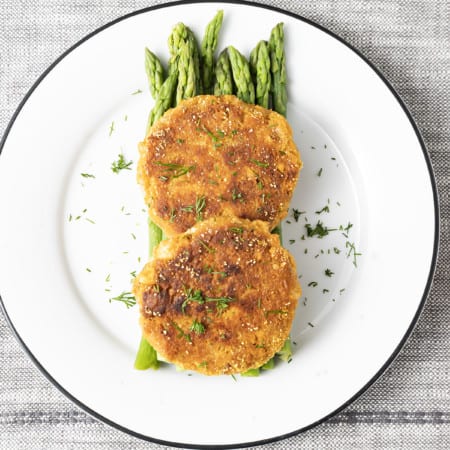
My dear friend’s reaction notwithstanding I am 100% head-over-heels for these fish cakes, er, New England Style Fish Cakes.  They have that satisfying crunchy brown outside that can only come from time spent with a hot skillet and sizzling oil.  Laced with tiny bits of scallion, parsley, celery and other herbs and spices, the inside is everything fish should be; flavorful, light textured, and moist.

Fish, while fantastic for your health*, is not something that dings everyone’s chimes.  I was so confident in the flavor and texture of these that I served one to a confirmed fish-hating friend. With a little cajoling she ate a bite.  Then she finished her portion.  Then she asked for a second helping.  The next week, she made them for her family.  She’s been making them regularly ever since.  And she still swears she hates fish!

*According to the American Heart Association, “Fish is a good source of protein and, unlike fatty meat products, it’s not high in saturated fat. Fish is also a good source of omega-3 fatty acids. Omega-3 fatty acids benefit the heart of healthy people, and those at high risk of — or who have — cardiovascular disease. Research has shown that omega-3 fatty acids decrease risk of arrhythmias (abnormal heartbeats), which can lead to sudden death.  Omega-3 fatty acids also decrease triglyceride levels, slow growth rate of atherosclerotic plaque, and lower blood pressure (slightly).”  For more details on what fish can do for you, visit the American Heart Association’s page on fish!


For a printer-friendly, photo-free version of this recipe, click here!

New England Style Fish Cakes

Ingredients:

  • 2 pounds firm fleshed boneless and skinless white fish fillets such as cod, blue hake, or haddock
  • 2 cups of freshly made medium fine breadcrumbs.  This is roughly equivalent to 6 slices of bread.
  • 3 medium stalks of celery, finely diced
  • 1 bunch scallions, thinly sliced then chopped again until finely minced
  • 1/4 cup fresh parsley, chopped
  • 3 large eggs
  • 1 Tablespoon dried basil
  • 1 ½ teaspoons Old Bay Seasoning or other seafood seasoning blend
  • salt and pepper to taste
  • neutral oil, such as canola, for pan-frying

Line up your fish fillets on a clean cutting board.  And don’t walk away from the cutting board to answer the phone or people (and by people I mean my children) are bound to mess with your ingredients. See what I mean?

"Ground control to Major Tom..."


Remove the Lego David Bowie from your cutting board and roughly cut the fish fillets into two-inch chunks.

Place the pieces into the work bowl of a food processor fitted with a blade. You are going to puree your fish.  I’m aware that sounds revolting, but keep on keeping on, please.  The end result is more worth it than I can possibly express.  Pulse several times until the fish is broken down into a puree that still contains some pieces. No pieces should be larger than pebble-size.  It should look like this.  It only gets better from here!

Add the processed fish and the remaining ingredients to a large bowl and mix until uniform.

Place a 12-inch nonstick skillet over medium-high heat and add a thin coating of oil to the pan; a tablespoon should be sufficient.  Swirl the oil to coat the pan.

Don’t pre-form all your fish cakes, because the patties tend to fall apart if left to rest on a plate It’s best just to form right before adding them to the pan.  To do this most easily, rapidly form ½-cup of the fish mixture into a thin patty.  Don’t squash them mercilessly!  That light end texture relies on a gentle hand.

Quickly and carefully place the patty into the oiled pan.

Using a 12-inch pan should allow you to cook four patties at a time.  Once all four patties are in the pan, raise the heat to high and cook for five minutes. After five minutes, use a wide spatula and an additional rubber spatula, if needed, to flip the patties one at a time.  Take care to control how your flip them so you’re not splattered with any hot oil in the pan.  The first side should be a beautiful brown when they’re turned.  This first side looks like perfection.

Fry the second side for five minutes and transfer the fish cakes to a plate lined with a paper towel.  Repeat with the remaining fish mixture, adding a little oil to the pan as necessary.

Serve immediately, either plain or with tartar sauce. They definitely have enough flavor to be served alone…

If you serve with tartar sauce, make it a good one.  These New England Style Fish Cakes deserve the best!

For my money, this tartar sauce recipe is the best you can possibly make.  It is the massively down-sized recipe that The Evil Genius learned to make when he worked at a very popular South Florida restaurant.  He recalls making multiple twenty-five gallon batches for daily lunch and dinner services.  We’re talking about one seriously road-tested and approved tartar sauce recipe.

This addictive tartar sauce is much more flavor-packed than most alternatives.   Oh yes, put it on fish, but don’t stop there.  It’s an explosive change to the usual mayonnaise on a hamburger. French fries take on a whole new dimension when dipped into Tart-er Tartar Sauce.  Once you’ve tried it, you’ll plan meals around it!

Tart-er Tartar Sauce

Ingredients:

  • 1 cup Greek yogurt
  • ¼ cup mayonnaise
  • ¼ cup minced scallions
  • 2 Tablespoons minced cabbage
  • 1 Tablespoon minced green pepper
  • 1 Tablespoon lemon juice
  • 2 teaspoons dill pickle relish
  • ½ teaspoon dried dill weed
  • ¼ teaspoon celery seed

Stir all ingredients together in a bowl, cover tightly and refrigerate for at least an hour before serving.

Provençal Fish en Cocotte with Garlicky Tomato Sauce

My Dad called me up the other day and gave me a piece of his mind.  “Where are the healthy recipes for folks with dietary restrictions like me?  Your stuff looks great, but there’s a lot there I can’t eat.  People need healthier recipes, too.”   “Sure, Dad,” said I.  I offered to get to it after Christmas and New Year’s Day.  He kindly suggested that dietary restrictions didn’t take a holiday and that some people might really enjoy a lighter food break occasionally even if it was Christmas…


After a week of my kids climbing the walls, bouncing off the ceiling, and being on each other like ugly on apes, it occured to me that perhaps the steady diet of Christmas treats might be affecting them adversely.  My Dad had been right.  Of course I realized this at about 5:30p.m. and had nothing remotely healthy on the radar for dinner that evening.  I stuffed the block of cheese and the ground beef back in the fridge, took a minute to reconsider my plans and stuck a pot of rice in the rice cooker.  I rifled through the freezer and dug out a pound and a half of individually frozen blue hake fillets.  Surely I could do something with that!


Twenty five minutes later I had thrown together what is a new favorite in our house; Provençal style fish en cocotte with a garlicky tomato sauce.  Don’t let the name fool you.  We’ve done cocotte here and here before and it was super simple and quick.  Cocotte is the French word for casserole.  We all know casserole=easy. This fish dinner comes together in a flash and is done to garlicky perfection in 20 minutes flat.  Give your body a break this holiday season.  Try the fish on for size and see if it doesn’t improve your outlook a bit.


 Provençal Fish en Cocotte with Garlicky Tomato Sauce

The “Provençal” in this dish comes from the lovely Herbes de Provençe in the tomato sauce.  If you can’t lay your hands on Herbes de Provençe don’t sweat it.  *You can substitute a sprig each of fresh rosemary, thyme, oregano and parsley or a half teaspoon each of the dried varieties of those herbs.  It’ll be just as good!

And don’t worry about the amount of extra virgin olive oil in this, for Pete’s sake.  It’s good for you and the fish itself is an extremely lean and low-fat protein.  And it’s mercifully light on the wallet, too. 

Ingredients:

  • 1 1/2 pounds firm, white fleshed fish fillets, such as hake or cod, fresh or individually frozen
  • 1 large onion, minced
  • 3 large garlic cloves, peeled and minced
  • 1/2 cup white wine (I used Pinot Grigio, but feel free to use what you prefer just so long as it isn’t cooking wine.  Blech.  There oughta be a law.)
  • 1 can, 14.5 ounces, diced tomatoes in their juices
  • 1/4 cup extra virgin olive oil
  • 1 Tablespoon dried Herbes de Provençe (*see note above for substitutions)
  • 1 bay leaf
  • Kosher salt and fresh ground black pepper, to taste
  • Hot, cooked rice, for serving

Preheat oven to 425°F.

Place a pan that has a tight fitting lid (and is also oven safe) over medium heat.  Add olive oil and heat briefly before adding the onions and garlic.  Throw a pinch of salt in the pan and stir well.  Soften the onions and garlic, lowering the heat if needed to keep from browning.  When onions are mostly translucent and soft, pour in the white wine and the diced tomatoes with their juices.  Stir well, increase heat to medium high and add herbs.  Bring to a boil and carefully arrange the fish fillets on top of the tomatoes and onions.  Put the lid on the pan and place in the oven.

Bake for 8-10 minutes for fresh fillets or 13-16 minutes for frozen fillets, depending on the thickness.  When fish flakes easily with a fork, remove pan from oven.   Serve immediately over hot rice with a generous amount of the pan juices and tomatoes spooned on top.  You could do worse than throwing a nice fresh wedge of garlic and rosemary foccacia on the side to soak up that lovely garlic tomato sauce.  To your health!