Pickled Green Cherry Tomatoes

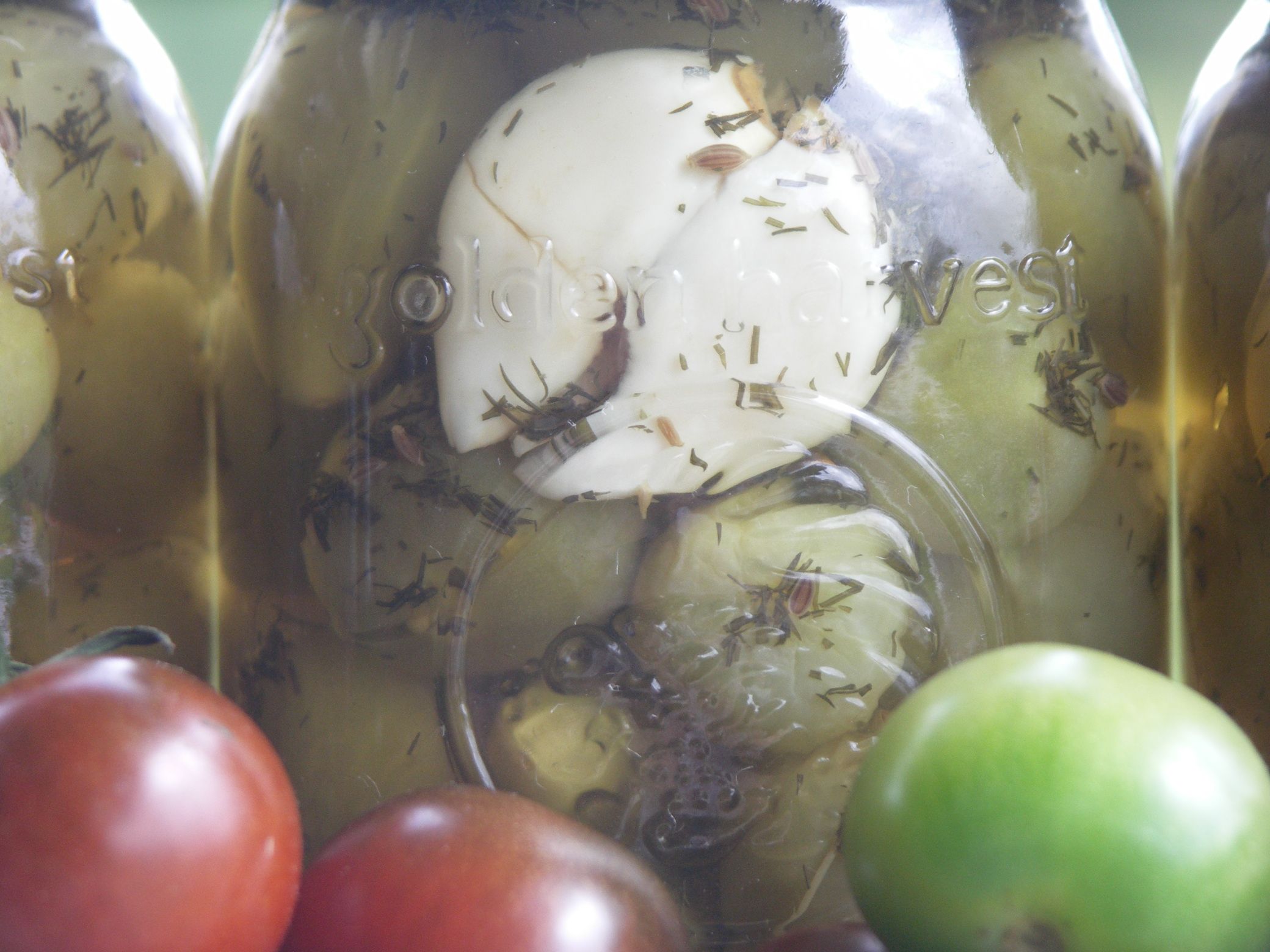
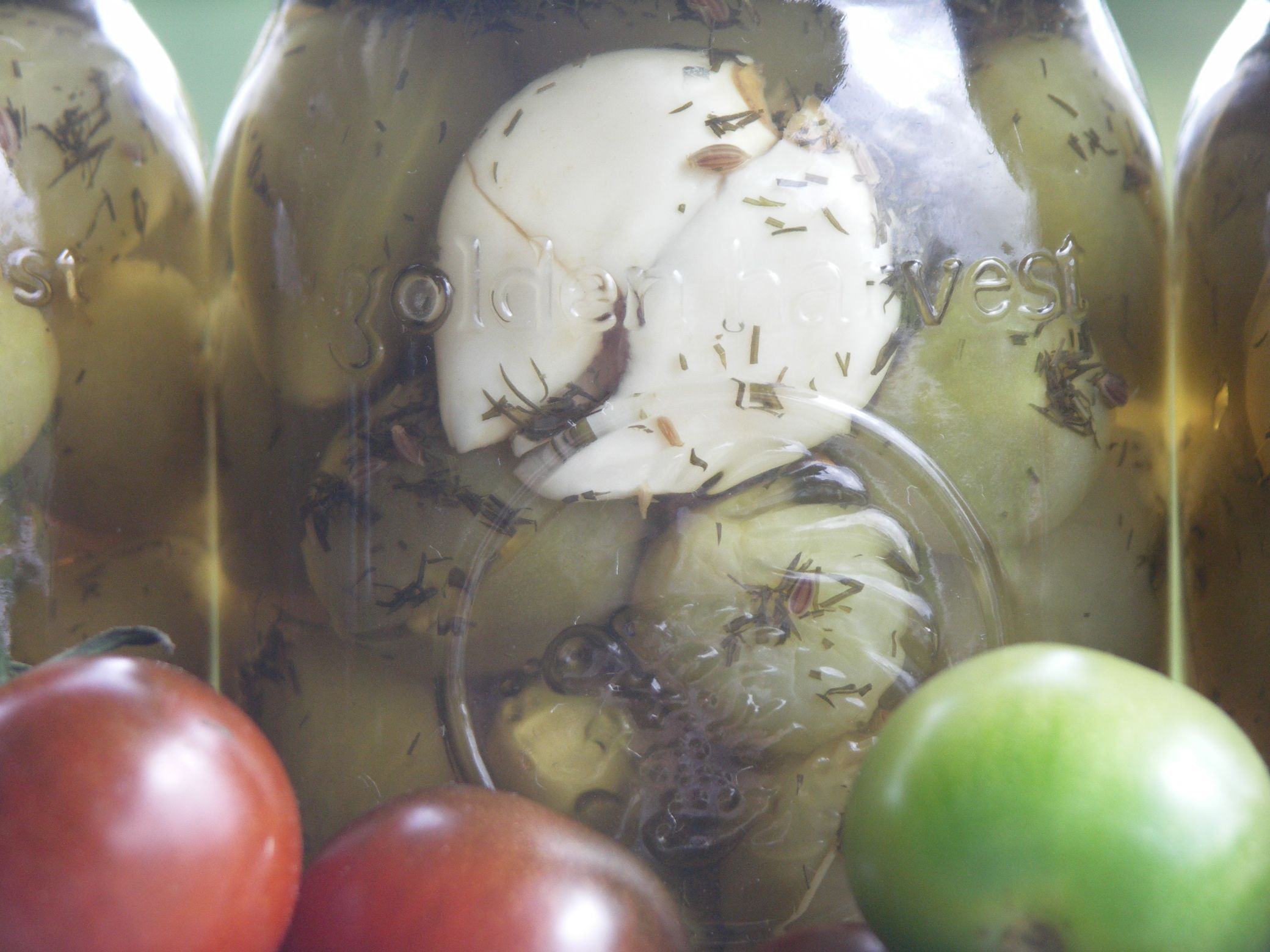
Beautiful little green ‘yellow pear’ cherry tomatoes waiting to be pickled…

Because there really is no such thing as a garlic clove that is too big.


When I got home from our vacation I didn’t toddle over to our garden immediately.  I started doing laundry furiously.  I don’t mean to say that I was doing it quickly.  I mean to say that I was furious that I had to do more laundry.  I know I’ve said it before, but it bears repeating.  I tried to clear out the wrappers and crumbs and sand that had invaded the van.  I scratched the dogs behind their ears, made a few meals, sat and finished “The Hound of the Baskervilles”, listened to my kids’ talk about how their second-cousin informed them there was a new generation of Bionicles being released just in time for Christmas, checked my email and did other various and sundry things before remembering that I had some plants that probably needed my attention.  I pulled on my barn boots and ambled out to the garden.


HOLY WUH!  In one week it seemed the entire garden had been taken over by monster heirloom cherry tomato plants.  I did some quick mental calculations and realized that there was no possible way we could manage to eat all the cherry tomatoes that were coming on.  A little more silent math and it was also plain that even freezing the excess ripe fruit for use in soups and stews would leave us with more tomatoes than my non-wasteful heart could bear to ignore.  What to do with all those gorgeous heirloom cherry tomatoes?  Pickling to the rescue!


A quick scan of the pantry revealed that I had everything else necessary for pickling some green cherry tomatoes; white wine vinegar, garlic, dill seed and weed, bay leaves and non-iodized salt.  Score!


Since dill pickled cherry tomatoes are one of the easiest things to pickle, I managed to pack my jars, make my brine and turn out dinner at the same time.  All you have to do in order to prep for this is to carefully wash and stem each cherry tomato, boil your brine, peel one clove of garlic for each pint of tomatoes, and sterilize your jars and rings.  With a dishwasher in the house, the sterilizing of the jars is the easiest part of the whole proposition.


With that gorgeous color, crispy and juicy texture and vibrant flavor dill pickled green tomatoes are a little burst of summer when added to a mid-winter salad.  But dill pickled green cherry tomatoes are even better.  They’re everything that is good about a pickled green tomato in a super cute bite-sized package.  In addition to being delicious on salads, they stand alone as appetizers that manage to be simultaneously elegant, flavorful, simple and adorable.


If you’re overrun with cherry tomatoes that you don’t want to kill off with that looming first hard frost, give these a try.  I think you’ll thank me!


White Wine Vinegar Pickled Heirloom Green Cherry Tomatoes


Feel free to play with the flavors in this recipe.  You could substitute tarragon for the dill and have a very French pickle.  You could toss in some dried or fresh habaneros with the dill and have Green Cherry Bombs.  Get creative!  As usual, I’m giving you this recipe in a per-jar scalable format.  Make as many or as few jars as you wish.  I recommend making at least as much brine as the recipe gives below and possibly more.  Extra brine keeps well in the fridge.  It’s very frustrating to have to prepare and boil another batch of brine for the sake of 1/4 cup shortage.  You can always make more later or use the extra brine to brine meats or in salad dressings.


Before starting your brine, have your jars and lids prepared.  For an easy explanation on how to sterilize and prepare your jars, lids and rings, click here.


Ingredients


For the Brine:

  • 3 1/2 cups white wine vinegar
  • 3 1/2 cups water
  • 1/4 cup pickling salt (Any non-iodized salt will work well here.  If your salt is superfine, reduce amount by 1 Tablespoon.)


For each pint jar:

  • 1 large clove garlic, peeled
  • 1 bay leaf
  • 2 teaspoons dried dill seed
  • 1 1/2 teaspoons dried dill weed
  • Small, firm green cherry tomatoes, carefully washed and stemmed (You can use small, firm green standard-sized tomatoes that are halved or quartered if you cannot lay your hands on the cherry tomatoes.)


In a medium sized, non-reactive saucepan combine all brine ingredients over high heat.  While waiting for brine to boil, fill your jars


In each jar, place a garlic clove, bay leaf, dill seed and dill weed.  Pack the jar tightly to within 1/2″ of the top with the green cherry tomatoes.  Pour boiling brine over the tops of the tomatoes to within 1/2″ of the rim of the jar.  Wipe rims, position lid over the top and screw rings on just until they hold but do not wrench them on too tightly.  (For more information on why this important click here!)


Place jars in the canner and fill with water to cover jars by at least an inch.  Cover canner and place pan over high heat.  Allow water to come to a rolling boil, leave lid on and boil hard for 15 minutes.  When the 15 minutes are up, shut off heat, remove lid and allow the jars to sit in the hot water for an additional 5 minutes.  Remove jars to a cooling rack and allow to cool, undisturbed overnight.


When jars and their contents are completely cooled, wipe down with a clean, damp cloth, remove rings and store in a cool, dry place for up to 3 years.  The pickled cherry tomatoes will be ready to eat in 6 weeks.   Bon Appetit!

Essay: What I did over end-of-summer vacation.


I am back!  One week on the sand went a long way toward restoring what little sanity I had left…  I regained my mind and then proceeded to leave half of it on the beach on the Cape Cod National Shoreline.  You will not see a single photo of food from this vacation.  The food we had was outstanding- goat milk mozzie in pesto tossed with heirloom tomatoes served with crusty bread, char-grilled hamburgers, homemade garlic dills and bread and butter pickles, garlic bean dip with homemade tortilla chips and more- but we were so hungry from all our time on the beach that we laid into each spread of food like a swarm of locusts before thoughts of photography even occured to me. 


 We left our indelible mark on South Wellfleet.  We terrorized a very tightly-wound, perfectly coiffed and tanned surf shop owner  by merely walking in the door.  Can I help you?  Oh!  Don’t touch that!  Or that!  Oh!  Don’t touch that surfboard!  Is there something you NEED?  Just DON’T touch that!  I suppose the fact that my husband, father-in-law and I were all present did nothing to assuage the woman’s fear that we would allow our little fuzzy-headed minions to run roughshod over her precious laid-back surfer haven and up-end all her painstakingly polished gear.  Interesting, because the first thing inside the door was kiddie-sized boogie boards, water pistols and kites.  Here’s a thought.  If you don’t want kids in the shop, put up a sign- or better yet- don’t carry toys.  Poor woman.  I guess we are a little intimidating…


We put a dent in the lobster population.  Have you ever seen an ten-year-old, an eight-year-old and a six-year-old  truly appreciate eating a lobster?  I did last week.  The eldest boys and the Evil Genius each ordered a boiled lobster the one night we went out for dinner.  The two youngest ordered ‘the beach toy special’ (fresh caught fried scrod with french fries in a sand-pail with a shovel.)  By the time we left the restaurant we could’ve squeezed about a quart of clarified butter from our hair and clothes.  It’s not the tidiest proposition to feed kids lobster.   My father-in-law and I ordered scallop jerky.  Er, actually we ordered broiled scallops, but we were served scallop jerky.  The name of the restaurant will remain a mystery because the rest of their food and their service was fine.  Just take this advice.  When a restaurant has the word “Lobster” in their name, it’s best to stick with the lobster for dinner.


We spent hours and hours and hours on the beach:


 playing in sand,

picking tiny rocks and sea shells,

letting the tide lap at our toes and bury our feet…

Staring at the waves…

The brave among us boogie boarded their hearts out…


It was fabulous.  It was relaxing.  It was a timeless family memory. 


And it is good to be home…

Carrot Cauliflower Soup with Sesame Yogurt Cream

Remember all the salad bar goodies mentioned in my last post? Well, I decided I really needed to use up a lot of those carrots, and being a lover of warm soup on cool days, I naturally went in that direction. The soup I ended up making is fairly simple and quite flexible, and is a good way of using up some of those leftover veggies. I also had a small amount of yogurt which always works well with creamy soups, as well as a couple lonely slices of bread, which would work well for croutons. The bread had sesame seeds, which made me think of toasting some sesame seeds to sprinkle on top of the soup, as well as adding a little sesame oil to the yogurt for flavor. As a lot of you are already most likely aware, one thing leads to another in the kitchen…and using up all these bits and pieces gave me sort of a warm, frugal feeling all over, if you know what I mean. Anyway, to the soup…


Carrot Cauliflower Soup with Sesame Yogurt Cream

The sesame yogurt cream, sesame seeds and croutons took this simple soup to an amazing place!

The sesame yogurt cream, sesame seeds and croutons took this simple soup to an amazing place!


The instructions for all the condiments for this soup are at the bottom of this post, and they can easily be prepared while the soup is simmering away.


For the soup:

1 large onion, chopped

3 cloves garlic, chopped

2 tablespoons olive oil, or half oil and half butter

2 lbs. carrots, chopped, peeled or not, as you like

1 to 2 cups cauliflower florets

2 medium potatoes, cut in large chunks, peel left on

6 cups water, veggie broth or chicken broth

1 teaspoon dried thyme leaf (1 tablespoon if fresh)

Salt and pepper to taste


In a large pot, heat oil, then add onion and garlic, saute for 3 or four minutes. Add the remaining vegetables, water or stock and seasonings, bring to a boil, and simmer till the vegetables are soft, about 20 to 25 minutes. In batches, carefully puree soup in a blender or food processor: NOTE: IF YOU ARE USING A BLENDER, LEAVE THE LID PARTIALLY OPEN, AND HOLD LID WITH A DISHTOWEL–YOU NEED TO LEAVE SPACE FOR THE STEAM TO ESCAPE WHEN BLENDING. IF YOU PUT THE LID ON TIGHTLY, IT WILL EXPLODE OFF THE TOP AND WILL COVER YOU AND YOUR KITCHEN WITH VERY HOT SOUP.


Once the soup is pureed, correct for seasoning, and ladle into warm bowls. Drizzle with sesame yogurt cream, and sprinkle with croutons (recipes follow) and toasted sesames seeds. Sit in a comfortable chair, preferably by a warm fireplace or woodstove, and slowly savor the goodness.


For the cream:


1/2 c. yogurt

1 t. sesame oil

pinch of salt


Whisk together all ingredients, and put to one side.


For the croutons:

2 slices whole grain bread

2 T. olive oil, or half oil and half butter


Heat oil in a large skillet, large enough to hold the bread cubes in a single layer. While the oil heats, cut bread into 1/2 to 3/4 inch cubes. Toss in hot oil, and toast in the pan, tossing now and then, till the croutons are crunchy and a nice deep golden brown. Set aside.


Toasted Sesame Seeds:

For this recipe, I used 3 tablespoons of sesame seed. Whenever toasting seeds or nuts, be sure to have a small bowl or plate handy to put the seeds on as soon as they are toasted; this will allow the toasting to stop immediately, for if you keep the seeds in the pan even with the heat off, they will continue to toast.


Place the seeds in a skillet large enough to hold them in a single layer and begin heating over medium high heat, gently stirring now and then. It will take a while for them to brown but be patient–once they begin to brown, they finish very quickly. You will see the pan begin to show signs of an oil appearance as the seeds begin to release some of their oil. The browning should begin shortly thereafter. As soon as they have browned to your liking, pour them into a small bowl to cool, and set aside.

Salad Bar Recycling: Sauce

One of the things that can happen to me now and then when preparing food for groups is ending up with LOTS of veggies from the salad bar or veggie trays, and while we don’t mind munching on carrot and celery sticks from time to time, as well as other fresh veggies, there are times when the amount left is rather daunting, at least it would be if we felt we HAD to eat these raw veggies before they begin to enter that tossable stage. Soups and sauces to the rescue!


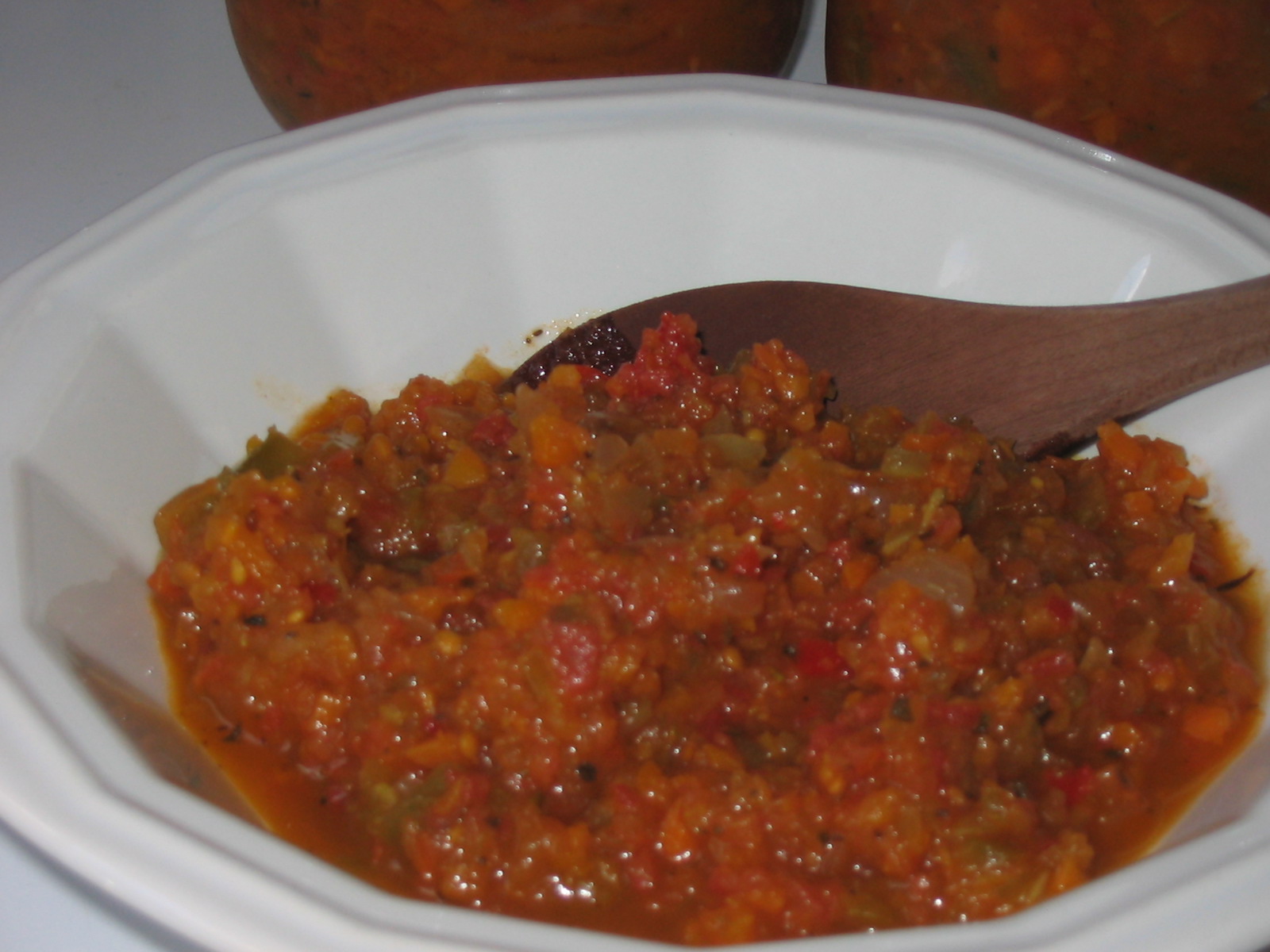
We inherited a pile of leftover veggies and crudites from a recent event, and my stove has had a busy couple of days. The vegetables involved included piles of carrots, both baby and stick fashion, celery sticks, cherry tomatoes and ripe-on-the-vine tomatoes and a couple of sweet peppers. First I started with a pasta sauce that I like to make, and which turns out differently every time I make it. It ends up being a nicely chunky sauce, not too tomatoe-y, and it’s quite versatile. The amounts vary depending on what is at hand, but the basic ingredients remain the same. You will need your food processor, which will do a lovely job of chopping everything into bits, and you can have this in your pot, simmering away for a couple of hours, in as little as 15 minutes.


Vegetable Pasta Sauce


1/4 cup olive oil

1 lb. carrots, cut into chunks (or baby carrots or carrot sticks)

1/2 lb. celery sticks or chunks

2 medium onions (or 1 large)

6 cloves garlic

2 sweet peppers

4 to 5 pounds of tomatoes, any variety or mix of varieties

Pinch of sugar if tomatoes are too acidic

Salt, pepper to taste

Thyme, fennel, rosemary, oregano (I use about 1 t. each if dry, larger amounts if herbs are fresh)


Begin to heat oil over medium heat in a 3 quart or larger heavy bottomed pan. In batches, beginning with onions and garlic together, place vegetables in food processor with the chopping blade and chop until small pieces are formed, about the size of corn kernels. Don’t overprocess, or the sauce will resemble a mush. As soon as the onions are chopped, place them in the hot oil, and adjust heat so that onions will begin to saute gently without burning. Chop the carrots, celery and peppers, adding them to the onions and garlic and letting that cook together while you prepare the tomatoes.


The tomatoes are the one exception to the processing rule–blend away until they are completely pureed. They will be very watery, but a good amount of that liquid will evaporate as the sauce simmers together. Pour over the vegetables in the pan, stir to combine, bring to a boil, and then lower to a simmer; do not cover the pan. Allow the sauce to simmer for a couple of hours. If it is thick enough for you at that time, add the seasonings and let simmer slowly for another half hour; if not thick enough, let it continue simmering until it is close to your desired thickness.


This can be serve as is over cooked pasta, baked potatoes, rice, polenta, whatever strikes your fancy.

Cornmeal Blueberry Muffin Souffle

Well, remember those blueberry cornmeal muffins from my earlier post last week? The last time I made those, I made a LOT. More than our guests could decently eat in the time they were with us, and more than we could handle all on our lonesome. My freezer would not allow any more foodstuffs to be stored, most of the nooks and crannies being filled in with quart-sized bags of blueberries and black raspberries that my husband so nicely picked for our later enjoyment. And they were beginning to get a little dry–even a few seconds in the microwave did not perk them up very much. But my inner frugalista could not bear the thought of introducing them to the local compost pile. SO, what could I do with them?


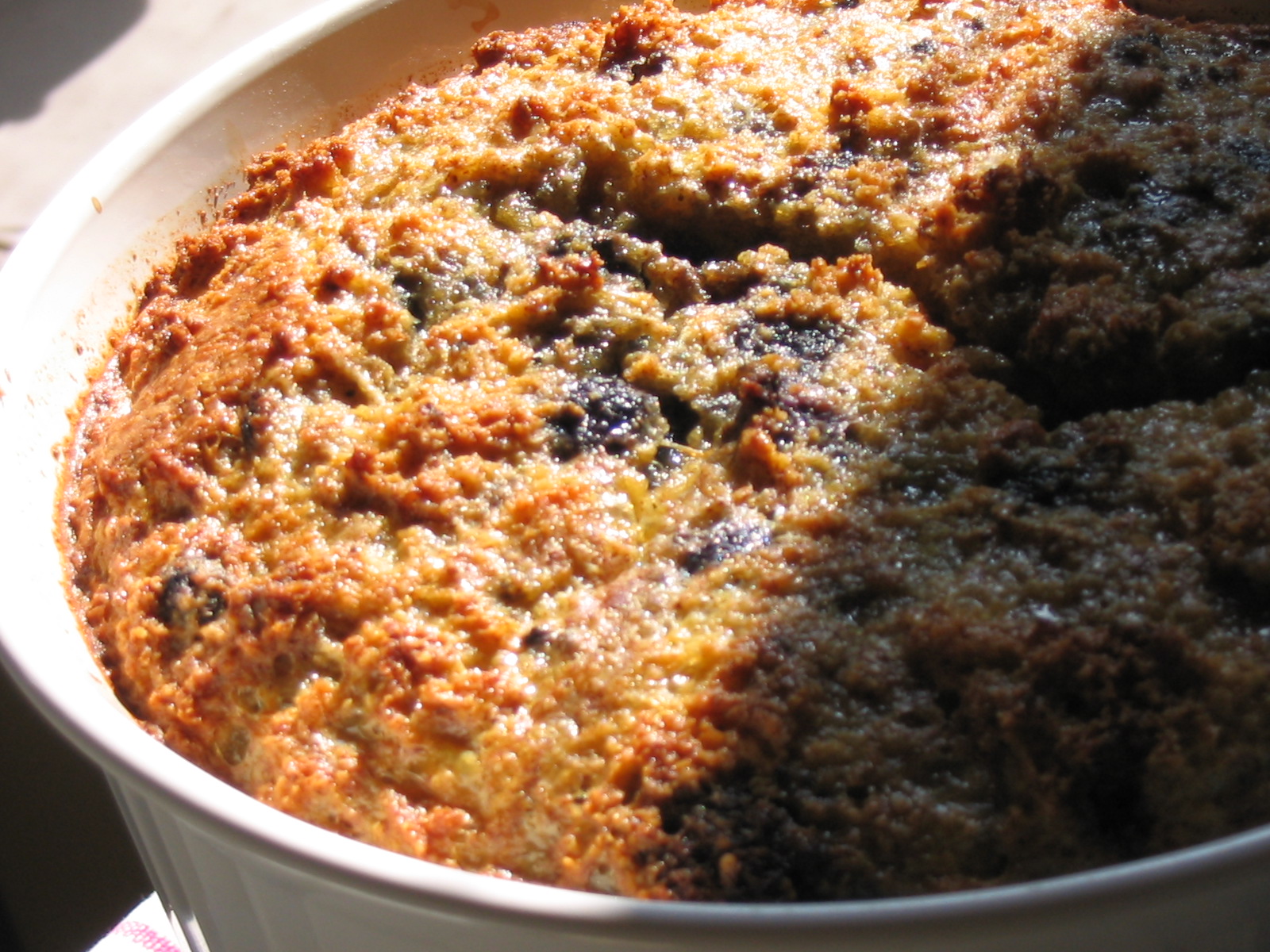
One of the things we really enjoy is a good bread pudding, and that is the first thing that came to mind, but muffins are quite different from the yeast breads we normally use for this purpose. But, since no other ideas came to mind, I thought it was definitely worth the risk. With the help of some milk, a few eggs, a little sugar and spice, the muffins were transformed from slightly dry bits of breadstuffs to a beautifully light, souffle-like custardy dessert which, when topped with a simple blueberry syrup, made a great ending to an otherwise simple meal. I highly recommend making extra muffins just for this purpose!  And I’m thinking some other muffins might work just as well (those bran apple muffins come to mind…).


Cornmeal Blueberry Muffin Souffle


6 standard-sized cornmeal blueberry muffins

4 eggs

1/3 c. sugar

1 t. cinnamon

1/2 t. nutmeg

Pinch of salt

2 1/2 c. milk

1 t. vanilla extract


Preheat over to 325 F. Break muffins into large chunks in a buttered 1 1/2 qt. casserole dish. Whisk eggs thoroughly, add sugar, spices and salt, and whisk again to incorporate. Stir in milk and vanilla, mix till completely combined. Pour over muffins, and let the mixture sit for a few minutes to give the muffins time to absorb some of the egg mixture. Push down any floating pieces to make sure all sides have been exposed to the custard. Bake for 40 to 50 minutes, or until a clean knife inserted near the middle comes out mostly clean. Let cool a bit before serving, or chill until ready to serve. (We liked it best served slightly warm.)  Serve with Simple Blueberry Sauce.


Simple Blueberry Sauce

2 cups blueberries, fresh or frozen

1/3 cup sugar

grated rind of one lime

juice from one lime

dash salt

1/2 t. vanilla extract


Place berries, sugar, lime rind, lime juice and salt in a small saucepan, and heat until the mixture boils and berries begin to burst. Lightly crush some of the berries, boil for one minute, remove from heat and stir in vanilla. May be served warm or cold, and any leftover should be refrigerated. Great with ice cream, pound cake, angel food cake, pancakes, etc.


Normally, I’ve used lemon with any blueberry sauces I’ve made, but all I had at hand at the time was a lime, and we loved it! Gives a nice twist to the dessert.

Coffee, tea or cocoa? Name your poison! (A reprisal)

Last February, I asked the readers of the Record-Eagle this vastly important question and most of my responses came from family.  So I’m trying again with my ‘Foodie’ readers.  Don’t get me wrong… I can listen to my family talk food all day and often do.  I just want some perspective.  Are we the only ones obsessed with our hot beverages?  It cannot be so…  I can’t wait to hear what you all have to say to this:


Two very devoted coffee drinkers raised me. My Dad said he knew that he liked my then-boyfriend, now-husband the first time they met because Lindy offered to buy my Dad a coffee during the first period break at a hockey game. He did however, have reservations when my husband asked whether he’d like cream and sugar. Dad said, “Why would I want to wreck a perfectly good cup of coffee with that junk?” Dad likes his coffee really strong. In fact, he was banned from making coffee at his office because he was the only one who could drink it.

My Mom drinks coffee so strong that it has, quite literally, given panic attacks to guests. Well, actually it only happened once, but I think my point is made. The son of one of her friends had palpitations, sweats and couldn’t sit still after drinking a demi-tasse of Mom’s joe. She occasionally drinks it with half-and-half (probably so that the coffee acids don’t eat through her esophagus and stomach lining…) Mom never measures. She doesn’t need to measure. If she fills the filter it’s probably almost strong enough.


My husband needs a cup or three of coffee in the morning to feel human. He has a couple cups throughout the day to keep on keeping on. We have five kids. Who can blame him? He used to drink it heavily sweetened and very pale. He now drinks it black except for the occasional afternoon cup with a little flavored creamer. He stopped adding all the goodies to his brew in an effort to become more fit (a successful attempt, I might add.)


Our pastor once half-jokingly stated, “Never trust a pastor who doesn’t like coffee.”


…And me? Odd gal out that I am, I’m almost exclusively a tea drinker. As a kid I loved tea. My mom says that on Saturday mornings, I’d wake up before everyone else and make myself a cup of tea to drink while I watched cartoons. As a teenager and younger adult I used to drink vast quantities of coffee. (With parents such as mine how could I do otherwise?)


One day, coffee suddenly stopped agreeing with my constitution — probably too much of a good thing. Decaf coffee tastes like it was brewed in a rusty tin pot filtered by a dirty sweat sock. I hate cola. My only caffeine option was tea. I am now a certifiable tea nut.


I order fabulous loose-leaf teas by the pound. A quote on my favorite tea store’s website says, “Never trust a man who, when left alone in a room with a tea cozy, doesn’t try it on.” (Billy Connolly) In fact, I got myself set up to have a wholesale account just so I could keep myself in great tea. I just discovered a fabulous tea blend called Chocolate Cream. Oh yummy, yum, yum! Listen to this description:


“Rich, sumptuous, and indulgent describes this blend of black tea, coconut, cocoa bits, chocolate chips, peppermint, and flavor. The aroma and flavor of creamy dark chocolate is so pronounced you almost feel guilty.”


Oh my. I need a cup now!


I had a friend who visited my house nearly every day after school. When he entered the door, my Mom and I would greet him with our automatic, ingrained response to anyone who crossed our threshold, “Would you like some coffee? Tea? Cocoa?” …He would stare at us with an incredulous expression and remind us that he didn’t like hot drinks. He never quite got through to us. I still assume everyone likes one of those in a devoted way. I still ask everyone. Heck, I even asked the UPS guy one day. He looked cold.


Last winter, I was back in touch with that old friend for the first time in over a decade.  One of the first things I asked him was whether he rememberd how thick-headed I was about offering him coffee, tea and cocoa.  He laughed and informed me that now he was slavishly devoted to coffee and he blamed me.  I win.


What about you? Coffee, tea or cocoa? Do you take it plain or doctored up? Hi octane or decaf? With snacks or without? Name your poison!


**Since I am now sitting on a beach somewhere I will be unable to agree with or tease you all about your choices.  I’m pretty sure I’ll be where wi-fi isn’t, so be patient with me.  I will get back to you all and in the meantime talk amongst yourselves.  Topic?  Coffee, tea or cocoa.  Discuss!

Slow-cooker Vanilla Bean Tapioca

In today’s Record-Eagle column, I ran a recipe for Slow-Cooker Vanilla Bean Tapioca Pudding.  (I’ll link to the full column when I’m back from vacation, but in the meantime the recipe is posted below.)

Slow-Cooker Vanilla Bean Tapioca

This pudding takes the perennial favorite tapioca pudding and dresses it up. Served warm, it’ll heat you up from the inside out on chilly fall days. Using a real vanilla bean gives the pudding a sumptuous velvet-like texture and flavor. If you don’t have access to vanilla beans, I weep for you, but you can still make a delicious version of the recipe by substituting for the beans with 2 teaspoons of real vanilla extract.

Ingredients:

  • ¼ cup fine pearl tapioca (not granulated)
  • ½ cup granulated sugar
  • ½ of one vanilla bean
  • 2 cups milk**
  • 2 eggs plus 1 egg yolk, beaten in a medium bowl
  • non-stick cooking spray or butter for greasing the slow-cooker

**Low fat milk works fine in this, but it’s silkier and richer if you use whole milk or a combination of whole milk and half&half or even GLORY, GLORY heavy cream.

Method:

Heat milk in a microwave safe container until very hot. Spray slow cooker crock with nonstick cooking spray or butter generously. Split vanilla bean lengthwise and use the blunt spine of the knife to scrape the ‘seeds’ from the bean pod. Add the vanilla bean and ‘seeds’ into the crock along with the tapioca, sugar, and milk. Stir well, put cover on the slow cooker and cook for 1 1/2 hours on low, or until tapioca is soft.

Use a spoon to carefully break up any clumps that have formed in the crock. Slowly pour a ladle of the hot tapioca mixture into the eggs while beating vigorously with a wire whisk. When it is fully incorporated, pour the mixture slowly back into the crock while whisking. Recover and continue cooking on low for 30 minutes more. When the time is up, vent the lid, turn the heat off, and allow to sit for 30 minutes more. Serve warm, room temperature or chilled. If you choose to chill the pudding, place a piece of plastic wrap directly on the surface before refrigerating.

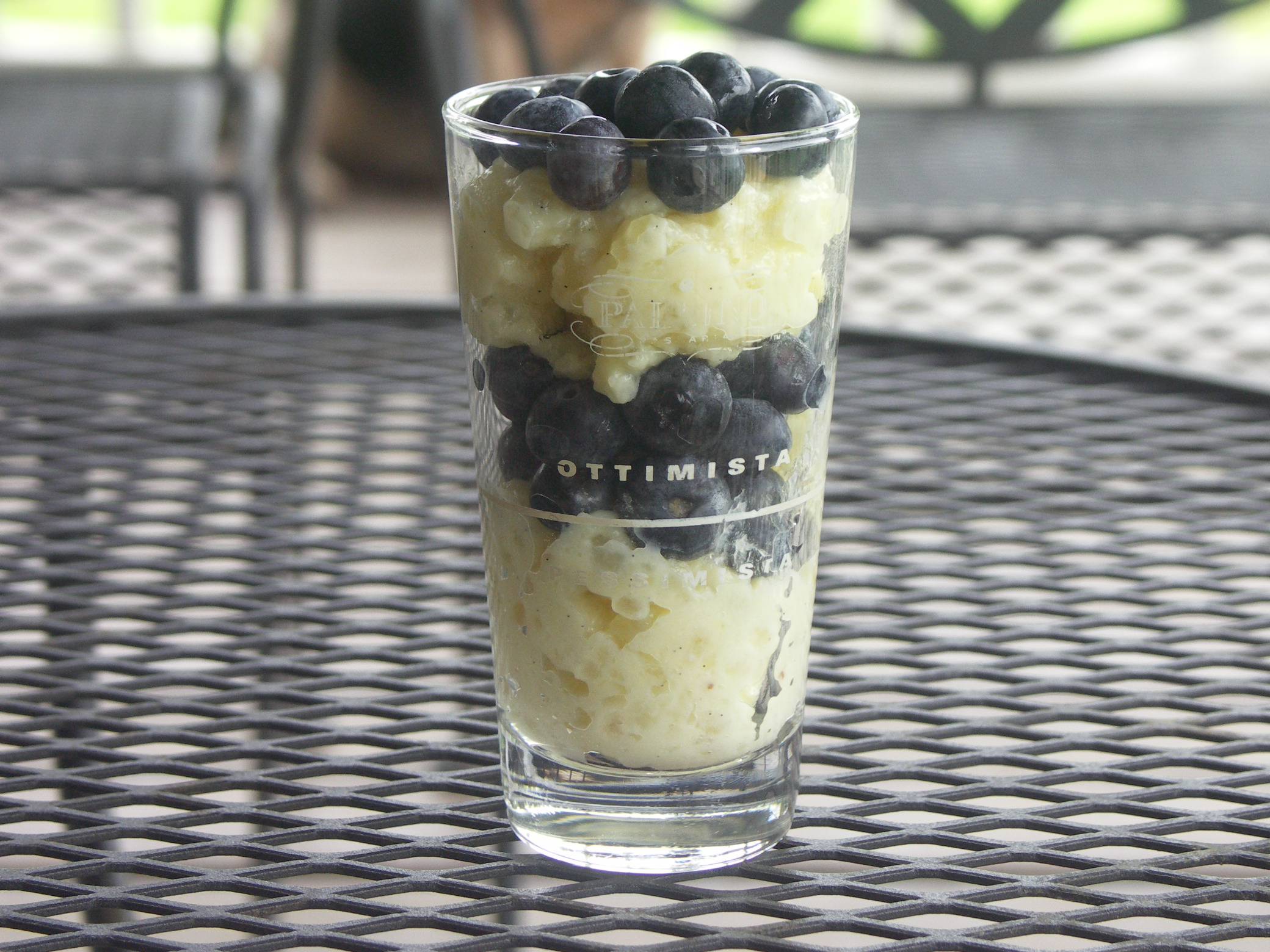
If you want to make this pudding something pretty enough for a special occasion or dinner guests just dollop some of the warm pudding in the bottom of a wine glass.   Top with a layer of blueberries equal in height to the layer of pudding and continue on until you reach the top of your glass.

The pudding is great alone, but when you layer it with fresh blueberries in parfait form?  Spectacular.  If you have a sprig of mint the top of this parfait is where it belongs.  If you don’t have mint, don’t sweat it.  No one will care when they’re eating this!

Can you see all those little flecks of vanilla in the pudding?  This is one of my new favorite week-night desserts.  It’s so easy to make and the vanilla is so silky.

Blue, Blue, Blueberry Cornmeal Muffins


In an earlier post this summer, I raved about The Cornbread Gospels by Crescent Dragonwagon (that name always makes me smile) and the two versions of cornbread salad we had tried out, both receiving enthusiastic reviews. Well, since then, it’s been hard for me to NOT bake and cook without cornmeal. Cornmeal breads, muffins, pancakes, etc. And my latest favorite muffin is her recipe for Blue, Blue Blueberry Muffins.  All the blue is the result of using blue cornmeal  and serving the muffins with a Blueberry-Cream Cheese-Honey Butter. Okay, have I your attention now? Are you hooked? Shall I start reeling you in???


These are unbelievably tender and moist, and the main spice in the recipe, nutmeg, sets off the flavor of the blueberries and the cornmeal beautifully. (I am somewhat biased—most dishes are considered incomplete without at least a little nutmeg thrown in). And when you top the warm muffins with the meltingly delicious blueberry butter—moment of silence, please.


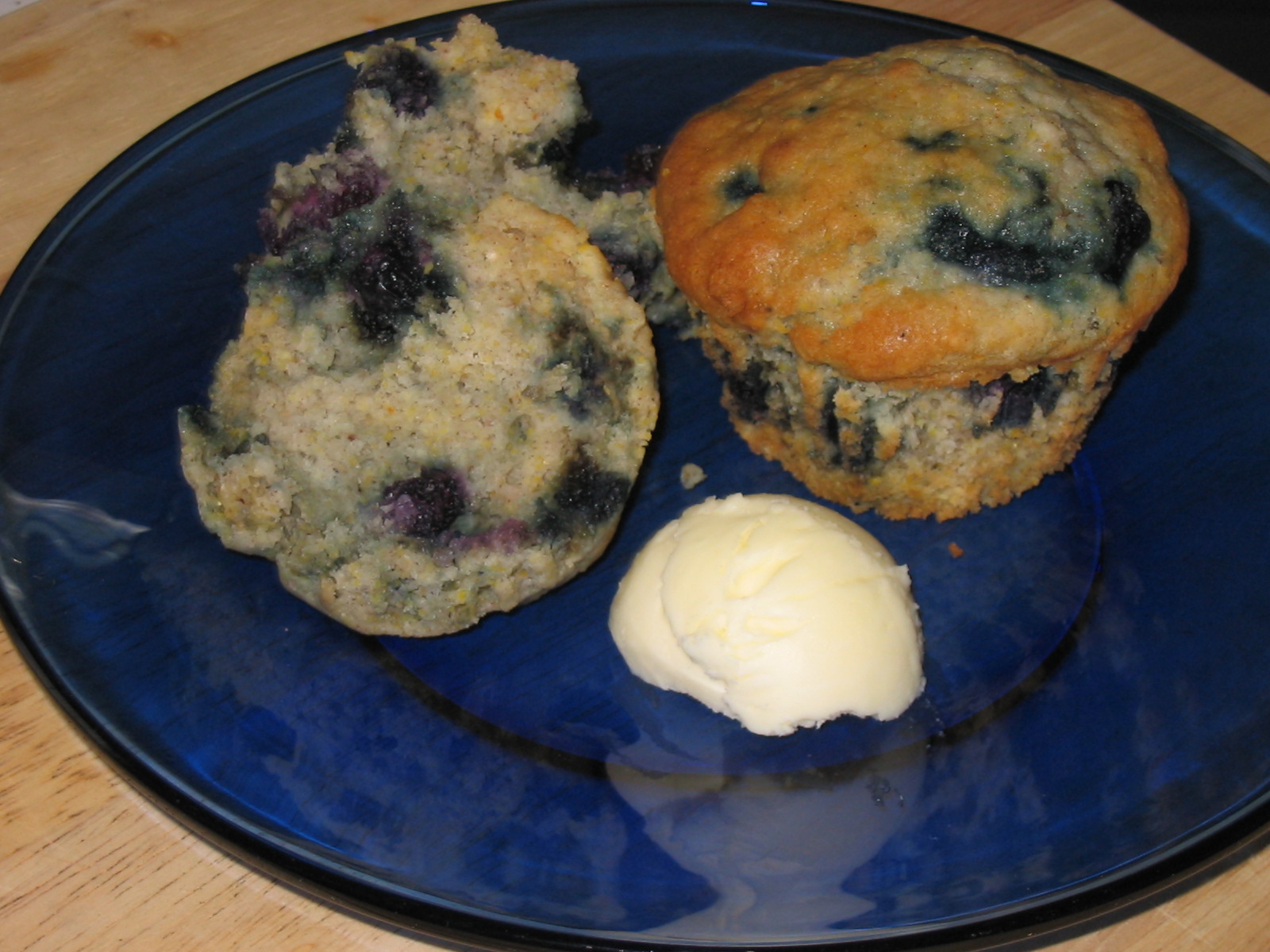
Now, if you are not able to find blue cornmeal, yellow is fine, and you end up with another lovely version, just less blue! Blue cornmeal is not easily accessible up here where I live in northern MI, so I’ve made these frequently with yellow cornmeal, as you can see here—


So if you have stockpiled a good amount of end-of-the-summer blueberries  AND you are a lover of corn AND need some muffins to warm you up on the crisp mornings arriving with the turn of the season, this recipe is for you. One note: When I made these muffins, I did notice that it only made 12 of what I would call standard sized muffins—if I had tried to make 18 muffins out of this, they would have definitely been on the small side.


Blue, Blue Blueberry Corn Muffins

From The Cornbread Gospels by Crescent Dragonwagon


Vegetable Oil cooking spray or muffin papers

1 2/3 c. unbleached white flour, divided

1/3 c. stone-ground blue cornmeal

½ t. salt

1 T. baking powder

½ t. baking soda

1/3 cup butter, at room temperature

½  c. sugar

1 egg

½ t. pure vanilla extract

¼ t. freshly grated nutmeg

1 cup low-fat milk, plain or vanilla

    Soy milk, or a combination (see Note)

1 cup blueberries

½ c. chopped toasted walnuts (optional)


1.       Preheat the oven to 425 degrees F. Spray 18 standard-size or 12 large muffin-tin

      cups with oil, or line the cups with papers.

2.       Stir together the flour, blue cornmeal, salt, baking powder, and baking soda into a large bowl. Set aside.

3.       Cream together the butter and sugar in a small bowl, then beat in the egg, vanilla and nutmeg.

4.       Stir the creamed mixture into the dry mixture along with the milk, until not quite blended. Then add the blueberries and the walnuts, if using, with just a couple of strokes, so the mixture is just barely combined. Spoon into the prepared muffin cups.

5.       Bake until the edges of the muffins are golden brown and the caps are rounded and also golden, 22 to 27 minutes. Let cool for just a few minutes, then remove from the cups. Serve warm with blueberry-cream cheese-honey butter if you like.