Mango Custard

Mangoes…I love them…just have a hard time finding a good one at times.


The first time I ate a mango, it was somewhat underripe, and actually cutting the mango up was a little bit frustrating, due to the monster pit waiting inside that lovely yellow flesh. But even under-ripe, the fruit was delicious, and that bit of piney undertone to the flavor was addicting.


Finally encountering a ripe mango, I was completely transported–I had no idea that fruit could send you to another dimension. Well, perhaps I exaggerate, but it was darn good. My problem over the years has been finding mangoes at that peak of perfection. I’ve discovered the color on the outside does not seem to be a good indicator, but the touch test is helpful–if the fruit yields to gentle pressure, you may be in for some good eating. If the fruit yields to the point of being able to touch the pit, it’s been around a little too long. If it is rock hard, it may ripen for you, but may actually begin spoiling before it is ripe enough to enjoy.


If you are lucky enough to find good ripe mangoes, cutting them up is actually easy, if messy. Starting at the top of the fruit, with stem down, and with the narrow side facing you, bring the blade of your chef’s knife down across the top and slice down through the fruit slightly off center; when you encounter some resistance, curve the knife out away from the pit a bit, and use the pit as a guide for your knife as you finish slicing through the bottom. Repeat the same slicing on the other half, and be careful, because the open portion of the mango is pretty slippery. Laying the mango halves skin side down, you can cut the fruit in a cross-hatch fashion, going vertically through to the skin (not through the skin), and then horizontally, so you end up with cubed mango pieces, still connected. Pick up that mango half, press up against the skin so that the mango curves up and out, and the skin is now concave. Grab a spoon and half a lime, squeeze the lime over the mango and dig in.  (Lime is one of mango’s best friends, by the way.) Or you can do what a friend of ours does, and forego the spoon. Just have a bowl handy to catch the drips.


Now, there is some good mango left on that pit, and I just take my paring knife and trim off the peel that is left as well as removing all the fruit that still clings to the pit. Cook’s Treat!


Once in a while you will find that even though the fruit is good and ripe, the flesh is very stringy and unappealing for eating as is. When I encounter that, I either use the mango in a fruit smoothie, or I make Mango Custard, which is a lovely and simple sugar-free dessert.


Mango Custard


3 mangos, peeled, pitted and sliced

1/4 t. nutmeg

1/8 t. salt

Grated peel of one lime

Juice of one lime

3 large eggs

2 T. shredded coconut


Lightly butter a 1 quart baking dish, set aside and preheat oven to 325 degrees.


Place mango, nutmeg, salt, lime rind and juice in the blender, and blend on medium. You may have to pulse and scrape down the blender a couple of times as the mixture will be quite thick. When most of the fruit has been pureed, add the eggs and blend again until thoroughly mixed and smooth. Pour into prepared dish and bake for 40 to 50 minutes, until a knife inserted halfway to the middle comes out clean.  While the custard bakes, lightly toast the coconut in a small skillet for a few minutes until toasted to a nice golden brown, and set aside to cool.

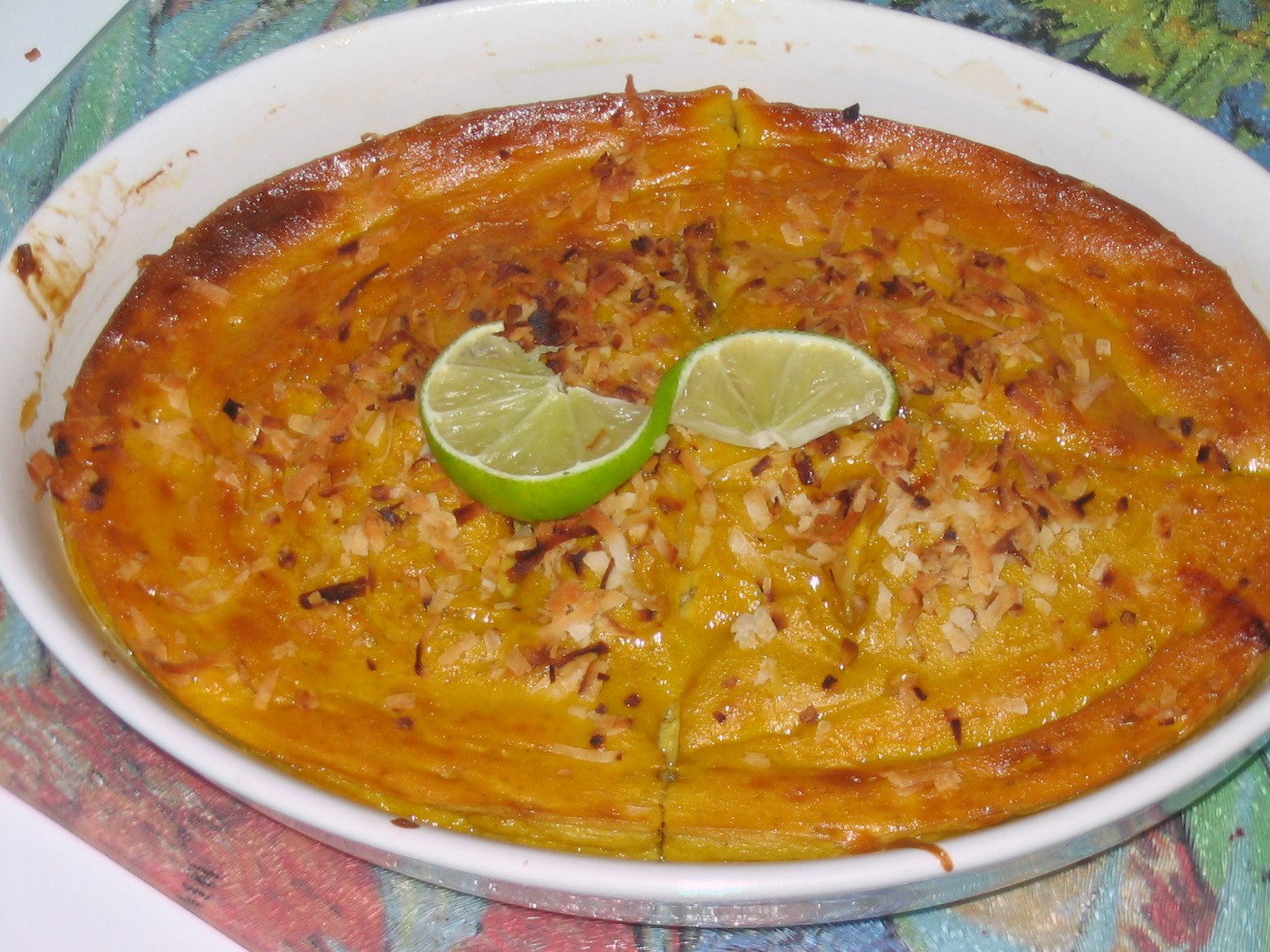
When the custard is done, set it aside to cool, and you can either serve at room temperature or chill before serving. When you are ready to serve, sprinkle the top with coconut, a nice lime slice if you have one handy, and dish it up. Jim and I found that we really like it with extra lime juice squeezed over the top–a really nice contrast to the sweetness of the mango.

Mojito Slushies

This is liquid cool.  And I need to cool down badly.


For those who don’t know me very well this post requires a little back history.  I’ll try to keep it brief.


Last year, feeling cramped with five kids, two dogs, a fish and a cat we decided to move from the 1400 square foot home where we’d lived for about ten years.  We were lucky to find our dream home.  We purchased a large Amish home and farm with a bunch of acreage from, well, an Amish family.  They were moving- as the husband phrased it- to the edge of civilization.  There are some who might suggest that they were moving from the edge of civilization (our house) over past the edge of civilization (their new house), but I digress.   


Because our house was built by the Amish for the Amish it lacked some of the acoutrements of which I am terribly fond; electricity, plumbing, septic system, upstairs walls and double pane windows to name a few.  Considering the scale of the project and the fact that we’re doing the work ourselves it should not surprise you to learn that we’re not anywhere near done.  We did get electricity to the house and to most rooms, but we don’t have overhead lights anywhere outside of the kitchen and bathroom yet.  We also have a tub and shower, a couple bathroom sinks, two working toilets (we didn’t opt for keeping the two-seater outhouse), and a mostly functioning kitchen.  It takes a while to convert an Amish house to an English house.  (Most Amish refer to non-Amish neighbors as ‘English’.)  We view this as a long-haul project and we’re excited to get our dream home for the cost of a little extra elbow grease and patience.


One  of the more straight-forward projects we have is putting the batten up on the siding.  Our house has board and batten siding but they kind of forgot to do that pesky little batten part of it.  In other words, we have the vertical boards up with lots and lots of spaces between those gorgeous hemlock boards. What this translates to, with the assistance of single pane windows, is that the house leaks like a sieve when you heat it or cool it.  This will be mainly remedied when we put up our batten next week, but in the meantime any air conditioning attempts would be expensive folly. 


Here’s a little piece of important information about me.  I hate heat.  I mean that.  Anything over 70F and I get cranky.  This means that with no air conditioning and soaring temperatures I need to find a way to cool down in the evening.  I can either grab the kids and the lawn chairs and go set up in the freezer section of the local grocery store and ignore the looks from the surly stock-clerk or I can make Mojitos slushies.  


I’m opting for the Mojito slushies.  It’s like the best of a Mojito and a Slurpee (Icee for those who don’t live near 7-Elevens) combined.  It’s air conditioning in a glass.  With the nearly powdered ice, the mint, lime and rum it is a drink designed to cool you from the inside out.

I’m pretty sure Mojitos slushies aren’t Amish. 


Here’s how you make them.  You’ll want to make the syrup early in the day so that it has time to cool, but other than that little technicality this comes together really quickly.


The Turbinado Syrup:

2 cups demerara (Turbinado) sugar

1 cup water

Combine in a small, heavy bottomed saucepan.  Bring to a boil, lower heat and simmer until it is slightly thickened and coats the back of a spoon.  You can test this by drawing your finger down the back of the spoon.  If it leaves a line that stays bare you’re done.


Pour into a clean jar with a tight fitting lid and chill until cold. 


The Mint and Limeade Kiddie Slushies:

1 cup fresh mint leaves, rinsed to clean

1 oz-3 oz Turbinado Syrup (This is adjustable depending on how sweet you like it.)

3 cups good limeade (We use Lakewood Organic Limeade.)

2 Tablespoons fresh lime juice

8 cups ice (You can use less if you don’t like it so thick.)


Combine the mint leaves, Turbinado syrup, and limeade in the blender.  Cover and blend on high until the mint leaves are obliterated and the mixture is a uniform color.  Open the blender and add the ice, taking care not to splash.  Cover again and blitz on high until there are no remaining ice chunks and you have a smooth minty slushy.  Pour into unbreakable cups (these are for kids after all.)  Pop in a straw and garnish with a strawberry.  Watch your kids relax and enjoy!


The Mojito (a.k.a. Mommy and Daddy) Slushies:

1 cup fresh mint leaves, rinsed clean

1 cup high quality golden rum

1 oz-3 oz Turbinado Syrup (This is adjustable depending on how sweet you like it.)

2 cups good limeade (We use Lakewood Organic Limeade.)

2 Tablespoons fresh lime juice

8 cups ice (You can use less if you don’t like it so thick.)


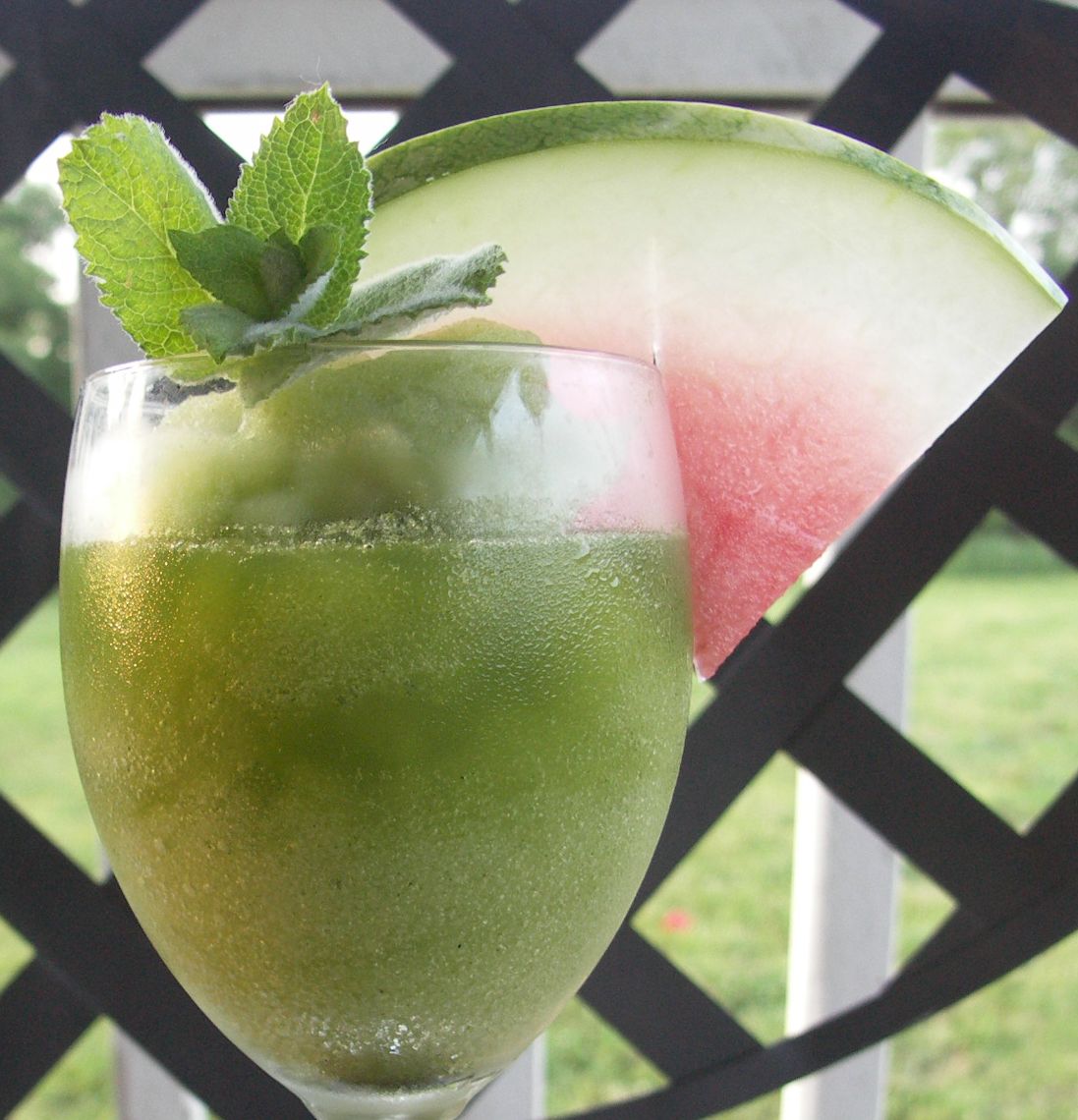
Combine the mint leaves, Turbinado syrup, rum and limeade in the blender.  Cover and blend on high until the mint leaves are obliterated and the mixture is a uniform color.  Open the blender and add the ice, taking care not to splash out the minty, rummy goodness.  Cover again and blend on high until there are no remaining ice chunks.  Pour into chilled glasses (with the rum in it maybe the grownups should have the unbreakable cups.)  Garnish with a thin piece of seedless watermelon and a sprig of mint.


You did save a sprig of mint, right?


Updated June 11, 2008-  These recipes were chosen as the winners of beverage portion of the ”You’re The Chef Night” contest over on EvilChefMom.blogspot.com .


Here’s hoping they like them as much as we do!