Homemade Naan

Welcome to part IV of the series of component dishes  to make the transcendent ‘Second to Naanwich’ that still has me obsessed almost three weeks after eating it. (Don’t forget to peek at Part I, Candied Jalapenos a.k.a. Cowboy Candy, Part II, Homemade Greek Yogurt and Cucumber Yogurt Salsa [Raita] and Part III, Homemade Ghee !) Tomorrow I’ll share the recipe for the Tandoori Style Grilled Chicken and directions for putting together the you-know-what!

You know how I feel about bread.(You can find proof is here, here, here, and here for starters.) It’s no mystery that I would do just about anything for a hot, fresh loaf of crusty bread.  And I’m about to share with you one of the most instant gratification perfection breads you can possibly make; Naan*.  We all know that bread is the closest thing to perfection in the food world, but this particular version of naan takes it one step closer; it’s fried. Can you think of something better than chewy bread that was fried in a pan with butter?  I’ll give you a minute to think about it.

*The hard-working grandmothers of an entire sub-continent just collectively gave me the stink-eye for suggesting their dietary staple is a convenience food.

Still thinking? It’s alright.  I’m not in a hurry.  I’ll just nibble my naan here.

Got anything yet?

I didn’t think so.  Bread.  Butter.  Fried.  That’s really all you need in life.

There is an advantage to this version of naan; it uses the super versatile Master Bread Dough (that I’ve evangelized about many times before; here, here, here and here.) That means that you can satisfy your naan cravings -and believe me, they will occur- in mere minutes because the dough is parked in the refrigerator awaiting your beck and call and ghee and pan.  In five minutes flat, you can be scorching your tastebuds on a perfect naan straight from the frying pan. That is serious convenience food.  It makes me look good to whip up bread in about as much time as it takes to rip open a bag of chips and a container of dip.  That makes me very popular with

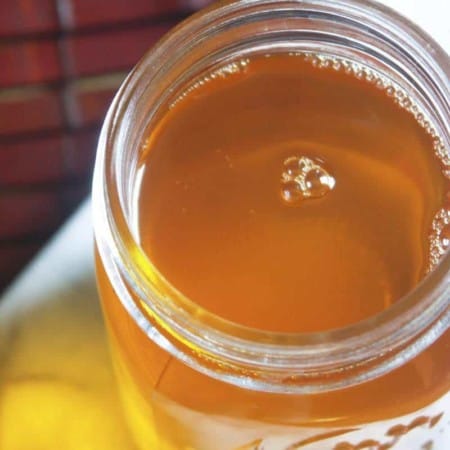
This is a job for ghee. Sure, you could fry it in oil or plain butter, but there are a couple reasons that ghee is superior here. First, oil is just bland in this application.  B-o-r-i-n-g.  And that is a sin with bread. Go forth and sin no more.

Second, if you read my post on homemade ghee you might remember that I said turning butter into ghee raises the smoke point.  That’s a very good thing when you’re frying bread.  It gives you longer to cook the bread before it scorches. The result is naan that is cooked all the way through; chewy on the inside,  crisp on the outside and a wee bit charred around the edges vs. carbonized on the outside and gummy on the inside.

This is good-for-the-soul food; happy-from-the-inside-out food. Do yourself a favor and make some today.  I boss you around because I love you.

For a photo-free, printer-friendly version of this recipe, click here!

Homemade Naan

The Dough recipe is reprinted from ‘Artisan Bread in Five Minutes a Day’ and the Naan recipe is gently adapted from the same source.  This does make a lot of dough.  You can use it to make the recipes found here, here, here and here or you can halve or quarter the recipe.

Ingredients for the Master Bread Dough:

  • 6 cups warm (but not hot) water
  • 3 Tablespoons Kosher salt (if using table salt, reduce to 2 teaspoons)
  • 3 Tablespoons active dry yeast (or SAF Instant Yeast)
  • 13 cups (3 pounds, 7.25 ounces by weight) all-purpose flour

Mix all ingredients together in a 12 quart bowl or container until an even but shaggy dough forms.  You do not have to knead it.  Simply cover loosely with plastic wrap or a lid.  Do not cover tightly or this might happen to you!  Allow the dough to rise for two hours at room temperature or until the dough has more than doubled in bulk.  It may collapse back in on itself or it may not.  Either way, after it has doubled you can either put it into the refrigerator to use within the next two weeks or you can use part of it immediately.

Ingredients for the Naan:

  • Ghee
  • Master Bread Dough
  • all-purpose flour

Dust the surface of the dough with a generous amount of all-purpose flour.

Pull up a portion of dough with your hands and use a sharp knife to cut off a portion about the size of a golf ball. Place on a clean, lightly floured counter top.

Use your hands or a rolling pin to spread the dough out as thin as you can get it.  If the dough is fighting you a lot (i.e. springing back to its original form) you can let it rest for a couple minutes and tackle it again.  It will stretch eventually!  For the naanwiches, I stretched the naan to about the shape of a single chicken breast.  That is totally unnecessary, but it made the sandwiches prettier and (I think!) easier to eat.

Place a heavy-bottomed pan with a lid over high heat.  I used a hard-anodized cast-aluminum pan, but cast-iron works really well here, too.  When a few drops of water flung onto the pan from your fingertips skitter across the surface before evaporating, the pan is ready to use.

Spoon about 2 teaspoons of ghee into the hot pan and swirl to coat.  Gently place the stretched dough into the pan and cover with the lid immediately.

Lower the heat to medium/ medium-high. Fry for one to two minutes before lifting the lid.  This allows the underside of the bread to fry while the top side steams.

Lift the lid to check the bread.  If the top is puffy and the underside is a rich golden brown around the edges and on large areas of the center, flip the bread.

Cover again and cook for an additional two minutes or until the second side is also a deep golden brown.  Remove naan to a rack and repeat until you have the desired number of naans.  These are best served within an hour of being made.

Don’t forget that tomorrow we make these:

Homemade Ghee (Clarified or Drawn Butter or Beurre Noisette)

Welcome to part III of the series of component dishes (Part I, Candied Jalapenos, can be read here! And Part II, Homemade Greek Yogurt and Cucumber Yogurt Salsa [Raita] can be read here!)  to make the transcendent ‘Second to Naanwich’ that still has me obsessed almost three weeks after eating it.  In the next post, I’ll share the recipe for the Tandoori Style Grilled Chicken and directions for putting together the you-know-what!

I promised myself I wouldn’t start this post with an excuse about why it’s taking me so ever-loving long to get these recipes to you. I pledged I wouldn’t tell you all that I’ve been hosting everybody and their uncle (well, everybody BUT the Uncle…), trying to finish up the year-end reports for the school district, keep the kids focused on the last few days of school, plan a trip to a theme park and catch up on my life-long enemy laundry.  I made a vow that I wouldn’t talk about the fact that I’ve spent more hours in the last two weeks outside putting in vegetable, herb and flower gardens than I have in the kitchen. And I pinky-swore that I would absolutely, positively not mention that a guy in the neighborhood (yes, three houses in five square miles counts as a neighborhood) kept us all awake until three in the morning all the way through Memorial Day weekend with a really lousy and very enthusiastic indefatigable live band*.  And I’m always good to my word, so I will not go there and we will instead jump straight to the food.   After all, that’s why we’re all here, right?

*I am writing my Congressman to ask that he propose legislation that if you are going to mike your band and turn the amps to eleven that you will be required to be good.  Anyone who has ever been forced to listen to the band who sounded like they had set up shop in my front yard would vote for it in a heartbeat.

Ghee (also known as ‘clarified’ or ‘drawn’ butter) is a staple in many world cuisines; Indian, French, English, Brazilian, and Iranian just to name a few.  It is -to use Wikipedia’s highly accurate and mega-scientific explanation- an anhydrous milkfat rendered from butter to separate the milk solids from the butterfat.  Hoo yeah!  In short, it’s pure butterfat.

Why not just use regular butter?

Ghee has gone through the process of removing the two things that tend to make butter go bad more quickly; milk solids and water.  By cooking it over low, slow temperatures, you evaporate the water and use density to separate the milk solids.  But that’s not the only amazing reason to make ghee.  Not only have you made the butter more shelf stable, you’ve raised the smoke point.  That means you can use it to cook at higher temperatures without scorching than you would be able to do with normal butter.  You get the butter flavor, it lasts more than five times as long as it would have and it is more versatile.  That’s a win/win/win situation.

As with many foods, you’ll get a better end result by starting out with a better ingredient.  If you can get your hands on cultured or European-style butter, you won’t regret it.  If you can’t, just use the best butter you can easily afford.  It’ll be delicious either way.

Let’s talk cost.  Have you ever bought or priced out a jar of ghee at the grocery store?  First of all, that preceding statement assumes you live in an area where they carry ghee in your grocery store.  In my little grocery store?  Not so much.  But if I were to head up to The Big City, I assure you that I wouldn’t pay the  $16.00 they want for a twenty eight ounce jar.  Not happening.  No way, no how.  I pay my Amish neighbor $2.00 per pound of cultured butter.  I’ll pause and let you rage at me for a moment.  Are we done?  Okay.  That means that I yield about twenty-four ounces of ghee for $4.00, if you want to add the cost of the fuel to cook it, we might generously push it toward the $5.00 range. So that’s somewhere in the range of one third of the cost of store-bought to make my own. I bet you don’t need two guesses to figure out what I do.

And don’t you let me catch you tossing out those milk solids that precipitated from the butterfat.  They turn a toasty gorgeous brown and have the flavor to match their appearance.  Spooned into a pot of fried rice, spread on a piece of fresh bread, or stirred into soup, you’ll be amazed at the depth of flavor they impart.  Plus, you can pat yourself (butter pun alert) on the back for being so frugal when so many people just tell you to discard that flavor powerhouse. You just saved even more money and provided yourself with a fan-flippin’-tastic ingredient that you cannot buy.

One warning, though.  You may want to have some snacks prepared to munch on while the ghee is cooking. This stuff smells just a little too good while it’s cooking.

For a printer-friendly, photo-free version of this recipe, click here!

Homemade Ghee

Yield: About 1 1/2 pints of Ghee plus 1/2 pint of crispy bits.

Ingredients:

  • 2 pounds of good quality butter (use Cultured or European Style if available)

Melt the butter slowly over low heat in a heavy-bottomed saucepan.

Stir occasionally.  When the butter is melted, it will begin to foam near the top.

Continue cooking over low heat.  After a couple of minutes, you will begin to hear snapping, popping and crackling.  This is the sound of the water separating from the fat and simmering to the top to evaporate away.  You need for this to happen.  This is what helps make the ghee so shelf-stable.

You will also start to see the milk solids separate out from the fat.

Continue cooking over low heat until the crackling sounds cease and the milk solids have mainly sunk to the bottom and taken on a toasty brown color. Another good indicator that your ghee is done is that it will smell like popcorn. There may still be a thin layer of foam near the top or it may have lost all of its foam.  Either way, if the crackling sounds have stopped and the milk solids are golden brown, it is time to remove the ghee or clarified/drawn butter from the heat.

An example of a batch with no foam at the top:

An example of a batch that had foam at the top:

And my beloved toasty milk solids:

Allow it to cool, uncovered for 30 minutes.

While it cools, set up your straining station.  Line a fine mesh sieve or colander positioned over a bowl or jar with paper towels, a clean tea towel or extra-fine cheesecloth.

After the ghee has cooled, carefully pour it into the straining apparatus.

When you are through straining, there should be the toasted milk solids left in the strainer.  Scrape these into a separate clean jar to save for spreading on toast or adding to recipes.  The toasted milk solids should be stored in the refrigerator in a tightly covered container.

The ghee can be stored at room temperature in a tightly covered jar for up to six months.  At room temperature, ghee is mainly solid and opaque.  It will look like this…