Greek Salsa

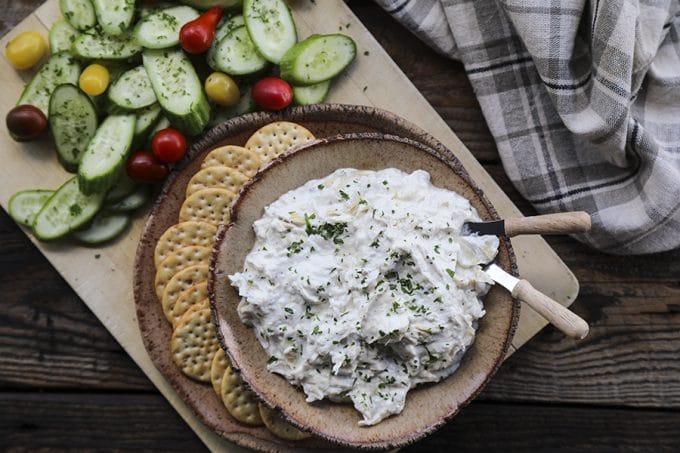
The little germ of an idea was flitting around in my brain since the first eighty degree day we had this year… I wanted to do a Greek salsa. I knew I wanted it to have lemon juice, feta cheese and kalamata olives. Not just any kalamata olives, mind you, I wanted garlic stuffed kalamata olives.

I have a thing for garlic stuffed kalamata olives. And by a thing, I mean a full-fledged dependency. If these things weren’t $7.99 a pound, I’d slurp them up all day every day and have water retention so severe my ankles would be the same size as my hips which are NOT tiny. Phew.

Sigh.

There is added insurance against my overdosing on the olives in that the closest place to buy them is a forty five minute drive in either direction. I shop at the place about once every month and drive to the store with eager anticipation. I scoop as much into the little container as I can while still being able to fix the lid in place, ask the clerk to double bag it and tie the top because that luscious marinating oil has a tendency to leak. Okay. I also have her double bag it and tie the top because it keeps me from eating them all before I get home.

Once home, I cram the bagged container into the back of the fridge in a vain attempt to hide them from myself and everyone else because I am not the only one here obsessed with the little gems.

I then sit and plot the ways that I’m going to eek them out. The idea for the Greek salsa was near the top of the list for months, but kept getting pushed back when someone or another discovered my hiding spot and made the olives disappear in a feeding frenzy. Alright. It was me. I can’t help myself.

I told you I love those things.

The last time I went to the store, they had BIG containers. It was a happy, happy day. I was able to fill the big container with enough to snack on AND use in recipes.

We snacked, we put them on pizzas (our second favourite thing to do with them after snacking), we finally made this salsa. It was worth the wait.

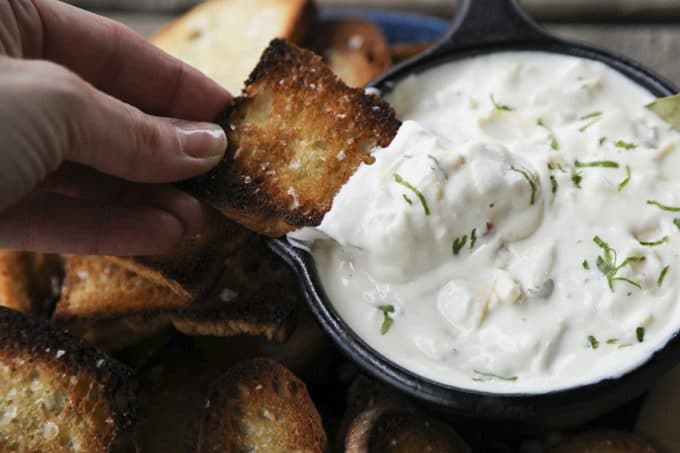
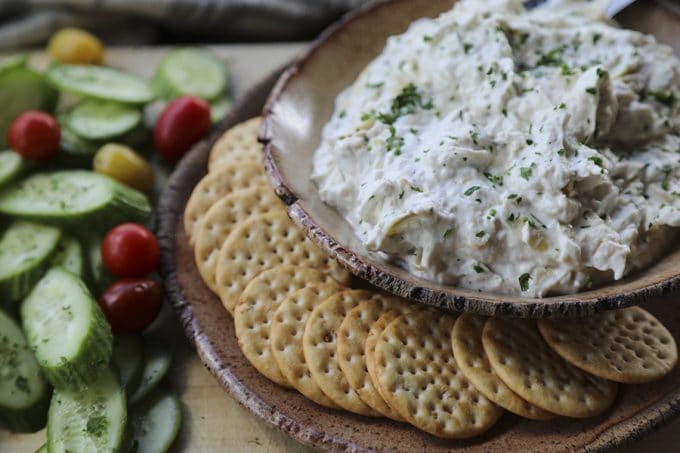
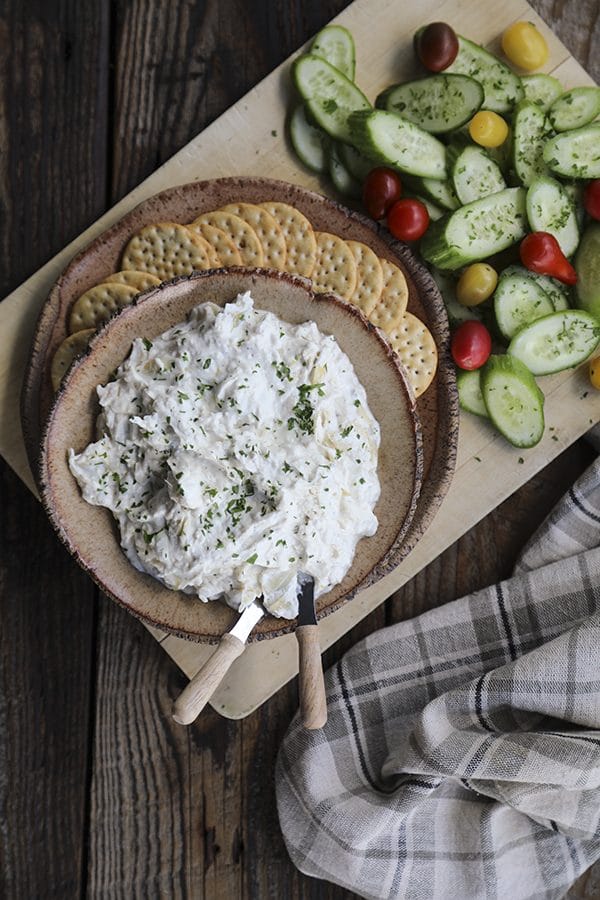
This is happy food, friends. Fresh, crunchy, flavourful, and filling without being heavy, this Greek inspired salsa is full of cucumbers, fire roasted peppers, red onions, garlic stuffed kalamata olives, crumbled feta, lemon and chopped parsley. I dipped it up with pita chips and I served it as a salad alongside grilled fish. It made me want to yell Opa! and smash plates*. I made batch after batch of this salsa until the olives ran out. It was so good.

*At least it made me want to smash the plates I have that I don’t like. I’ve been gunning to get rid of that Correlle for years.

Here’s the beauty of the recipe, though. While it is most wonderfully suited to summer, it can be made year ’round. I imagine this will fill in some mid-winter cravings for fresh food for me. It’s just that kind of dish.

I know those garlic stuffed kalamatas can be hard to find, so if you can’t lay your hands on them, simply use pitted kalamatas and add a large clove of garlic, peeled and minced, to the recipe.

OPA!!


Greek Salsa

Greek Salsa

This is happy food, friends. Fresh, crunchy, flavourful, and filling without being heavy, this Greek inspired salsa is full of cucumbers, fire roasted peppers, red onions, garlic stuffed kalamata olives, crumbled feta, lemon and chopped parsley. Dip with pita chips or serve as a salad alongside grilled meat or fish. Opa!

I know those garlic stuffed kalamatas can be hard to find, so if you can't lay your hands on them, simply use an equal amount of pitted kalamatas and add a large clove of garlic, peeled and minced, to the recipe.

Ingredients

  • 1 seedless cucumber, also known as an English cucumber, diced finely
  • 1 jarred fire roasted red pepper (or a freshly roasted pepper, peeled and seeded), diced finely
  • 1-inch thick slice from a red onion, minced finely
  • 1/2 cup garlic stuffed kalamata olives, coarsely chopped
  • 1/2 cup feta crumbles
  • 1/4 cup, packed, flat leaf or curly parsley leaves
  • 1 garlic clove, peeled and minced or pressed
  • the juice and zest of 1 lemon

Instructions

Finely mince the parsley leaves and add to a mixing bowl with the remaining ingredients. Refrigerate, tightly covered, or serve immediately with pita chips or alongside grilled chicken or fish.

http://www.foodiewithfamily.com/2012/08/24/greek-salsa/

Chipotle Cilantro Lime Butter and Mexican Grilled Corn | Make Ahead Mondays

Last week, I had the opportunity to travel to Oregon to join a fabulous group of fellow bloggers in a tour of the Medford, Oregon area sponsored by Harry and David. It was an incredible trip filled with great food and great wine, respect and wonder for what Harry and David does as a company and how they do it (more on this and the trip in a subsequent post), and fantastic friends.

Just look at these gorgeous ladies and Matt who is not a lady but a talented and enthusiastic horticulturalist. Hi, Matt!

Photo by Sandy Coughlin: The Reluctant Entertainer

I’m telling you, I tried valiantly to figure out how to take all of them home with me. Lori, Jessica, Jenna, Rachel, Maria, Amy, Matt, Sandy- who helped pull this stupendous weekend together (see her posts about it here and here), Bridget, Kristen, me, and Heidi had a wonderful time reconnecting (in some cases) and finally meeting in real life (in other cases.) I’m taking away an obsession with Harry and David peaches and pears, Rogue creamery cheese, the entire state of Oregon (again, this is another cup of coffee. It’s coming on another post.) and the company of all those fabulous bloggers with whom I was privileged to spend time. Talk about an inspiring and motivational group of people!

As I drove home from the airport on Saturday, I was so glad to see sweet corn signs had popped up all over the local roadsides. I pulled into my favourite stand (Hi, Mrs. Morton!), grabbed three dozen ears (WHAT?!? You don’t go a little nuts over the first sweet corn of the year?), and drove hell for leather to get home and squash the tar out of my menfolk (who apparently didn’t miss me all that much since my darlink little sister was way more fun that mommy. Folks, she helped the boys catch CRAYFISH to COOK and put in their macaroni and SMOKED cheese. ) and fire up the grill.

Yes. I said fire up the grill.

I know cooler corn is all the rage now, and if anyone could justify pouring buckets of boiling water into a cooler and cooking massive amounts of corn it’d be me. Truth is, though, I tried it (the cooler corn, that is) and wasn’t in love with the process. It took too long, the idea of pouring boiling water into plastic didn’t really ding my chimes, and I just plain love the flavour of roasted corn. Stick with what you love, right? Especially when we’re talking corn. Oh corn.

I do love you.

Madly.

Grilling it somehow magnifies the, how to say, corniness of corn. You know, the sweetness, the freshness, the pure summer of the experience; it’s all made bigger by the application of fire rather than water. It is so good.

While eating it with obscene amounts of plain butter and salt is my usual method, I do so love dressing it up Mexican style with one of my favourite things: Chipotle Cilantro Lime Butter. This is the bees-knees, friends; smokey and spicy butter with the freshness of lime, studded with little emerald bits of cilantro to wake everything up. Here’s the beautiful thing- you whip up a batch of the butter, shape it into a log, roll it up in plastic wrap and store it in the freezer where you can store it for three months, lobbing off little pats of this butter to put on grilled chicken, fish, pork, corn or whatever floats your culinary boat.

Imagine this dripping down a freshly grilled ear of corn and onto your fingers. You know you’d better lick that off. It’s a sin to waste.

And gild the lily while you’re at it with a fistful of crumbled Queso blanco and a shower of freshly chopped cilantro. Mmmm.

I hate the heat, but I love summer for the corn. Now, if you’ll pardon me, I’m off to the farm stand for another three dozen. Summer only lasts so long here. I must take advantage of it!


Chipotle Cilantro Lime Butter and Mexican Grilled Corn | Make Ahead Mondays

Chipotle Cilantro Lime Butter and Mexican Grilled Corn | Make Ahead Mondays

Spicy, smoky, lime laced chipotle butter is studded with bright green flecks of cilantro to wake everything up. Store in the freezer for up to three months. Serve on grilled fish, chicken, pork or on grilled or roasted sweet corn.

Ingredients

    For the Chipotle Cilantro Lime Butter:
  • 2 sticks (1/2 of a pound) salted butter, softened to room temperature
  • the juice and zest of one lime
  • 1 tablespoon dried ground chipotle chiles
  • 1/2 teaspoon kosher salt
  • 3-4 grinds of fresh black pepper
  • 1/4-1/2 cup minced fresh cilantro (depending on how strong you like the flavour)
  • For the Mexican Grilled Corn:
  • Unshucked sweet corn (as many ears as you'd like)
  • 1 tablespoon crumbled Queso Blanco or Chihuahua Cheese per ear
  • minced fresh cilantro, to taste

Instructions

To Make the Chipotle Cilantro Lime Butter:

Add the unwrapped, softened butter, juice and zest of lime, ground chipotle, salt and black pepper to the bowl of a stand mixer fitted with the whisk attachment (or a large mixing bowl with an electric hand mixer). Whip on high for 1-2 minutes, stopping to scrape down the sides of the bowl occasionally. When it is thoroughly and evenly mixed, add in the minced cilantro and mix again for about 30 seconds or until the cilantro is evenly distributed.

Lay a 12-inch long piece of plastic wrap on the counter.

Use a silicone spatula to scrape the whisk attachment clean. Scrape the butter onto the plastic wrap in a rough log shape. Fold one long edge over the butter and use it to help you shape into a cohesive, even log. Roll the butter log along the countertop, wrapping tightly in plastic wrap and evening up the shape as you go. Pat the ends even and twist the plastic wrap on the ends. Put the tightly wrapped butter log on a plate in the freezer until firm through, then transfer the wrapped butter log into a zipper top plastic bag. Cut off pats as needed and return what remains to the zipper top bag in the freezer, storing the remainder in the freezer for up to 3 months.

For the Mexican Grilled Corn:

Preheat a gas grill on low heat. (Or start a small bed of coals in a charcoal grill. When the coals are completely covered in ash, pile over to one side, leaving most of the grill under indirect heat.

Carefully peel the husks back from the corn (keeping intact). Remove the silk and fold the husks back up over the ears. Lay the ears of corn evenly over the grill (if using charcoal, be sure to leave the area immediately above the coals free of ears of corn.) Grill with the lid closed for about 30 minutes- 45 minutes, turning and changing the ears' positions about every 5-7 minutes

When the corn is finished, transfer to a rimmed baking sheet.

To Serve:

Shuck each ear of corn and top with pats of Chipotle Cilantro Lime Butter, about 1 tablespoon of crumbled Queso Blanco or Chihuahua cheese and a shower of minced cilantro. Let the butter melt and dribble down the corn and serve immediately. Make sure you wash your hands before eating so you can lick your fingers to get every last bit of that wonderful butter.

http://www.foodiewithfamily.com/2012/08/20/chipotle-cilantro-lime-butter-and-grilled-sweet-corn-make-ahead-mondays/


Slow-Cooker Red Beans and Rice and Creole Seasoning | Make Ahead Mondays

I’m going to go ahead and say right now that I have absolutely zero idea how authentically “Cajun” today’s recipe is, having never actually been to the great state of Louisana. All I know is that it is very possibly one of the tastiest things to come out of my kitchen in recent weeks.

There are few things more satisfying than a big bowl of cooked rice topped with saucy, spicy, tender red beans and smoky sausage rounds then crowned with green onions and sour cream. Whether the weather be cold, or whether the weather be hot, as the saying goes, you can weather it better with a bowl of this under your belt. It is one of the few comfort foods that does hot or cold weather conditions equally well.

On a wild hare, I decided to throw my usual red beans and rice ingredients into my slow-cooker and see what happened. I figured that the worst case scenario would be a flavourful mush and the best case scenario would be the world’s easiest and wickedly economical dinner. I turned my best beloved slow-cooker to high, let ‘er rip, and walked away for six hours.

The next six hours were spent trying fervently not to eat everything in the pantry because it smelled so ever loving good in this house that I thought I might die. I repeatedly broke the cardinal rule of slow-cooking and crockpot-ery by lifting the lid and testing and re-testing beans to see if they were (oh please oh please oh please) done yet. After those agonizing six hours were up, I was rewarded with the easiest -and easily the best- red beans and rice I had ever made.

The facts that it didn’t heat up my kitchen and that the hardest part of the whole procedure was keeping myself from eating it before it was done were just gravy. My word, friends, it was so good.

So good, in fact, that I made a double batch again later that week and plan on making it for company when we receive a houseful of family for my brother’s wedding next month. It’ll be just thing; set it up and let it cook while running around for rehearsals, making the wedding cake, and trying to get five boys who’d rather not see the inside of a shower ready for their uncle’s wedding. Pray for me folks. It’s the getting the boys ready that’s giving me palpitations.

There is one grave danger attendant to making this recipe. It smells so good while cooking that there is a very real possibility that you will gnaw off your own leg of that of someone nearby.

I have just a couple of other thoughts to share about this recipe.The Creole Seasoning is wonderful to have on hand for recipes that call for it, to be sure, but we like to use it on other things, too. For instance, we love it on popcorn or homemade tortilla chips.

I like to make it really spicy and then mellow it out in my own bowl with a big dollop of sour cream. I think a fistful of grated Cheddar would do something similar if you’re so inclined. To do this, I tend to use the higher amount of cayenne pepper I specify in the recipe.

On the other hand, you could just keep the spice to a minimum in the first place. If you’d like to keep it on the milder side, cut back on or omit the additional cayenne pepper (above and beyond the small amount that is already in the Creole Seasoning) from the recipe.

I know andouille is the sausage darling of Cajun/Creole cooking, but it can be hard to find in these parts, so I most often make mine with smoked sausage. I absolutely love it this way, so do not feel like your ability to make this spicy, smoky classic hinges on the availability of andouille.

Slow-Cooker Red Beans and Rice and Creole Seasoning | Make Ahead Mondays

Slow-Cooker Red Beans and Rice and Creole Seasoning | Make Ahead Mondays

Whip up a batch of this handy Creole seasoning to add a little oomph to your every day dishes or reserve it for the most wonderfully tantalizing and simple red beans and rice you've ever had. The slow-cooker does the work so you can stay out of the kitchen on hot days. Be forewarned: this smells so good while it's cooking that you may feel ravenous by the time dinner rolls around.

Creole Seasoning adapted from Emeril Lagasse's recipe.

Ingredients

    For the Creole Seasoning:
  • 3 tablespoons paprika
  • 2 tablespoons kosher salt
  • 2 tablespoons garlic powder
  • 1 1/2 tablespoons dried thyme
  • 1 tablespoon onion powder
  • 1 tablespoon cayenne pepper
  • 1 tablespoon dried leaf oregano
  • 2 teaspoons black pepper
  • For the Slow-Cooker Red Beans and Rice:
  • 10 cups water
  • 3 cups small red chili beans (about 1 1/2 pounds), rinsed and picked over
  • 1 pound smoked sausage or andouille, sliced into 1/4 to 1/2-inch rounds
  • 1 red bell pepper, stemmed, seeded and cut into 1-inch pieces
  • 1 medium cooking onion (yellow or white), peeled, trimmed of root and blossom ends, and diced
  • 1 rib celery, cut into 1/2-inch pieces
  • 1 tablespoon Creole Seasoning
  • 1/2 teaspoon dried thyme
  • 1 bay leaf
  • 1/8-1/2 teaspoon ground cayenne pepper (according to heat preference)
  • For Serving: Hot cooked rice and green onions
  • Optional: Sour Cream

Instructions

To Make the Creole Seasoning:

Add all of the ingredients to a small mixing bowl bowl and toss together with a fork or a whisk. Store, tightly covered, in a jar or other airtight container in a cool, dry place. This is good for about a year after mixing.

To Make the Slow-Cooker Red Beans and Rice:

Add the water, beans, sausage, red bell pepper, celery, Creole seasoning, thyme, cayenne pepper, and bay leaf to the bowl of a slow-cooker. Add the lid and turn the heat to "HIGH'. Let it cook for 6 hours, stirring once or twice. After 6 hours, use a spoon to fish out a bean to test. If it is tender, turn off the heat. If it is still underdone, replace the lid and cook for another hour or until the beans are tender. Remove and discard the bay leaf.

Gently stir the contents of the slow-cooker before ladling over bowls of hot, cooked rice. Garnish with chopped green onions and -if desired- sour cream.

Store leftover beans tightly covered in the refrigerator for up to 4 days or freeze in individual portions for longer storage: up to 6 months.

http://www.foodiewithfamily.com/2012/07/16/slow-cooker-red-beans-and-rice-and-creole-seasoning-make-ahead-mondays/

Tocino (Filipino Cured Pork) | Make Ahead Mondays

UPDATE: The National Pork Board has generously extended the deadline for The Foodbank donation partnership with you all because you’ve been asking such great questions! In other words, every question you leave for pork producers in the comments on this post, the Foodie With Family facebook page, or on Twitter with the hashtag #sustainablepork will translate to 1 pound of pork being donated to The Foodbank of Ohio. No strings attached!

Pork.

It’s what’s for dinner in one form or another in our house most nights of the week. We are a porkcentric household. That has probably been pretty obvious here with all my use of bacon, chops, roasts, Cuban Pork, Cola Pulled Pork, Hot Tex Mess, and more (scroll down for porky goodness.) So when the National Pork Board contacted me to see if I wanted to take a tour of a sustainable pork farm, I replied with a pretty quick ‘yes’.  Then they contacted me again and made me an offer I couldn’t refuse.

They are going to donate one pound of pork to The Foodbank in Ohio for every question you all leave here for me to ask them when I go on the tour up to 1,000 pounds. Holy cow. Or should I say holy pig?

Just think of how many people we can feed if you all are curious enough!

Let’s talk for a moment about what I’ll be looking at when I head out to Dayton. According to the information sent to me by the National Pork Board, within a 50 year time frame, pig farmers have reduced their carbon footprint by 35%, reduced water usage by 41% and decreased the amount of land needed to grow feed by 78%. Additionally, we are getting more meat from fewer pigs – which helps reduce the use of natural resources to raise pigs.

 The Pork Checkoff has been honoring the sustainability efforts of pig farmers for 18 years with the Pork Industry Environmental Steward Award. The farm I will be visiting on July 24 was recently honored with this award.

So where do you come in on all of this? Just leave me a question in the comment area below (or on Twitter using the hashtag #SustainablePork ) between now and July 13th. All comments and tweets that have questions for me to ask the farmers and the National Pork Board representatives will count and one pound of pork will be donated per question or tweet.

~~

Now I figure you all know me well enough to realize that I couldn’t talk this much about pork without giving you a great recipe for it. That would just be unkind. Without further ado, I present to you one of my favourite freezer pleasers; Tocino. (Pronounced toe-see-no.)

Tocino is a Filipino dish that I have loved longer than I can remember. Starting with a humble and inexpensive pork shoulder (about $1.29/lb where I shop), a little slicing and a quick cure in some sugar and spice in a resealable zipper top bag, you end with a salty but sweet, crisped pork that tastes like super meaty bacon. It doesn’t take much work, and once you’ve tossed the pork with your sugar and spices, you can stash the bag in the freezer for up to six months before frying or grilling. Low investment, mega-payoff.

The sugary salty cure that enrobes the thin slices of pork keeps the mixture from freezing totally solid, so you can scoop out what you’d like to serve for dinner and leave the rest frozen for future meals. The traditional accompaniment for tocino is garlic fried rice and a fried egg for the classic Filipino breakfast called Tosilog. Doesn’t that sound like just about the best possible way to start a day? I speak from experience when I say it makes one heckuva lunch, dinner or snack, too.

Tocino is traditionally cured with red food colouring or other agents (like the pink salt, or saltpeter, used in curing other meats). I’m not super keen on food colouring, so I use beet powder as recommended by Jun-Belen. That man is a genius. The beet powder adds an appetizing red colour without adding any funky insect or chemical colouring. Lest you fear the beet, let me assure you it does not impart any beet-y flavour to the finished product.

Tocino (Filipino Cured Pork) | Make Ahead Mondays

Tocino (Filipino Cured Pork) | Make Ahead Mondays

Do you love meaty bacon? Give this traditional Filipino, quick-cured, pork a try. An inexpensive pork should gets a boost from the fast-curing sugar, salt and spice combination and yields salty, sweet perfection that is reminiscent of thick cut bacon. It stores beautifully in the freezer for whenever cravings strike.

Ingredients

  • 3 pounds pork shoulder, sliced into 1/8-inch thick pieces
  • 3/4 cup raw or granulated sugar
  • 3/4 cup brown sugar (light or dark)
  • 1 clove garlic, peeled and minced
  • 3 tablespoons kosher salt
  • 3 tablespoons beet powder (you can substitute about 15 drops of red food colouring if you prefer.)
  • 1 tablespoon light soy sauce
  • For Cooking:
  • Vegetable, peanut or canola oil for pan frying

Instructions

Combine both sugars, the garlic, salt, beet powder (or food colouring), and soy sauce in a very large resealable zipper top bag (2 gallons) or a stain-proof container with a tight fitting lid. Close the bag or container tightly and shake to combine ingredients evenly. Open the bag or container, drop the pork slices in and reseal. If using a bag, squeeze the bag to thoroughly coat all of the pork with the sugar and salt mixture. If using a container, use your hands to move the pork around to be sure it is thoroughly coated in the mixture then close the container tightly.

Put the bag or container in the refrigerator and let it cure for at least 2 days before using, but up to 4. Alternatively, you can put the container or bag directly into the freezer (letting it sit for at least a week before using) for up to 6 months.

To Cook the Tocino:

Whether using fresh from the refrigerator or directly from the freezer, remove the amount of tocino you want to cook and let it sit in a colander for several minutes to drain any excess liquid.

You may either grill the tocino over high, direct heat, or pan fry in batches. To pan fry, heat about 2 teaspoons of oil in a heavy-bottomed skillet over medium-high heat. Fry the pieces until cooked through and browned with little charred bits, about 2-3 minutes per side.

Serve, if desired, with garlic fried rice and a fried egg for a traditional Filipino breakfast.

http://www.foodiewithfamily.com/2012/07/09/tocino-filipino-cured-pork-make-ahead-mondays/

Don’t forget to leave your question for the pork farmers and National Pork Board below. Every question you leave will provide a hungry family with a pound of pork!

From July 23-24, I will be attending a tour of an Ohio family’s pig farm with the National Pork Board (NPB) focused on sustainability efforts in the pork industry. NPB will cover the costs of my trip, but all opinions expressed are my own.


Butterscotch and Milky Way Tapioca Pudding | Amish Recipe

I’ve told you about my friends, Ada and Anna, in the Maple Sandwich Cookies post. What I haven’t told you about these ladies is that we are constitutionally incapable of having a conversation without it somehow turning to food and lots of it.  We talk about every kind of food we can think of, but our favourite topic is always dessert.

About three months ago, we were chatting about pudding (like you do) and Anna said, “Mom, you’ve told Rebecca about our butterscotch tapioca, right?” Whenever Anna says that, my ears perk up, and they did. “No…,” said I. “I don’t believe you have!”

What happened next is etched in my brain for all of eternity because I never had heard of such a glorious, decadent, unapologetically desserty dessert in all of my time.

Ada: Well, you start with cooking tapioca with brown sugar…

Anna: And then you add in white sugar, egg and milk.

Ada: Stir it so it doesn’t scorch!

Anna: Then you stir in butter and vanilla. Now you have to let it cool. Then you fold in whipped cream. Lots of whipped cream.

Ada: And chopped Milky Way bars.

Anna: And little tiny pieces of cream cheese. That’s it!

Ada: No, that’s not quite it. We sometimes serve it with caramel ice cream topping.


THUD. That was the sound my jaw made as it hit the floor. I was speechless. I was mesmerized. I was so befuddled that I walked out of their store with neither the recipe nor the requisite pearl tapioca.

I couldn’t really head back up the hill to see them again for about a week, and when I finally got there  no one was home. I left a beseeching and desperate note pinned to their front door, “Dreaming about your tapioca! Would you be so kind as to write it down for me? We can exchange it the next time we see each other!” I’m pretty sure I drew some smiley faces and hearts, too.

Two weeks after that, Ada and Anna pulled their buggy into my driveway to chat about helping me paint my fence and porch. Their horse was a bit lame that day, so they didn’t stay long, and it wasn’t until they were out of the drive and halfway up the road that I remembered the pudding.

Just three days ago I finally got my hands on the recipe that Anna had copied over for me by hand. They called it “Butterscotch Tapioca” but I had to add the Milky Ways to the title of the recipe because, well, MILKY WAYS ARE IN THE PUDDING. Holy cow. If you’re not clutching your keyboard in anticipation by now you never will be.

It was absolutely everything I was waiting for and more. Normally, I prefer my tapioca warm with fruit, but this stuff is served cold. Warm is not optional; it needs to be cold. You want the whipped cream and candy bars to hold their integrity and if you fold those into warm pudding it’ll just go phllllllbbbbbt. You want a bowl full of this in the refrigerator just so you can walk by with a spoon and turn back and get a big old mouthful.

Even my three tapioca-averse children hoovered this with wild abandon. The two who like tapioca under normal circumstances? Forget about it. They were so blissed out they couldn’t even speak. And my husband… He walked up and said, “Tapioca in the summer? I don’t know about that… It’s more of a winter…” as he lifted the spoon to his mouth. The next words out of his mouth were, “Oh my. I need another bite. Boys, can you get me a bowl?”

Behold the power of Ada and Anna and their magical Butterscotch (AND MILKY WAY) Tapioca Pudding.


Butterscotch and Milky Way Tapioca Pudding | Amish Recipe

Butterscotch and Milky Way Tapioca Pudding | Amish Recipe

In this recipe from my Amish friends, Ada and Anna, tapioca pudding takes a turn for the spectacular when cooked with a brown sugar custard then loaded with folded-in whipped cream and oodles of chopped Milky Way candy bars and little tiny bits of cream cheese.

Ingredients

  • 1 teaspoon salt
  • 1 1/2 cups small pearl tapioca
  • 6 cups water
  • 1 1/2 cups brown sugar, packed
  • 2 eggs, well beaten
  • 1/2 cup white sugar
  • 1 cup milk
  • 1 stick butter
  • 1 teaspoon vanilla
  • 1 1/2 cups whipping cream (or heavy cream) whipped to firm peaks (or 3 cups of Cool Whip)
  • 15 "fun size" Milky Way bars or 2 King Size Milky Way bars, roughly chopped
  • 4 ounces cream cheese, cut into small pieces

Instructions

Bring the tapioca, water and salt to a boil in a large, heavy-bottomed saucepan. Lower the heat and simmer for 15 minutes, stirring frequently to prevent sticking.

Add the brown sugar and stir well. Continue simmering until the tapioca is cooked all the way through (clear or just a tiny white speck at the center of each tapioca pearl.), stirring quite frequently to prevent scorching. My small pearl tapioca purchased at Ada and Anna's store took close to 40 minutes to reach this point.

In a 4 cup measuring cup, whisk together the milk, sugar and beaten eggs. Ladle about a cup of the hot tapioca mixture into the egg mixture and whisk until smooth, then return that to the pan whisking constantly. Bring to a hard simmer and then turn off the heat. Add the butter and vanilla, stirring until the butter is melted and incorporated. Cover tightly and refrigerate until cool.

Stir the cooled tapioca well to loosen it up. Add 1 cup of the whipped cream and stir it in. Add the remaining whipped cream and fold it in gently. After the whipped cream is incorporated and the mixture is even, fold in the chopped Milky Way bars and small pieces of cream cheese. Serve immediately or refrigerate, with a sheet of plastic wrap directly on the surface of the pudding and also tightly covered for up to a week.

Ada and Anna suggest serving this with caramel ice cream topping if you want!

Notes: Do not use large pearl tapioca in this pudding as it will take far too long to cook through. Ada and Anna suggest that if you're short on time, you can substitute granulated tapioca, but I have not tested this option. Additionally, when you have chilled the tapioca in preparation for adding the final ingredients, it's going to look like a big, brown lump. Don't fear! Just stir it well to loosen it up. It will lighten significantly in colour and texture as the whipped cream is folded in.
http://www.foodiewithfamily.com/2012/06/29/butterscotch-and-milky-way-tapioca-pudding-amish-recipe/

Greek Millet Tabbouleh (Gluten-Free)

I’ve been wilting like spinach in a screaming hot pan in this humidity and heat. I dropped two of my boys off at camp and drove away after giving the hairy eyeball to all the counselors to try to ascertain whether or not they were secret closet psychos. Conclusion: They are all wonderful people. I’m the one who is crazy.

I blame the weather and a colourful family history of wild men and wilder women. As in the sort of folks who slept with shotguns under their pillows.

Here is where my dilemma comes into play. I love food. Love it madly. (Queen Obvious makes an appearance today.) There are, however, few things I like less than sweating just because I’m breathing. With the spontaneous combustion level temperatures this week, I honestly didn’t want to go anywhere near the stove. In fact, I swallowed my pride when dropping the two aforementioned boys off at camp and handed over packages of storebought shortbread cookies in lieu of actual baking. *hangs her food blogger head in shame and shuffles past table*

So what is a gal to do when she wants to eat and doesn’t want to cook? Enter the rice cooker, stage left.

Rice cookers aren’t just for rice, folks. They cook all sorts of grains to perfection. In this case, my rice cooker cooked millet to perfection without heating up my stove. Are you familiar with millet? It’s a tiny grain that’s a major food source in many parts of the world. Coming from a family of grasses, millet has no gluten at all, making it suitable for consumption by folks with coeliac disease or gluten-intolerance.  All that aside, it just plain tastes great. It cooks much like rice when done right and has a slight nuttiness to it that makes it a stand out in cold salads like tabbouleh.

Tabbouleh. Is there anything better on a hot, hot day than a cold bowl of vibrant vegetable, olive, feta and dill laden tabbouleh dressed with lemon juice and olive oil? I don’t think so! Tabbouleh hails from the Middle East which seriously knows how to survive heat waves. This tabbouleh is a departure from the normal bulghur wheat version, using millet instead. It’s a lovely change, with that little nutty hint the millet lends the dish, that -as a pure bonus- renders the dish gluten-free.

Before anyone says it, yes. This dish makes a large batch! Let’s consider, though, what time of year this is. This is picnic, pool-side, lunch-under-a-tree, road-trip, too-hot-to-cook, lay-in-a-hammock-with-a-book season. When you make Greek Millet Tabbouleh, you can eat off of it for a whole week. (Well, unless you’re a family of our size, in which case you get two meals from it. Tops.)

Greek Millet Tabbouleh (Gluten-Free)

Greek Millet Tabbouleh (Gluten-Free)

Toasty, nutty, fluffy millet takes the place of bulghur wheat in tabbouleh and is studded with fresh cucumbers, tomatoes, marinated artichoke hearts, crumbled feta, and fresh dill then dressed with freshly squeezed lemon juice. This big batch, gluten-free summery salad stores well in the refrigerator for up to a week.

Ingredients

  • 3/4 cup dry millet
  • 1 1/3 cups water
  • 1 tablespoon plus 1/4 cup extra virgin olive oil, separated
  • 1 seedless cucumber, cut lengthwise into eighths and then into small wedges
  • 1 pint cherry tomatoes, quartered
  • 1 cup marinated artichoke hearts, roughly chopped
  • 1 cup feta crumbles
  • 3/4 cup black kalamata olives, pitted (I used garlic stuffed kalamata olives for extra oomph.) and chopped
  • 1/2 of a sweet onion, peeled and diced
  • 1/4 cup, packed, fresh dill leaves, finely chopped
  • The juice and zest of 1 lemon
  • 1 clove of garlic, peeled and finely minced
  • salt and pepper to taste
  • additional extra virgin olive oil for serving

Instructions

Put the millet in a heavy bottomed skillet over medium high heat, stirring or tossing constantly, until you hear the grains popping and they toast to a very light golden brown. This will take about 4 to 5 minutes.

Quickly transfer the toasted millet into a deep bowl and immediately pour cool water over it to cover. Be careful when you do this as it will create a lot of hot steam very quickly. Swirl a couple of times then pour the water and toasted millet into a fine mesh strainer. Put the millet into the bowl of a rice cooker, add the 1 1/3 cups water and 1 tablespoon of the extra virgin olive oil. Program the rice cooker for 'regular' or simply turn it on if it is an on/off variety.

If you do not have a rice cooker, toast and rinse the millet as directed above, then cook according to package directions but using the same ratio of millet/water/olive oil as instructed in this recipe.

When the rice cooker (or stove top cooking) is done, open the lid and fluff with a wooden spoon or rice paddle. Scoop into a large mixing bowl and toss in the chopped onions and garlic. Let cool 10 minutes, fluffing every so often to help it cool more quickly.

After 10 minutes, toss in the last 1/4 cup of extra virgin olive oil and the cucumbers, tomatoes, artichoke hearts, feta crumbles, kalamata olives, chopped dill, juice and zest of the lemon, and salt and pepper to taste. Transfer to a storage container and refrigerate for at least 2 hours before serving, but an overnight chill is best. Toss gently and drizzle with a little additional olive oil just before serving.

Store leftovers in the refrigerator for up to a week.

http://www.foodiewithfamily.com/2012/06/23/greek-millet-tabbouleh-gluten-free/

If you’re looking for a good rice cooker, look no further than the model that gets a hard-core workout in my own kitchen. This Sanyo rice-cooker is one of the few things I would replace immediately if it kicked the bucket even though it hasn’t kicked the bucket yet and shows no signs of doing it despite being used several times a week for the past four years. It is practically titanium folks. The link below IS an affiliate link but I put it there because I believe in the product.

Pissaladière (French Pizza)

I spent my senior year of high school as an exchange student in the Alsasce region of France.  How my parents managed to pull that off in the middle of a divorce on a church salary and as a full time student I have no idea, but I am eternally grateful. I took full advantage of the opportunity they gave me and studied (the boys. Sorry, Dad.) at a French high school, traveled through France, Germany, Switzerland and even a wee bit of Italy, drank up the culture, admired the architecture, consumed my weight in pastry, read their literature, attended sporting events, hiked the countryside, walked the city streets (only the safe ones, ish. Sorry, Mom.), made lifelong friends, and -in retrospect- did everything I could have wanted to do.

Except for one thing.

You see, the year I spent in France was smack dab down the middle of my seven year stint as a vegetarian. Sigh. That’s right. I spent a school year in the sausage capital of the world. As in the region of France that is best known for its charcuterie and specialty hams and oh man. (That sound is me smacking my head on the desk repeatedly.) I want a do-over on the meat portion of the trip.

To be fair, I must assert I did not do without good food, lack of ham notwithstanding.  France is a food mecca no matter how you eat. I had cheese and pastry and vegetable tartines and more cheese and more cheese and yet more cheese. I put a great deal of French cheese under my belt. Given that I was not partaking in the local meats (weep, gnash, moan), the hospitable folks of the area pushed many cheeses my way. And if you think I ran out of cheeses to try whilst in La Belle France, you’re sorely mistaken.

With all the multitudinous fromages I munched, you might think think it’s a cinch that cheese was my favourite food in France. That distinction, however, belongs to a food that will always reign supreme in my heart as the ultimate in French food. It’s not a high-falutin’, fancy-pants, five-days-prep food either. It’s that good, solid, favourite-of-the-citizens selection: Pissaladière.

Pissaladière is not technically an Alsatian dish (Whimper, see lack of ham tirade above.) but it is at its heart a seminal French dish. It is, in a nutshell, French pizza. The crust is a little breadier than Italian pizza, it’s covered with a thick layer of caramelized onions, and topped with salty, oil cured olives and anchovy fillets. This is a dish that encapsulates why -among other reasons- I love France so much. They don’t shy away from stinky food when it tastes great.

Some day, I’ll get back to France. I’ll tour the places where I spent some of the most defining time of my youth. I’ll once again eat my weight in cheese and pastry, tour the countryside and admire the architecture. But this time, I’ll take my own cute guy with me, and I’ll try that ham and sausage, dangit.

…and I will most certainly have a pissaladière. Or three.

This post was sponsored by Frigidaire. When you share your own do-over moment at Facebook.com/Frigidaire, Frigidaire will donate $1 to Save the Children’s U.S. programs. Plus, Frigidaire will help cover the costs for one lucky visitor to win the ultimate do-over.

Pissaladière (French Pizza)

Pissaladière (French Pizza)

Pissaladière is the ultimate in French street food; crispy crust, caramelized onions, anchovies and salty, oil-cured olives. Because it is wonderful served both warm and at room temperature, it makes perfect picnic fare. La bonne vie is sitting on a blanket with a slice of Pissaladière and a glass of chilled, crisp white wine.

Ingredients

  • 1 pound pizza dough preferably this
  • 3 medium onions, peeled, halved and cut into thin half-moon shapes then roughly chopped
  • 3-4 tablespoons olive oil
  • 1/4 teaspoon dried thyme or 1/2 teaspoon fresh thyme
  • 1/2 a bay leaf
  • 3 garlic cloves, peeled and sliced
  • 1/2 teaspoon kosher salt
  • black pepper to taste
  • 8-10 oil packed flat anchovy fillets, patted dry
  • 16 oil cured olives, pitted and halved (You don't need to be fancy about it. Pop the pit out with your fingers and tear the olives in half.)

Instructions

Preheat your oven and a pizza stone to 500°F (or up to 550°F if your oven can go higher.)

While the oven preheats, gently heat the olive oil in a heavy-bottomed skillet. Add the onions, thyme, bay leaf, garlic, salt and pepper, stirring to evenly coat with oil, and cook gently over medium low to low heat (lowering if necessary to prevent over-browning) for about 20 minutes, until the onions are softened and just lightly browning around the edges. Do not caramelize the onions completely or they will scorch in the oven giving a burned taste to the final product. Remove the bay leaf from the caramelized onions.

Dust your work surface with flour and gently stretch your pizza dough into a circle. Use a floured rolling pin to stretch the dough out until it is about 1/8-inch thick. Generously cover a pizza peel with semolina or cornmeal.

Spread the onion mixture (including the oil) to within 1/4-inch of the edges of the crust. Arrange the anchovies and olive halves over the top of the onions. Give the peel a gentle shake to be sure the dough isn't sticking. If it is, carefully lift that area and sprinkle more semolina or cornmeal underneath to fix it.

Slide the dressed dough onto the hot stone and bake for between 8 and 15 minutes, depending on the heat of your oven, or until it is evenly browned and crisp underneath. Use the peel to transfer the Pissaladière to a cutting board.

Cool for five minutes, cut into wedges and serve warm or at room temperature.

http://www.foodiewithfamily.com/2012/06/15/pissaladiere-french-pizza/

(Classic) Slow-Cooker Cuban Pork | Make Ahead Mondays Highlight


Back in March of 2009, this blogging novice posted a recipe that remains one of the most popular ever here on Foodie With Family. And let me tell you, it deserves every bit of its popularity. Slow-Cooked Cuban Pork is one of those crazy recipes that somehow manages to be dead simple, insanely inexpensive, habit-formingly delicious, almost infinitely customizable, and wickedly versatile. This is the original Foodie With Family unicorn recipe.

A testament to how fabulous this recipe actually is is the fact that so many of you made it even though I split the recipe into two different posts and made you go to two places to print it. Mea culpa. Mea maxima culpa. I was a newbie. So today, for Make Ahead Mondays, I am finally righting my wrong against you all with a bright, shiny, easy printable version of this classic recipe. I’m doing a little roasting two pigs with one post action, too… because in the last several months the readership here has grown explosively AND I LOVE YOU ALL MADLY FOR IT but that means that some of ye who are new around these parts may not have yet seen the Slow-Cooked Cuban Pork and in a wild display of run-on-sentence-ery, I’m here to tell you that you must, must, MUST make one or several.

If the five reasons given above weren’t good enough to convince you to make this at the soonest possible moment, I have a couple more to persuade you.

  1. It makes a massive amount which makes it good for…
  2. FREEZING. I realize I’m type-screaming a lot with the all-caps today, but I’m very excited to share this recipe again.

This is truly Make Ahead Monday friendly. You get a gigantic amount of shredded pork to eat off of and freeze into individual portions. Win/win!

We use leftovers from this recipe for Barbecue Pulled Pork Sliders, Barbecue Pulled Pork Pizza, and Hot TexMess among other things. A couple containers of this pork in the freezer is the best guarantee against the “I have no idea what to make for dinner” syndrome.

Over the past three years, I’ve received all sorts of emails from people who have up-sized the Cuban Pork enough to feed a couple hundred people at church suppers, wedding receptions, and down-sized it to feed a singleton or a couple. If you’ve been around here for a while, and you’re one of the many who HAVE tried the recipe, would you tell us how you made it? Did you serve it for a special occasion?  Did you make any changes to it? Add anything to it that you absolutely love? Fill me in!

If you prefer the old posts along with the photo tutorial, they’re still there and here, but I, for one, will be using this brand-spanking new all-in-one, easy-print version below.

(Classic) Slow-Cooker Cuban Pork | Make Ahead Mondays Highlight

(Classic) Slow-Cooker Cuban Pork | Make Ahead Mondays Highlight

Of all the recipes published here on Foodie With Family over the years, this remains one of the best loved and for good reason. Fragrant, garlicky, moist and yet crispy, this mouth-watering pork is as easy to make as it is wonderful and habit forming. The recipe yields a large amount making it perfect to feed a crowd or freeze for quick meals in the future.

Ingredients

    Step 1:
  • 1 (8-10 pound) bone-in pork shoulder, make sure it fits into your slow-cooker. Cut to fit if necessary.
  • 1/2 cup frozen 100% orange juice concentrate
  • 1/3 cup lime juice (fresh squeezed or bottled)
  • 1 Tablespoon olive oil
  • 8 whole peeled cloves fresh garlic (or 1 Tablespoon granulated dried garlic)
  • 1 Tablespoon (or more, to taste) ground cumin
  • 1 Tablespoon dry oregano leaves
  • 1 Tablespoon or more fresh ground pepper
  • 2 teaspoons kosher or sea salt
  • 1 teaspoon crushed red pepper flakes, optional
  • if available, 2 stems (no leaves, just stems) fresh cilantro
  • Step 2:
  • Slow-cooked pork shoulder, thoroughly chilled
  • Cooking juices from slow-cooked pork shoulder
  • 2 Tablespoons lime juice
  • 2 Tablespoons white wine or cider vinegar
  • 1 teaspoon minced garlic
  • 1/2 teaspoon crushed red pepper flakes
  • 1/2 teaspoon dried mustard powder
  • 2 drops liquid smoke, optional

Instructions

Step 1:

Drizzle the olive oil in the slow-cooker bowl. Place untrimmed pork, fat side down in the bowl then flip fat side up. Toss garlic cloves in around the roast and sprinkle with salt, pepper, cumin, oregano and crushed red pepper flakes. Use a spoon to dollop the frozen orange juice concentrate over the top of the roast. Pour the lime juice around the edges of the roast, toss on cilantro stems- if using, cover, and turn cooker to ‘HIGH’. Allow to cook for 1 hour, turn the heat to ’LOW’ and continue cooking for another 12 hours or until meat falls apart when prodded with a fork. When the meat is tender, turn off slow cooker and place the slow cooker bowl in the fridge. (If your slow-cooker doesn’t have a removable insert, transfer the contents to a large container with a tight-fitting lid and pop that into the fridge.

Step 2:

Use a spoon to remove the congealed fat from around the pork shoulder. Discard the fat. Transfer pork shoulder to a large cutting board, preferably one with a groove to catch juices. Otherwise, keep the paper towels handy! Let sit while attending to the pan juices.

Pour the cooking juices that surrounded the pork through a fine mesh strainer positioned over a saucepan. Remove and discard any solids left in the strainer. Add the lime juice, vinegar, garlic, red pepper flakes, dried mustard powder and liquid smoke to the cooking juices. Whisk until evenly combined and bring to a boil over medium high heat. Allow to boil (while working on shredding the pork) until reduced to about 1/4 of the starting volume. Set aside until pork is fully shredded.

Pull the bone out of the pork and discard. Scrape as much fat as you can from the outside of the pork shoulder. Throw away the fat or give it to your spoiled and lazy dogs. Pull large chunks of the shoulder apart. It should naturally come apart at places where there is additional fat you can remove. Take as much of the fat out as you can without wasting meat.

Using your hands -or two forks- shred the meat into small pieces. When you’ve shredded all the meat, you can leave it as is or chop through it quickly with a knife to ensure that you have small bite-sized pieces. It depends on what you’ll do with the pork. I usually run through it with the knife since I have so many little mouths eating it. When pork is fully shredded (and chopped, if desired) transfer to a 9? x 13? baking dish with sides. Pour the reduced pan juices over the pork and toss. Tightly cover the pan with foil. If you plan on serving it immediately, put into a preheated 350ºF oven and heat for 25 minutes, or until hot all the way through. If you are preparing this ahead of time you can either place the pan directly into the freezer or into the fridge.

To reheat from chilled:

Place, still covered in foil, in a preheated 350ºF oven for 30 minutes, or until heated through.

To heat from frozen:

Place, still covered in foil, in a preheated 350ºF for 45 minutes, or until heated through.

http://www.foodiewithfamily.com/2012/06/11/classic-slow-cooker-cuban-pork-make-ahead-mondays-highlight/