Falafel (Savory Chickpea Fritters)

This post is my entry for the second challenge in Project Food Blog: The interactive competitive series of culinary blogging challenges for the chance to advance and a shot at the ultimate prize: $10,000 and a special feature on Foodbuzz.com for one year.  I want to send out a big “Thank you!” to all of you who cast your votes for me.

The category for this challenge is “The Classics”.  Foodbuzz says, “Any food blogger worth their salt can make a classic dish sing, but can they go outside their comfort zone and tackle a foreign cuisine?”  In other words, they want we-the-contestants to tackle a classic dish from a foreign cuisine.  They also asked that we render said dish faithfully.

…I made another rule for myself, though. I wanted my classic foreign dish to be made entirely of items that I already had on hand. Yes, the rules require me to render the foreign dish faithfully, but I have to render my blog faithfully, as well. We do real food here, folks.  The kind of food that makes your mouth, heart, mind and pocket-book happy.  It wouldn’t have fit the bill if I ran up to the city and bought fifty bajillion exotic ingredients that aren’t available out here in Amish country.  I wanted to prove that you can whip up a fabulous ethnic feast on items that can be grown in your own yard or found in any two-bit grocery store in the back-forty.

Did I succeed?  Oh yeah.  Big time.

A meatless meal can be a hard sell in this home.  My crew is a real meat-loving bunch. My eldest boy once described himself as ninety-eight percent carnivore and two percent omnivore.

Let that sink in for a moment.

While I do insist on the occasional meatless meal, let’s just say my guys don’t usually beg for them. Well, at least they didn’t until I rediscovered falafel. Real falafel.*

*I’ll quantify that in a moment…

Aside from being so good that you crave it even after immediately eating it, it seriously does a body good. Made from ground chickpeas, it is packed so full of nutrients that I feel like the fine print on a prescription drug commercial listing them all here; mega-protein, complex carbohydrates, dietary fiber, calcium, iron, magnesium, phosphorus, potassium, zinc, copper, manganese, Vitamin C, thiamine, pantothenic acid, Vitamin B, and folate. Not only that, but it’s low in fat, cholesterol and sodium.  Moreover, you know I love a recipe that’s mouthwatering, nutritious and cheap, right?  Well, hello!  Falafel isn’t just inexpensive, it’s dirt cheap. Score!

I spent my long-ago vegetarian years eating a lot of falafel. Back in the (vegetarian) day, I ate the stuff that came in dry mix boxes (yes, me!) but once or twice I had excellent versions at Middle Eastern eateries.  The boxed stuff just isn’t my bag, so to speak, anymore. It’s expensive and doesn’t taste fresh.  Mainly because it isn’t. The contest provided just the push I needed to learn, after all this time, how to make my own falafel from scratch. A little fiddling around with soaked chickpeas resulted in a recipe that rivals the best falafels I ever ate in restaurants.  In fact, I’d say (in sotto voce) it’s the best falafel I’ve ever had.

While the history and origins of the dish are contested (not surprisingly) the general consensus is that falafel was originally created in Egypt. It has since spread throughout the Middle East as a staple food and is even considered the National Snack of Israel. One bite of a savory, steaming hot chickpea fritters, and it’s obvious why it’s so well loved.  The crispy outer crust yields to a spicy, garlicky interior that is impossibly light for being made from such hearty beans.

Unlike most dishes made with chickpeas (i.e. hummus), falafel is made with dried beans that simply have been soaked, not cooked.  That makes this dish easy-chickpeasy.  Soak, blitz in the food processor with other ingredients, rest, pan fry, done.  Such a small amount of work for such a massive pay-off at such a tiny price. This kind of discovery is thrilling, I tell you!

Whether you stuff it in pitas or simply serve as a finger food with a variety of dipping sauces (like Tahini Sauce or *gasp* ketchup), Falafel is sure to please even the pickiest eaters.

Allow me to set the stage.

Me: “Dinner time!”

Two Youngest Boys: “I don’t wanna eat vegetables!”

Me: “Boys.  Come try these fritters.”

Boys: “Hey!  Those are fried!  Can I have them?  Do I have to share?  Can I eat it with my hands? Can I stab it with a toothpick?”

Me: “Yes.”

Boys descend on plate like a swarm of locusts in the Holy land.  Silence and an empty plate.

For the record, my carnivorous crew didn’t like the falafel.  They loved it. They inhaled it. They fished for little crunchy bits left on the plate. My little man who keeps promising he will like vegetables when he turns eight ate nearly his weight in it then asked whether we could have the ‘Middle Eastern hushpuppies’ again tomorrow. I’d call that an enthusiastic endorsement.

For a printer-friendly, photo-free version of this recipe, click here!

Falafel

  • 2 cups dried chickpeas
  • 1 onion, roughly chopped
  • 1/4 cup flat-leaf parsley, roughly chopped
  • 1/4 cup fresh cilantro leaves, roughly chopped
  • 8 cloves garlic, peeled and roughly chopped
  • 2 teaspoons dried cumin
  • 2 teaspoons Kosher salt or sea salt
  • 1 to 2 teaspoons ground cayenne pepper, to taste
  • 1-1/2 teaspoons baking soda
  • 8 to 14 Tablespoons all-purpose flour
  • Canola, vegetable, safflower or peanut oil for frying.

Optional for serving:

  • Pita bread
  • Tahini sauce (see recipe below)
  • Chopped tomatoes
  • Chopped onions

Rinse and pick over the dried chickpeas, removing any debris, discolored or misshapen beans in the process.  Place the chickpeas in a bowl and cover with at least 2 inches of cool water.  Place the bowl, covered, in the refrigerator for at least 12 hours and up to 24 hours.

Drain the chickpeas and place in the work bowl of a food processor fitted with a blade.  Add the onions, parsley, cilantro, garlic, cumin, salt and cayenne to the work bowl, fix the cover in place and pulse until everything is finely ground but not pasty.  Sprinkle the baking soda and 8 tablespoons of the flour flour over the ground chickpea mixture and pulse again until it is evenly combined.  Scrape the falafel mixture into a mixing bowl. Use your hands to mix in the remaining flour until the mixture does not stick to you as much.  Cover and refrigerate for at least 2 hours before cooking.

To cook:

Line a plate with paper towels and set aside.

Heat about 3/4 of an inch of oil to about 375°F in a high-sided, heavy-bottomed pan. While oil is heating, form the falafel mixture into ping pong size balls, using about 1-1/2 Tablespoons at a time.

When oil reaches the right temperature, drop about 6 balls in at a time.  Fry for about 1 minute, flip the balls and fry for an additional minute.  Use a slotted spoon or tongs to transfer the falafel to the lined plate.

Serve hot with a side of tahini sauce or stuffed into pita halves with chopped tomatoes, onion and tahini sauce.

Get ‘em while they’re hot, boys!

Tahini Sauce

Adapted from a recipe by Tyler Florence

  • 1/2 cup tahini
  • 1/2 cup Greek yogurt (or plain yogurt if Greek yogurt is not available)
  • 2 Tablespoons lemon juice or white wine vinegar
  • 2 garlic cloves, chopped
  • 1/4 teaspoon Kosher salt
  • 1/4 teaspoon freshly ground black pepper

Add all ingredients to a blender, cover, and process on high speed until completely smooth. Taste and adjust salt and pepper to your liking.  Serve over fried falafel or salad greens.

This is my second entry in Project Food Blog over at Foodbuzz.com.Did you like this recipe and the post?  I’d appreciate your vote of support!  You can cast it for me here! Or you can simply click on the yellow orange “Vote for Me” tab on the “Official Food Blog Contestant” badge up in the left sidebar.  Thank you from the bottom of my heart!

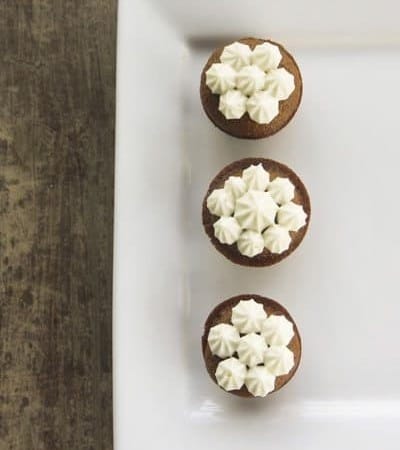
Honey Gingerbread Bites and Spiced Pumpkin Cupcakes with Vanilla Cream Cheese Frosting

If you haven’t checked out the column that I write for the Traverse City Record-Eagle before today, this is the perfect day to start.  And if you have?  Well, get on over there.  Unless of course you have a problem with  Honey Gingerbread Bites and Spiced Pumpkin Muffins with Vanilla Cream Cheese Frosting, romantic nattering about Fall, baking, flannel shirts and frosting thieves…

Home “Sun”dried Tomatoes with Basil and Garlic

I signed up for Foodbuzz’s Project Food Blog contest this weekend.  It’s a huge competition with multiple challenges, great publicity and a big old cash prize at stake. After each challenge, hundreds of participants will be cut.  I have to clue you in on something. I am a secretly competitive person.  And a perfectionist.  What this boils down to is that I usually don’t compete unless I know I can win.  Clever and super mature tactic, right?  That is what makes this such a huge departure for me.  There is a massive amount of food blogging talent involved in the competition and I have no idea where I stand in this crowd.  This is scarier than playing Boggle with my Grandma. But for once, it doesn’t matter.  Don’t get me wrong.  The competitiveness?  It’s there.  It’s on like Donkey Kong.  I care big time.  More importantly though, I’m on a mission to become a better blogger for all of my readers because you folks make blogging so much fun.  That’s why I’m diving in head first.

This post is my first entry in the competition.  The Challenge, “Ready, Set, Blog!” is for me to distill the essence of who I am as a food blogger in one post. I have discovered I have a marked tendency to get sappy when I have to talk about what motivates me. But it’s food AND family!  How could I not?

On September 20th, Foodbuzz will open the competition up to popular votes from the public-at-large. I’ll let you all know when the vote opens up just in case you want to throw your support behind little ol’ me.  Whew. Thanks for coming along on the ride.


“Love is the only cure for irritability, for irritability is only another manifestation of self-centeredness.  And love that takes a man outside himself and centers the focus of his attention on the well-being of others is its only cure.”

-Granville Walker

A major proverbial switch flipped in my brain the first time I read that.  The mega-life changing kind of switch that makes you look at just about everything differently. We’re talking epiphany, people.

I realized food and family are both utterly dependent on love to thrive. And I’m not talking about all hearts and flowers and goo-goo eyes all the time. I mean the real love; the love described by Granville Walker. The love with arms that hugs the scared four-year-old climbing into bed in the wee hours of the morning.  The love with legs that keeps you walking alongside and balancing a child’s bicycle even though your back (and arms and neck) are all aching.  The love with spine that reminds you that when you’re saying “absolutely not” to them banging that yellow jacket nest with wooden swords that you really do want the best for them. The love with hands that crafts the food that goes beyond mere sustenance to keep them all going….

I told you it was an epiphany.

Since you’re here, I’ll assume that you don’t view food as a simple necessity.  You -like me- think of food preparation far beyond the basic calories in vs. calories out.  If it was as basic as that, with no emotion or art attached, we’d all be walking around like Charlton Heston in ‘Soylent Green’ before his epiphany. Food is a creative outlet, sensuous pleasure, science experiment, math formula, historic treatise and cultural study all rolled into one.  And like it or not, the food we make speaks volumes about who we are and how we view life and love.

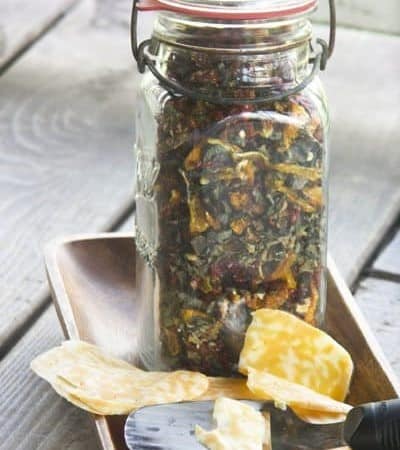
In food, much as in life, the best things come with a good head-start and a healthy dose of patience and selflessness. Sundried tomatoes have long been a staple on most food-lovers’ shelves.  They command a premium price at even the lowest quality and are sometimes pumped and plumped with odd additives and preservatives that are both unnecessary and undesirable.  We can easily make them at home using the simplest and healthiest ingredients possible without sacrificing any of the flavor and convenience of the store-bought counterpart. And it doesn’t hurt anything at all that you can make a far superior product for a much lower price tag.

The key, as with all food preservation, is to start with the best produce you can buy or grow.  There’s not much to be done to the tomatoes before drying, but -oh!- the possibilities when they’re done.  The favorite mode of consumption around these parts is to shake a handful from the jar, insert directly into the mouth and chew.  If that’s a little too country-cousin for you, we have more options; serve a bowl full -as is- along with thin slices of good cheese as finger food at a party, soak in warm water for 30 minutes before draining (save that liquid for adding to soups or stews!) and tucking into pizzas or sandwiches or pasta, or stir into polenta or risotto for bursts of intense tomato flavor.  In short, use these anywhere you would use a store-bought sundried tomato.

Living where I do, using the sun to dry tomatoes is a sketchy proposition at best.  We just don’t have enough hot daylight hours to accomplish the task before mold sets in to ruin our efforts.  That’s where  creativity comes in to save the day.  While a dehydrator is certainly more convenient, don’t let the lack of one stop you.  Your household oven can do the job admirably.

This is so worth your time, effort and love.  Oh, it is so worth it.

For a photo-free, printer-friendly version of this recipe, click here!

Home “Sun”dried Tomatoes with Basil and Garlic

Ingredients:

  • 4 cups cherry tomatoes of any variety.  Using a blend of types will give you beautiful variations in color and shape.
  • 2 cloves of garlic, peeled and minced
  • 1/2 cup fresh basil leaves, preferably Genovese, washed and very thinly sliced (otherwise known as chiffonaded basil.)
  • 1 teaspoon Kosher salt or sea salt

Wash your cherry tomatoes, examining them for bad fruit or soft spots.  Trim away any soft spots and remove any stems.  Halve all of your cherry tomatoes.  If you have any particularly large cherry tomatoes, quarter them so they will be the same size as the others.  The more uniform your pieces, the more evenly they will dry.  Arrange the tomatoes, cut side up, on a cutting board and sprinkle with the Kosher salt, chiffonaded basil and minced garlic.  Press the garlic and basil gently into the tomato halves.

…And here you need to make a decision.  If you have a dehydrator, use the first set of instructions.  If you do not, use the second set of instructions to dry your tomatoes.

Dehydrator Instructions

Transfer the tomatoes, cut side down, onto your dehydrator trays.  Do not overcrowd or they may not dry well.  Some garlic and basil will fall from the tomatoes; this is expected.  When all of your tomatoes have been arranged, scrape the basil and garlic that remains on the cutting board evenly over the dehydrator trays.  Dehydrate for 6-12 hours (at 135°F if your dehydrator has an adjustable thermostat) or until they are very shriveled.  They should be rather leathery and remain slightly pliable when warm but they should not be at all moist when you use a fingernail to dig into the centers.  When they reach this stage, allow to cool before transferring to an airtight container for storage.  stored in a cool, dry place in an airtight container, these should be good for up to one year.  Stored wrapped in foil and then in a resealable plastic bag, they will remain delicious for up to 18 months.

Oven Dehydrating Instructions

Preheat your oven to 130-140°F.  On some ovens, this will be the “keep warm” setting.  If your oven does not go this low, you will need to use your very lowest setting, prop the oven door open by about 4 inches,  set a small fan near the opening to keep air circulating, and reduce the cooking time (watching them carefully for scorching) for the most even results.

Line a baking sheet (or two, depending on the size) with foil.  Arrange the prepared tomatoes cut side down on the foil-lined sheets. Scrape the basil and garlic that remains on the cutting board evenly over the tomatoes.  Dehydrate for 6-12 hours or until they are very shriveled.  They should be rather leathery and remain slightly pliable when warm but they should not be at all moist when you use a fingernail to dig into the centers.  When they reach this stage, allow to cool before transferring to an airtight container for storage.  stored in a cool, dry place in an airtight container, these should be good for up to one year.  Stored wrapped in foil and then in a resealable plastic bag, they will remain delicious for up to 18 months.

Barbecue Bacon Cheeseburger Stuffed Sandwiches

Wake. Breakfast. School. Work.  Snack. School. Work. Lunch. School. Work. Snack. Work. Chores. Play. Dinner. Play. Bed. Repeat 4 times.  Weekend.

Routines can be good things, but getting them to become routine is the tricky bit. And fitting everything extra (cooking, planning, friends, activities) into this fresh Fall routine?  Hoo boy. It makes me feel a little panicky.

Feeling panicky fires up my organizational thinking.  Give me boxes.  Give me label guns.  Give me a freezer full of quick meals.  Watch me go people!

Stocking your freezer with items that can form the base of a fast homemade meal is a sanity saver.  And please.  Pretty please, don’t suggest once-a-month cooking to me.  I’ve tried it.  I failed. Miserably.  I am a fickle girl and while I approach it with enthusiasm, I fall down on it for the same reason that I can’t shop for a month at a time.  My solution is to make rubber chicken meal starters; big batches of food that form the base of many quick meals.

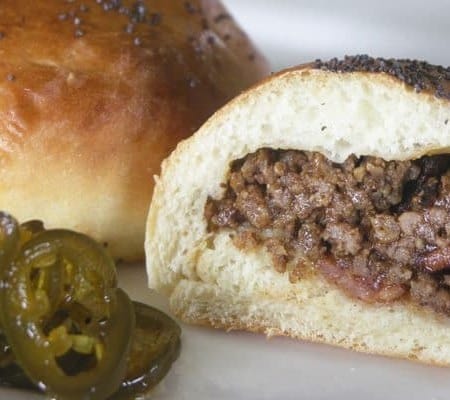
I’ve got a kids-of-all-ages pleasing, time-saving, budget-friendly, brain-soothing rubber chicken meal that all starts with a lip-smacking Barbecue Bacon Cheeseburger Meal Starter. Once you have this meal starter under your belt you can stir it into macaroni and cheese, top a pita-bread or pizza dough with it and pile on some grated cheese before baking it then tossing on chopped tomatoes and onions for a quick cheeseburger pizza, scoop it up with tortilla chips for some barbecue bacon cheeseburger nachos for game day*.) But today?  Today is all about the Barbecue Bacon Cheeseburger Stuffed Sandwiches.

Oh yes, my dears.  I am about to make you very popular.  Barbecue Bacon Cheeseburger Stuffed Sandwiches do everything but your windows.  They make a fantastic brown-bag lunch (if you have access to a way to heat it at lunch time), great dinner-on-the-go, incomparable hand-held tailgating (or sports watching) snack food, and they’re freezer friendly to boot.  By removing the sandwiches from the oven a few minutes early and wrapping with foil before freezing, you have the foundation for a meal that is done in thirty minutes or less on hand.  I tell you that if you serve these with a big pile of Candied Jalapenos you will be a certifiable super star.  Gimme a high-five!*

*I have a decidedly geeky habit of high-fiving.  My kids and high-school senior sister have tried to cool-ify my high-fives by adding a fist-bump and some slide-y action afterward and telling me not to yell, ‘HIGH FIVE!’ with it but I fear they’ve only succeeded in pointing out that no matter what I do, I will never, ever be cool again. My food, however, is crazy cool. Because all my cool is poured into my food there is none left for me.  It’s a price I’m willing to pay.

So let’s recap.  Cook this big batch of meal starter (you already won because it has BACON in it!).  Divide it up into smaller portions and freeze or refrigerate those portions.  Use one portion to make Barbecue Bacon Cheeseburger Stuffed Sandwiches (a meal-starter in and of themselves because they freeze like a dream.  A dream I tell you!).  Are you excited yet?  I am.  Let’s get cooking…

HIGH FIVE!

For a photo-free, printer-friendly version of this recipe click here!

(The printer-friendly version of the recipe contains instructions on preparing the bread dough by hand or by stand-mixer.)

To Make Barbecue Bacon Cheeseburger Stuffed Sandwiches

Ingredients:

  • 3 cups Barbecue Bacon Cheeseburger Meal Starter (see recipe below)
  • 1 batch of Buttermilk Sandwich Bread dough or 2 pounds thawed frozen or other bread dough of your choice. (See recipe for bread dough below.)
  • 1 egg beaten with 1 Tablespoon water (for egg wash.)

Optional:

  • Sesame seeds, poppy seeds or minced onion for topping

Preheat oven to 400°F.  Line a large baking sheet with a piece of parchment paper.  Set aside.

On a lightly floured surface, divide the bread dough into 12 even pieces.  Roll each piece into a ball.  Working with one piece of dough at a time, flatten bread dough into a circle that is about 1/4″ thick.  Place about 1/4 cup of the meat filling into the center of the dough circle.  Gather up the edges of the dough around the filling and cinch to seal.  Place seam side down on the parchment lined pan.  Repeat until all the dough is used.

Gently cover the dough with a piece of lightly oiled plastic wrap or a damp tea towel.  Let rise in a warm place for 15 minutes or until slightly puffy.  Brush with the egg wash and sprinkle with any desired toppings.

Slide the pan into the preheated oven on the center rack.  Bake for 18-24 minutes, rotating the pan 180 degrees halfway through the cooking time, or until the rolls are deep brown and shiny and the bread is cooked all the way through. Remove the pan from the oven and let the rolls rest on the pan for 5 minutes before transferring to a cooling rack.  Let the rolls rest at least 15 minutes before eating.

If you wish to freeze the rolls remove them from the oven about 5 minutes early and let cool completely on the pan before putting the pan directly into the freezer.  When the rolls are frozen through (about 6 hours), wrap each one in foil and transfer to a resealable freezer bag.  Kept like this in the freezer they will be good for about 3 months.  To reheat, place foil wrapped rolls on a pan and heat in a preheated 400°F oven for 15 minutes.  After 15 minutes, open the foil so the rolls are exposed and continue heating until hot all the way through.

Big Batch Barbecue Bacon Cheeseburger Meal Starter

Yield: 5 meals worth of starter

Ingredients:

  • 5 pounds 90% lean ground beef
  • 1 pound sliced smoked bacon, cut into 1/2″ strips
  • 2 cups ketchup
  • 1/2 cup packed light brown sugar
  • 1/2 cup cider vinegar
  • 2 Tablespoons prepared yellow mustard
  • 3-5 cloves of garlic, peeled and minced
  • 1 teaspoon Kosher salt
  • 1/4-1/2 teaspoon crushed red pepper flakes
  • 4 cups shredded Cheddar or Monterey Jack cheese
  • freshly ground black pepper, to taste

Optional:

  • 1 small onion, peeled and finely chopped

In a very large skillet (or a stove-top safe roasting pan over two burners) cook the bacon strips over medium heat, stirring frequently, until deeply colored and crispy. Use a slotted spoon to transfer the crisp bacon to a paper towel lined plate.  Cover the plate with foil and set aside.  Drain most of the fat from the pan, leaving about 1 Tablespoon, and return the pan to medium heat.

(If using the optional onions, add them to the pan now.)

Break up the ground beef into the pan.  Cook the beef, stirring and breaking up large clumps of the beef, until the beef is browned and no longer pink in the center.  If necessary (if there is a lot of liquid or fat remaining after browning the beef), drain the beef in a colander, wipe the additional fat from the pan, and return the drained beef to the pan.

Lower the heat on the pan to medium low and add the ketchup, sugar, cider vinegar, mustard, garlic, salt and red pepper flakes to the beef mixture.  Stir to evenly coat and cook until the sauce coats all the beef and is hot.  Add the reserved bacon and shredded cheese and stir until the cheese is completely melted and the bacon is evenly distributed.  Taste and add black pepper to your liking.

Divide the beef mixture into heat-safe containers with tight fitting lids.  I usually divide the starter into 3 cup portions. Cool quickly (by resting in a bowl with ice water halfway up the sides of the containers.)  The beef mixture will be good in the refrigerator for four days or in the freezer for up to four months.

Buttermilk Sandwich Bread

Ingredients:

  • 1-1/2 cups Cultured Buttermilk (You’re making your own, right?)
  • 2 Tablespoons softened butter
  • 4 cups bread flour (1 pound and 1 ounce by weight.)
  • 2 Tablespoons sugar
  • 1 Tablespoon plus 1 teaspoon vital wheat gluten (If you can’t find this it can be omitted, but it helps the structure and texture of the finished bread.)
  • 2 teaspoons salt
  • 2-1/2 teaspoons instant yeast or SAF yeast

Optional:

  • 1 egg beaten with 1 Tablespoon tepid water to glaze the bread

Bread Machine Instructions:

Load all ingredients into the pan according to your bread machine manufacturer’s instructions.  Program for a simple white cycle and press START.

Immediately remove bread from the pan to a cooling rack when the cycle is finished.  Cool completely before slicing.

(For instructions on preparing bread dough by hand or with a stand-mixer see the printer friendly version!)